
Study Finds Commuting Keeps Hearts Elevated 94% of the Time
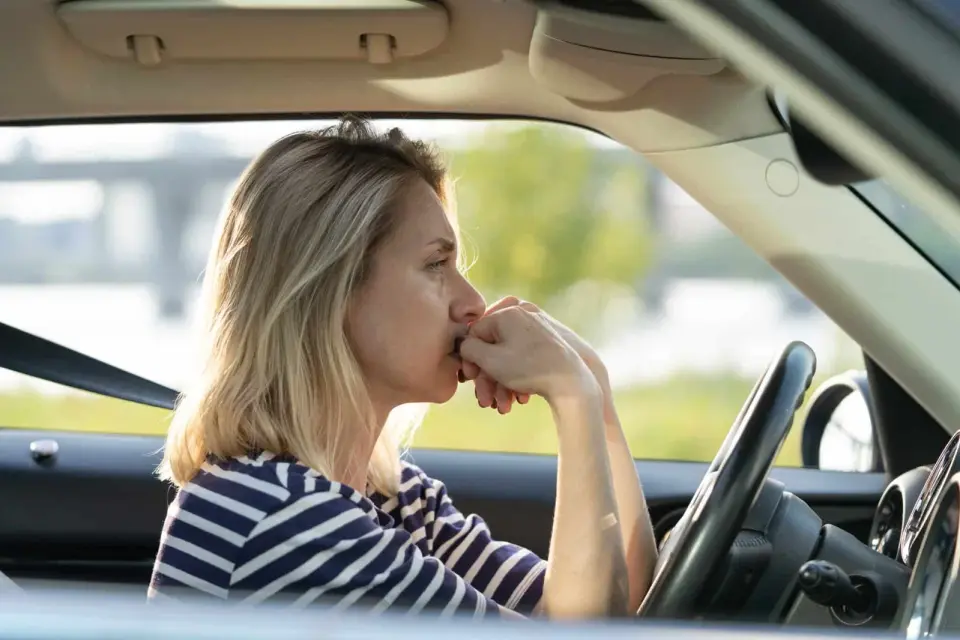
A new observational study from the University of Houston indicates that daily driving keeps heart rates above resting levels for 94% of the time, compared to 81% during other sedentary activities. Researchers found that while the average heart rate increase is similar to other sitting, the heart returns to baseline roughly half as often while driving. The study suggests that high trait anxiety may add one extra beat per minute, potentially accumulating to significant cardiovascular strain over years, though it does not prove driving causes heart disease.
Key points
- Researchers at the University of Houston and Texas A&M Transportation Institute tracked 57 adults in Texas for one week using Apple Watches and in-car sensors.
- Data from 177,318 minute-level observations showed heart rates remained above baseline for 94% of driving time versus 81% for non-driving sedentary time.
- Returns to resting heart rate occurred approximately 1.3 times per hour while driving, compared to 2.5 times per hour during other sitting.
- The study is observational and cannot establish causation, but it highlights a distinct physiological pattern associated with the act of driving.
- Researchers noted that higher trait anxiety was associated with an additional beat per minute, which could accumulate to over 173,000 extra beats annually for full-time drivers.
Background
This research builds on recent discussions regarding the physiological impacts of modern work routines. In October 2026, media attention focused on extreme commuting habits, such as a Google executive flying daily between Los Angeles and San Francisco, highlighting the growing prevalence of long-distance travel for hybrid work. Additionally, a November 2026 UK study linked frequent night shifts to subtle structural changes in the heart, reinforcing broader scientific interest in how non-exercise daily routines affect cardiovascular health.
How outlets are covering it
The University of Houston press release emphasizes the concept of the heart remaining 'on duty' during uneventful trips, framing the findings as a hidden strain that lacks the fitness benefits of exercise. In contrast, the primary source and the Nature journal abstract focus on the methodological novelty of using wearable sensors to decompose heart rate into baseline, context, and modulation, stressing that the study provides a blueprint for measuring repeated physiological exposure rather than proving harm. While the university highlights the potential for long-term health consequences, the academic publication explicitly states that the data show association, not causation, and that the yearly projections are illustrative scenarios rather than clinical forecasts. All sources agree that the pattern is consistent across weekdays and weekends, but they differ in how they frame the urgency of the findings for public health policy.
Why it matters
For the millions of people in car-dependent regions who spend hours daily behind the wheel, this study suggests that routine commuting may impose a continuous, low-level cardiovascular load that is distinct from physical exertion. If these sustained elevations contribute to long-term heart disease, it could influence future road design, vehicle engineering, and public health guidelines. The findings also provide a baseline for future research into autonomous vehicles, which may offer the heart a rest by removing the cognitive and physical demands of manual driving.
What to watch
The research team, supported by the Texas A&M Transportation Institute through 2027, plans to expand the study to larger, more diverse populations, including older adults, professional drivers, and those with existing cardiovascular conditions. They also intend to investigate whether autonomous ride services, such as those from Waymo and Tesla, reduce cardiac activation by allowing passengers to disengage from the driving task. Future studies will aim to determine if the observed heart rate patterns translate into measurable long-term health risks.
Want the full story? Read the original reporting
Read on StudyFinds