
Lung TRM cells persist as durable, pathogen-spanning guardians in humans
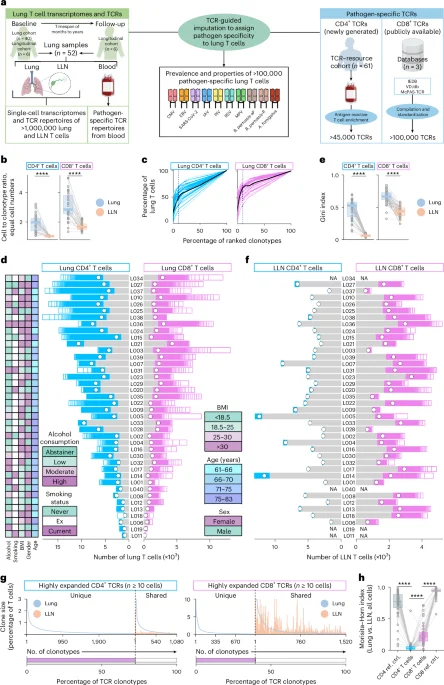
A large-scale analysis of human lungs and lung-draining lymph nodes shows that tissue-resident memory T (TRM) cells in humans are durable and diverse, with many being pathogen-specific and persisting for months to years—contrary to the rapid attrition seen in mice. Using single-cell transcriptomics and TCR profiling, plus donor-matched and public TCR resources, the study imputes pathogen specificities to a substantial fraction of lung T cells and reveals prevalent CD4+ TRM responses to a broad range of respiratory viruses, bacteria, herpesviruses, and fungi. TRM clones largely persist in the lung independent of blood migration, and the LLN is unlikely to be the major reservoir for these cells. The work also notes intraindividual heterogeneity, with some pathogens generating both TRM-biased and non-TRM-biased clones. These findings have implications for vaccines aiming to bolster durable lung TRM-mediated protection and highlight differences between human and mouse TRM maintenance.
- Human lungs maintain tissue-resident memory T cells against a broad spectrum of pathogens Nature
- Building immunity: Tissue-resident immune cells defend human lungs from viral, bacterial, and fungal infections Medical Xpress
- Tissue-Resident Immune Cells Protect Human Lungs from Viral, Bacterial, Fungal Infections bioengineer.org
Reading Insights
1
41
88 min
vs 89 min read
99%
17,751 → 143 words
Want the full story? Read the original article
Read on Nature