Memory-like CCR2+ monocytes differentiate into long-lasting lung cells that secrete galectin-1 to directly boost the formation and maintenance of lung CD8+ tissue-resident memory T cells, with galectin-1 also enhancing memory responses when used as a mucosal vaccine adjuvant.
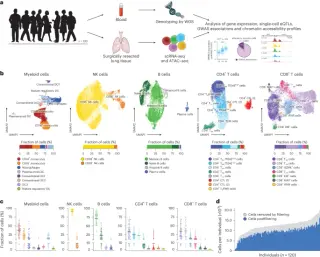
A large single-cell eQTL study across 29 lung immune cell subsets from 120 individuals links disease-risk variants to gene expression in tissue-resident immune cells, revealing cell-type–specific regulatory mechanisms for autoimmune diseases and COPD. The researchers identify thousands of eGenes, with hundreds showing colocalization to GWAS signals; COPD heritability is estimated at 15–20% mediated by lung-immune-cell expression, and genes like IRF5, IFITM3, and ZNF683 illustrate how regulatory variants shape immune responses in the lung. Many signals are not detected in blood-based eQTL datasets, highlighting the value of studying tissue-resident cells.
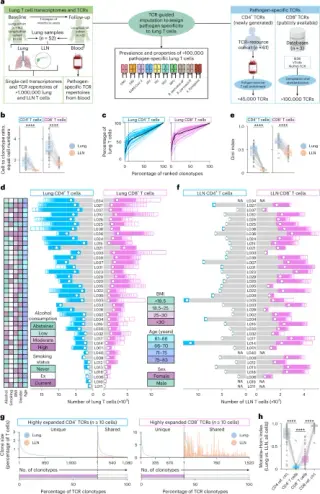
A large-scale analysis of human lungs and lung-draining lymph nodes shows that tissue-resident memory T (TRM) cells in humans are durable and diverse, with many being pathogen-specific and persisting for months to years—contrary to the rapid attrition seen in mice. Using single-cell transcriptomics and TCR profiling, plus donor-matched and public TCR resources, the study imputes pathogen specificities to a substantial fraction of lung T cells and reveals prevalent CD4+ TRM responses to a broad range of respiratory viruses, bacteria, herpesviruses, and fungi. TRM clones largely persist in the lung independent of blood migration, and the LLN is unlikely to be the major reservoir for these cells. The work also notes intraindividual heterogeneity, with some pathogens generating both TRM-biased and non-TRM-biased clones. These findings have implications for vaccines aiming to bolster durable lung TRM-mediated protection and highlight differences between human and mouse TRM maintenance.
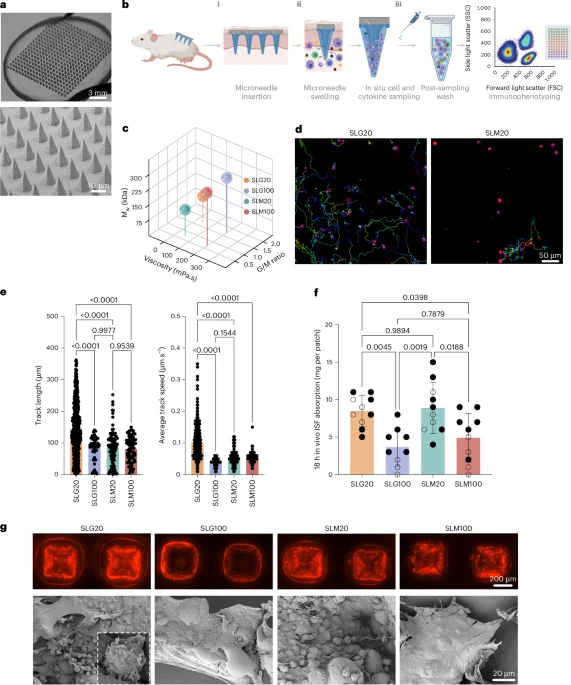
The study combines skin-resident memory T cell (TRM) recall with hydrogel-coated microneedle patches to non-invasively sample antigen-specific T cells from skin and blood. In mice, TRM priming and recall at the skin enabled sampling of thousands of live antigen-specific lymphocytes, surpassing conventional peripheral blood assessments. In a human case of allergic contact dermatitis, TRM reactivation followed by microneedle application captured diverse immune cells and cytokines from the interstitial fluid, with sampling efficiency comparable to or better than suction blisters and better suitability for longitudinal monitoring. The approach is antigen-agnostic and could enable broad, repeated immune monitoring across vaccination, infection, and autoimmune contexts, though larger cohorts and antigen-defined readouts are needed for broader clinical translation.