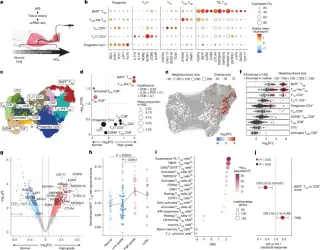
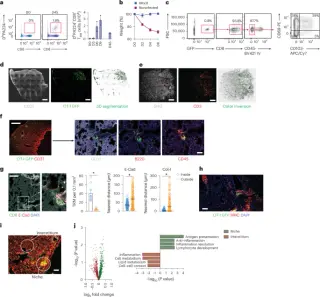
Researchers identified a specific network of regulatory T cells that emerges in preinvasive lung lesions, offering a potential method to detect and intercept non-small cell lung cancer before it becomes invasive.
An early-stage clinical trial has demonstrated that individuals with Type 1 diabetes can discontinue insulin therapy after receiving an experimental medication designed to prevent organ transplant rejection. The treatment aims to restore natural insulin production by suppressing the immune system's attack on pancreatic beta cells, offering a potential functional cure rather than just management. While experts express cautious optimism regarding the initial results, they emphasize that further research is required to confirm long-term safety and efficacy before widespread adoption.
A new review in Science argues that X and Y chromosomes directly influence immunity, cancer, and aging, independent of sex hormones. Researchers found that loss of the Y chromosome in men is linked to cancer and heart disease, while X chromosome dynamics in women affect brain aging. The study suggests these genetic factors should shape clinical trial design and personalized treatments.
Sanofi and Regeneron have signed a new collaboration agreement worth up to $8 billion to develop four early-stage immunology assets. The deal includes a $1 billion upfront payment from Sanofi and up to $7 billion in potential milestone payments. This partnership aims to secure future growth for Sanofi as its blockbuster drug, Dupixent, faces patent expiration in 2031. The agreement also resolves a 2024 lawsuit filed by Regeneron against Sanofi over commercialization details. Regeneron will lead research and development for the assets, while Sanofi will handle global commercialization. The most advanced asset, REGN20423, is already in clinical trials for eczema.
New research reveals that regular and intense exercise fundamentally alters immune cell behavior and metabolic pathways. A study in Science Advances shows that consistent activity boosts antioxidant levels and sugar metabolism, making immune cells more vigilant. Concurrently, research in Cell Reports Medicine indicates that brief, high-intensity bursts trigger massive protein changes in the blood, outperforming long moderate sessions in signaling between organs. These findings suggest that exercise intensity and consistency offer distinct but complementary benefits for preventing chronic diseases like diabetes and heart disease.
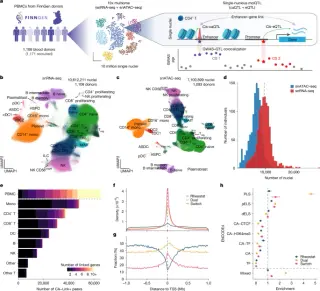
A massive new study published in Nature has created a population-scale atlas of the human immune system, linking genetic variants to disease mechanisms. By analyzing 10 million blood cells from 1,108 Finnish donors, researchers identified over 51,000 expression quantitative trait loci (eQTLs) and 338,000 chromatin accessibility QTLs. The study reveals how genetic variations in non-coding regions regulate gene expression, providing a clearer understanding of autoimmune diseases. This resource offers testable hypotheses for more than half of known immune disease associations, potentially accelerating drug discovery and personalized medicine.
Researchers at Washington University in St. Louis have identified a peripheral immune mechanism that may explain why the body fails to heal Alzheimer's-related brain damage. Published in Nature Neuroscience, the study shows that dendritic cells in lymph nodes, not the brain itself, activate T cells that migrate to the brain and cause neurodegeneration. In mouse models, blocking these lymph node signals protected neurons and preserved cognition, even when toxic tau protein tangles remained in the brain. This suggests future treatments could target the immune system outside the blood-brain barrier, bypassing a major obstacle in drug delivery.
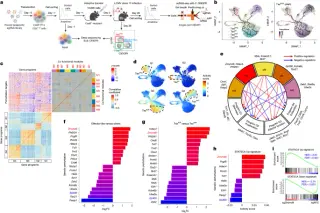
Researchers identified ZMYND8 as a key epigenetic factor that drives CD8+ T cell exhaustion by suppressing IL-2 receptor signaling. Blocking ZMYND8 restores T cell function and enhances anti-tumor and anti-viral responses, particularly when combined with IL-2 therapy or checkpoint inhibitors.
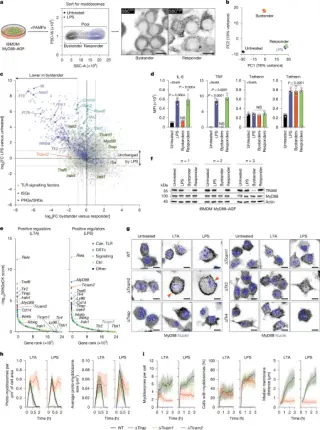
A new study in Nature reveals that the protein TRAM is essential for the maturation of myddosomes, which are cytosolic signaling complexes derived from Toll-like receptors (TLRs). TRAM facilitates the release of MyD88 from membrane-bound proto-myddosomes, allowing them to mature into stable, enzyme-rich structures that sustain long-term inflammatory signaling. Without TRAM, MyD88 remains trapped at the plasma membrane, leading to premature termination of immune signals and reduced expression of secondary response genes. This mechanism explains how TLRs achieve hours-long NF-κB activation and durable cytokine production, providing a molecular basis for receptor-free signal transduction in innate immunity.
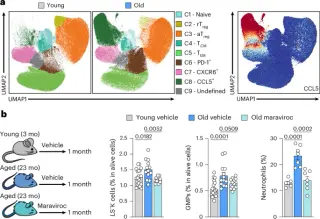
In aging, cytotoxic CD4+ T cells promote an age-associated myeloid bias in blood cell formation via the CCL5–CCR5 axis; blocking CCR5 with maraviroc in aged mice partially reverses this hematopoietic dysfunction and helps restore immune balance.
A biotech hedge fund-backed startup, North Immunology, is being formed to develop a longer-acting antibody treatment for atopic dermatitis, led by Mohit Gupta of Adar1 Capital in collaboration with Dan Schneeberger.
A kidney from a genetically engineered pig kept Tim Andrews alive and functioning for 271 days—the longest xenotransplant on record—before it was removed. He then needed dialysis for 82 days until a human donor kidney was found. Published in Lancet, the case demonstrates xenotransplantation as a potential bridge to transplantation amid organ shortages, while also highlighting immune and vascular challenges that must be overcome.
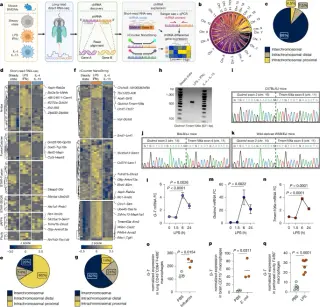
A Nature study shows that inflammation drives the production of functional chimeric RNAs formed by trans-splicing between distant genes in macrophages. The standout Gsdmd-Tmem106a transcript encodes a membrane-associated fusion protein that binds GSDMD-NT to accelerate pore formation, amplifying IL-1β release and pyroptosis to boost antibacterial defense but also worsen sepsis. In vivo, loss of GSDMD–TMEM106A reduces early cytokine release and sepsis severity, while delivering GSDMD–TMEM106A mRNA enhances bacterial clearance against Salmonella but increases septic risk. The work reveals a regulated, inflammation-responsive layer of transcript and protein diversity that expands the mammalian proteome and presents new therapeutic avenues through RNA-based interventions.
A study of little brown bats finds they have extra copies of the immune gene PRK and that their cells, when damaged by toxins, favor killing damaged cells over repairing them, a possible mechanism for cancer resistance and longevity that researchers hope could inspire human aging and cancer research, though real applications are far off.
Memory-like CCR2+ monocytes differentiate into long-lasting lung cells that secrete galectin-1 to directly boost the formation and maintenance of lung CD8+ tissue-resident memory T cells, with galectin-1 also enhancing memory responses when used as a mucosal vaccine adjuvant.