
Rare Thoracic Ewing Sarcoma Diagnosed via Spinal Compression in 20-Year-Old
A 20-year-old male presented with acute spinal cord compression, leading to the diagnosis of a rare thoracic Ewing sarcoma. After surgical decompression and chemotherapy, the patient developed orbital metastasis six months later.
Key points
- The patient, a 20-year-old male with no prior medical history, presented with 10 days of lower limb heaviness and urinary incontinence.
- Physical examination revealed flaccid paraplegia with a sensory level at T10 and a left paravertebral mass.
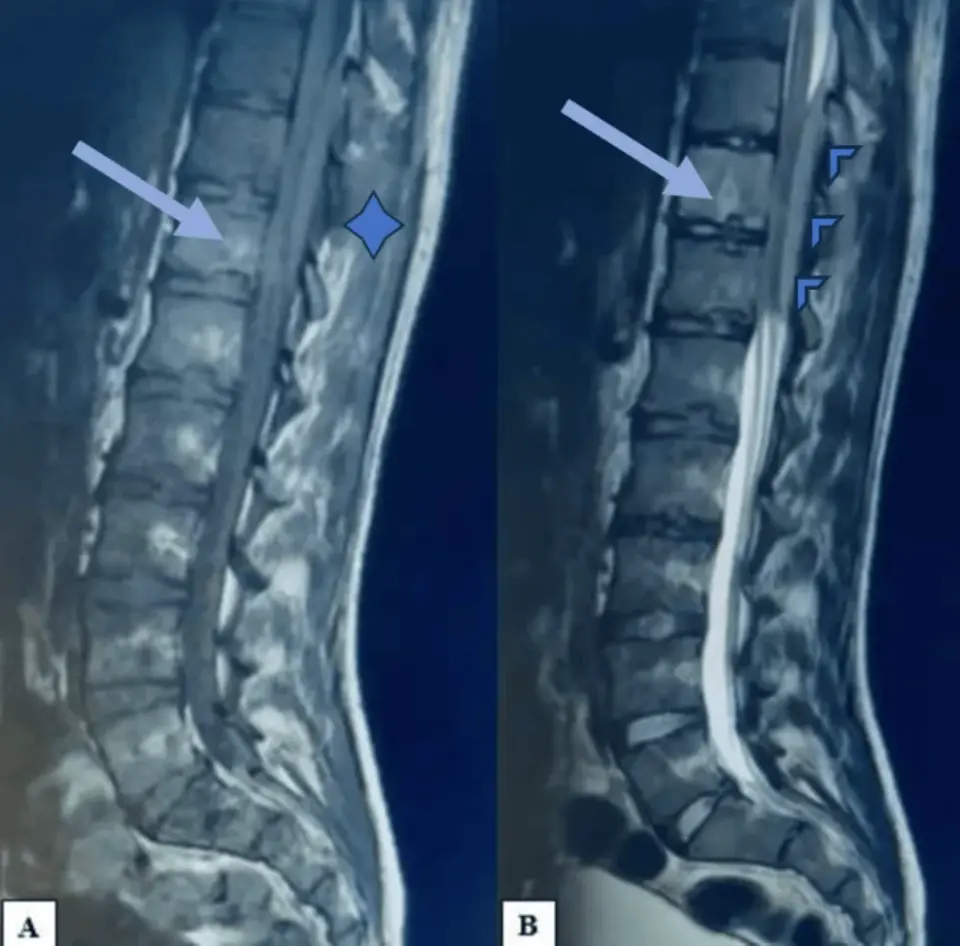
- MRI identified an extensive intraspinal lesion from D10 to D12 extending into paravertebral soft tissues, which was initially nonspecific.
- Surgical laminectomy and wide excision confirmed the diagnosis of Ewing sarcoma via histopathology.
- Treatment included the VAC chemotherapy protocol and stereotactic radiation therapy (30 Gy in 10 fractions).
- Six months post-treatment, the patient developed headaches and exophthalmos, revealing an orbital metastasis.
Background
Ewing sarcoma is a malignant bone tumor typically affecting children and adolescents, with spinal involvement being exceptionally rare. Previous coverage has highlighted community concerns regarding potential clusters of this rare cancer, such as the recent demand for investigation in Ladera Ranch, California. This case underscores the diagnostic challenges posed by nonspecific radiological findings in young adults.
Why it matters
This case highlights the critical importance of prompt surgical decompression in cases of neurological deficit caused by spinal tumors, as recommended by European Society for Pediatric Oncology guidelines. It also illustrates the poor prognosis associated with metastatic Ewing sarcoma, where localized disease has a 65-80% survival rate, but metastatic cases remain guarded.
What to watch
The patient’s oncology team is reviewing the case to determine if a second course of chemotherapy is warranted following the development of the orbital metastasis.
Want the full story? Read the original reporting
Read on Cureus