
Mediterranean sponge's mobility and cloning offer new path for harbor restoration
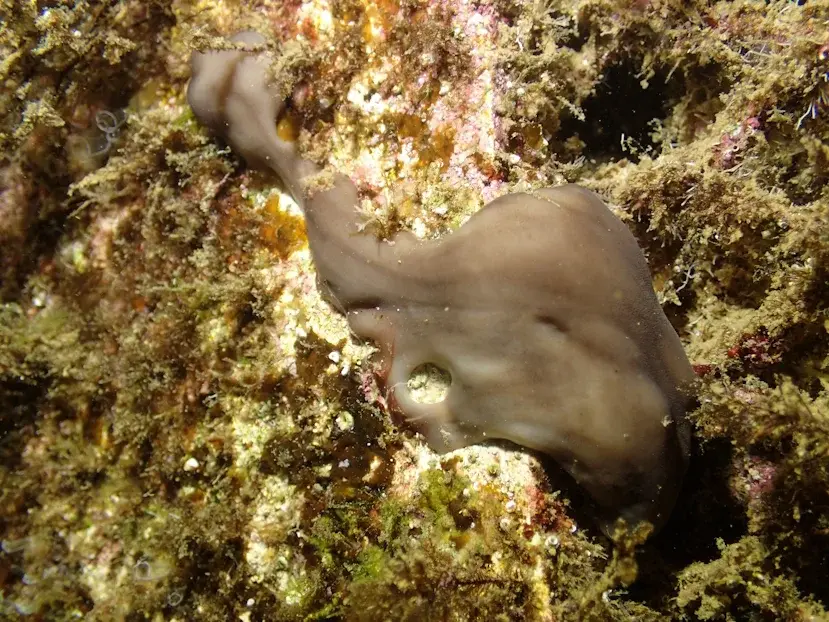
A study published in Frontiers in Marine Science reveals that Chondrosia reniformis, a Mediterranean sponge, can survive, move, and clone itself in polluted harbor environments. Researchers at the Centre for Advanced Studies of Blanes found that this species thrived where four others failed, suggesting it could serve as a foundation for restoring degraded coastal habitats.
Key points
- Five Mediterranean sponge species were transplanted into a marina in Spain over a 455-day period to test their resilience in polluted, low-circulation environments.
- Four species failed entirely, dying shortly after transfer or during preparation, while Chondrosia reniformis (the chicken kidney sponge) survived with a 91.7% success rate among the 24 transplanted individuals.
- The surviving sponges exhibited 'biological plasticity,' moving up to 12.7 centimeters across their substrate to avoid stressors like pollution and competition, a behavior rare for sessile marine organisms.
- The population grew from 24 to 40 individuals through asexual fission (cloning) during warm months, even as boat traffic and fuel pollution peaked.
- The study utilized 'Life Boosting Units,' metal structures coated in calcium carbonate and recycled ceramic plates, to facilitate the settlement of sponges and other organisms.
- Researchers emphasize that while the sponge is a promising pioneer species, it cannot restore an ecosystem alone and requires further long-term monitoring to assess its impact on broader biodiversity.
Background
This development follows broader discussions in 2026 regarding the restoration of heavily altered marine habitats. While previous news cycles focused on industrial and aviation regulatory changes, such as the FAA's return to Boeing self-certification, this study highlights a biological approach to environmental recovery in areas where traditional ecological restoration has struggled due to pollution and physical coastline transformation.
How outlets are covering it
Oceanographic and Earth.com both report on the same study led by Manuel Maldonado and Carlota Escarré, but they emphasize different aspects of the findings. Oceanographic highlights the technological innovation of the 'Life Boosting Units' and the use of computer vision algorithms to track the sponges' movement, framing the discovery as a methodological advance for restoration design. Earth.com focuses more on the biological mechanics, detailing the specific failure rates of the other four species and the sponge's ability to heal from infections and detach itself to move. Both outlets agree that the sponge's ability to filter water and provide shelter makes it a 'pioneer species,' but Oceanographic stresses the potential for broader re-naturalization strategies, while Earth.com notes the preliminary nature of the results due to small sample sizes for the failed species.
Why it matters
Harbors are among the most heavily altered marine habitats, typically hostile to native biodiversity due to pollution and limited water circulation. The discovery that a sponge can not only survive but actively move and clone itself in these conditions offers a new, low-cost tool for ecological restoration. By acting as an 'ecosystem engineer,' the sponge can filter water and create habitats for other species, potentially kick-starting the recovery of degraded coastal areas that have historically been difficult to restore.
What to watch
Researchers plan to monitor the transplanted sponges over several years to track changes in their symbiotic microbial communities, which may aid in pollutant tolerance. The team also intends to use the computer vision data to design future restoration initiatives, though they caution that sexual reproduction has not yet been observed in the harbor environment, suggesting that long-term population sustainability may require further study.
- Self-moving, self-cloning sponge could restore degraded harbours Oceanographic Magazine
- Chicken kidney sponge could help clean up polluted ports Earth.com
Want the full story? Read the original reporting
Read on Oceanographic Magazine