Tag

Science And Environment

All articles tagged with #science and environment

Lobsters, warming seas and the hunt for an ocean carbon fix
science-and-environment5 days ago

Lobsters, warming seas and the hunt for an ocean carbon fix

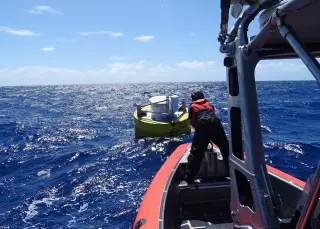
New England lobsters face rising ocean temperatures and shrinking inshore stocks as scientists test ocean alkalinity enhancement (OAE) in the Gulf of Maine to boost the ocean’s carbon uptake and study its effects on lobsters and other marine life. The effort, under the LOC-NESS program, comes amid shifting funding—strong private and European backing countered by US cuts—raising questions about ecological risks and the role of geoengineering alongside urgent fossil-fuel reductions.

Heat and Habitat Shifts Push California Toward Vector-Borne Disease Spike
science-and-environment9 days ago

Heat and Habitat Shifts Push California Toward Vector-Borne Disease Spike

A warming climate and disrupted ecosystems are expanding the range of disease-carrying mosquitoes and fleas in California, fueling spikes in West Nile virus and raising dengue and flea-borne typhus risks; experts say multiple factors—heat, urban expansion, wildlife interactions, and rodenticide bans—are at play, making California a focal point for the growing threat of vector-borne diseases.

Removing Barred Owls Frees Old-Growth Habitat for California Spotted Owls
science-and-environment12 days ago

Removing Barred Owls Frees Old-Growth Habitat for California Spotted Owls

A California GPS-tracking study shows invasive barred owls overwhelmingly occupy tall, old-growth stands that spotted owls depend on, with 64% overlap in home ranges and 38% in high-quality nesting habitat. Ongoing management that removed 1,171 barred owls freed more than 1,800 square kilometers of habitat (including about 1,150 km2 of prime nesting/roosting forest) for spotted owl recolonization, underscoring the need for sustained barred-owl control to protect the old-growth ecosystem.

Europe dazzled by a rare solar eclipse, from near-total UK skies to totality in Spain
science-and-environment12 days ago

Europe dazzled by a rare solar eclipse, from near-total UK skies to totality in Spain

Millions across the UK and Europe watched a once-in-a-generation solar eclipse, with the UK seeing a heavy partial eclipse (~90–95% of the Sun obscured) while Spain, Iceland and Greenland experienced totality. Crowds gathered at viewing sites, eye-protection stock ran out, and improvised viewers were used. The total phase lasted under two minutes. A 'golden age' of total eclipses is predicted for 2026–2028 (none visible from the UK), with the next UK total eclipse not until 2090.

Famed Big Bear bald eagle fights mystery illness as doctors hunt elusive cause
science-and-environment1 month ago

Famed Big Bear bald eagle fights mystery illness as doctors hunt elusive cause

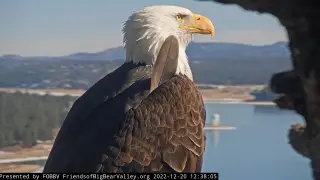
Jackie, the 14-year-old bald eagle from Big Bear Lake, remains in critical condition at the Ojai Raptor Center as veterinarians treat suspected rodenticide poisoning and severe anemia; tests have ruled out lead poisoning and metals, a life-saving blood transfusion helped her energy, and clinicians are awaiting zinc toxicity results while she fights the illness and her family at the nest.

Winter Warmth Triggers Ice-Free West Antarctica and Rising Sea-Level Fears
science-and-environment1 month ago

Winter Warmth Triggers Ice-Free West Antarctica and Rising Sea-Level Fears

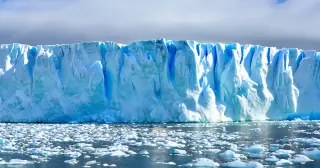
The article argues that a mid-winter heatwave left a large portion of West Antarctica ice-free, an unprecedented condition that scientists reportedly link to a possible irreversible collapse of the West Antarctic Ice Sheet and several metres of potential sea-level rise. It weaves satellite observations, past indicators like Antarctic sea-ice decline, rapid glacier retreat, and new methane seeps with warnings about record CO2 emissions, portraying the climate system as changing faster than models predicted and stressing the need for urgent action.

Deep-ocean turbulence could accelerate climate change within a lifetime
science-and-environment1 month ago

Deep-ocean turbulence could accelerate climate change within a lifetime

A Nature Communications study finds that tiny deep-ocean turbulence rapidly distributes heat, nutrients and carbon, influencing sea level rise and fisheries on decadal scales—far faster than current climate models capture. By tracing chlorofluorocarbons, researchers show deep waters move heat and carbon around on timescales relevant to human life, underscoring gaps in climate projections and the need for improved understanding and monitoring of small-scale ocean mixing to inform policy.

Bright-lipped monkey in DRC confirmed as a new species
science-and-environment1 month ago

Bright-lipped monkey in DRC confirmed as a new species

Scientists have officially recognized a new Colobus monkey species in the DRC's Lomami National Park, nicknamed 'Likweli' by locals, notable for its pinkish-orange lips and black face; discovered after decade-long fieldwork following initial sightings in 2008, the species Colobus congoensis is rare, canopy-dwelling, and may require protection as researchers plan population surveys and further behavioral study.

Gus the T. rex Breaks Fossil Auction Record with $50 Million Sale
science-and-environment1 month ago

Gus the T. rex Breaks Fossil Auction Record with $50 Million Sale

A 67-million-year-old Tyrannosaurus rex named Gus sold for £37.4m ($50.1m) at Sotheby’s in New York—the most ever paid for a dinosaur. The nearly 60% complete fossil was discovered in 2021 on a South Dakota ranch and required three summers of digging plus three years in the lab to reassemble, with bite marks and healed ribs indicating a life on the hunt. The buyer remains undisclosed; the sale surpasses the previous record and signals growing ultra-wealthy interest in fossil collecting, with Gus potentially heading to a museum in the future.

Gus the T. rex Could Break Dinosaur Auction Record, Sparking Fossil Ownership Debate
science-and-environment1 month ago

Gus the T. rex Could Break Dinosaur Auction Record, Sparking Fossil Ownership Debate

Gus, one of the most complete T. rex fossils ever found in South Dakota, goes to Sotheby’s with a $30 million pre-sale value and a $19 million starting bid, potentially becoming the most expensive dinosaur ever sold. The auction reignites a debate over whether scientifically important fossils should stay in museums or be privately owned, since private specimens are harder for researchers to access and many journals won’t publish work on them. Excavation and recovery spanned years, and while collectors help fund finds, scientists stress public accessibility and rigorous study as essential for understanding dinosaur biology and our past.

Phosphate Scarcity Triggers Ocean Methane Boom and a Hidden Climate Feedback
science-and-environment4 months ago

Phosphate Scarcity Triggers Ocean Methane Boom and a Hidden Climate Feedback

Researchers find that marine bacteria produce methane when surface waters become phosphate-poor, creating a self-reinforcing warming loop: warming drives stratification that limits nutrient (phosphate) delivery, triggering more methane emissions and potentially accelerating near-term climate warming—an interaction not fully captured in many climate models.

Whale Super-Groups Signal a Bold Humpback Comeback
science-and-environment4 months ago

Whale Super-Groups Signal a Bold Humpback Comeback

Two December 2025 days off South Africa yielded the highest ever counts of humpback whales: 304 on the second day and 208 on the first, with 372 individuals identified overall (some duplicates), signaling a pronounced recovery since near-extinction from 20th-century whaling. Sightings of 'super-groups'—20+ whales within five body-lengths—are rising as populations rebound, though scientists aren’t sure why (more prey, expanded ranges, or previously undocumented behavior). The sightings are tracked via Happywhale’s AI photo-ID database, which helps monitor health and migration even as threats like entanglement, ship strikes, and warming seas remain.

Falcon 9 reentry leaves upper-atmosphere lithium plume, raising space-pollution concerns
science-and-environment6 months ago

Falcon 9 reentry leaves upper-atmosphere lithium plume, raising space-pollution concerns

Researchers using ground-based lidar detected a large lithium plume from SpaceX’s Falcon 9 upper-stage reentry ~62 miles up over Europe, marking the first observed upper-atmosphere pollution from space debris. As satellite constellations grow, such reentries could alter atmospheric composition and potentially impact the ozone layer, though the long-term climate effects remain unknown.

First 2026 Cat 5: Horacio forms in remote Indian Ocean
science-and-environment6 months ago

First 2026 Cat 5: Horacio forms in remote Indian Ocean

Tropical Cyclone Horacio became the world’s first Category 5 tropical cyclone of 2026, peaking at 160 mph over warm South Indian Ocean waters; it poses no land threat and is expected to weaken as it moves into cooler waters and higher wind shear, a reminder that climate change may drive a higher share of storms to Category 4–5 strength.

Massive $1.5 Trillion Lithium Deposit Discovered Beneath U.S. Supervolcano
science-and-environment7 months ago

Massive $1.5 Trillion Lithium Deposit Discovered Beneath U.S. Supervolcano

Scientists have discovered a potentially massive $1.5 trillion lithium deposit beneath the dormant McDermitt caldera, which could significantly impact the global supply of critical energy materials. The deposit, formed over 16 million years ago, is of strategic interest for the U.S. amid rising demand for lithium-ion batteries, but environmental, cultural, and technical challenges remain before extraction can proceed.