
Wake County Mosquitoes Evolve Rapid Resistance to Common Sprays, Threatening Public Health Tools
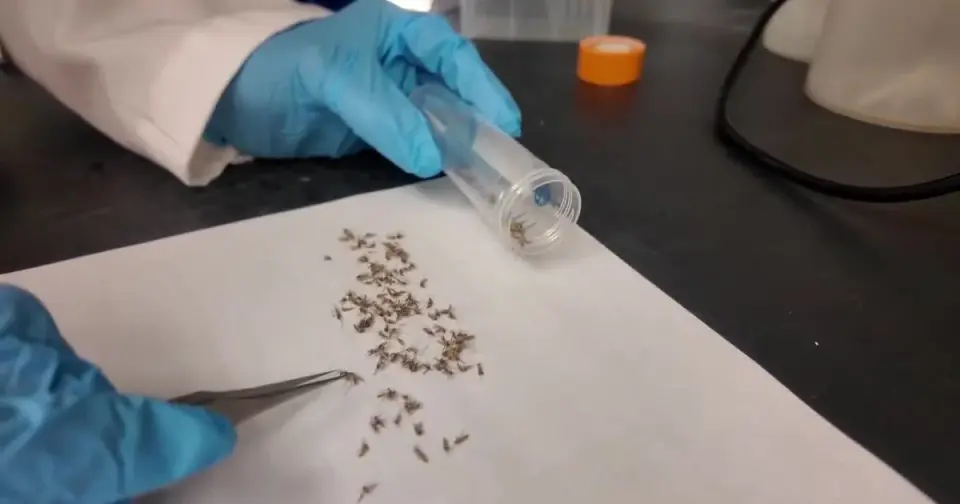
Asian tiger mosquitoes in Wake County, North Carolina, have rapidly developed resistance to pyrethroids, the insecticides commonly used in backyard sprays. Two studies from North Carolina State University found that a specific genetic mutation went from undetectable in 2016 to present in 84% of sampled residential blocks by 2023. This resistance is most prevalent in wealthier neighborhoods with higher property values, where private pest-control services are more frequent. Researchers warn that this trend threatens the effectiveness of pyrethroids, which are critical for controlling disease outbreaks, and advocates for integrated pest management strategies that reduce reliance on chemical sprays.
Key points
- A genetic mutation associated with pyrethroid resistance in Asian tiger mosquitoes went from undetectable in 2016 to 84% of sampled residential blocks in Wake County by 2023.
- By 2023, 39% of sampled mosquitoes carried the mutation, with preliminary 2025 data showing a slight increase.
- Resistance is highest in older, wealthier neighborhoods, correlating with higher property values and likely increased use of private pest-control services.
- Pyrethroids are considered safe and effective for rapid population control during disease outbreaks, making their declining efficacy a public health concern.
- Researchers recommend integrated pest management, including eliminating standing water, using larvicides, and rotating insecticides with different modes of action.
Background
This story follows earlier coverage in July 2026 that highlighted the rapid spread of pyrethroid resistance in Wake County. Previous reports noted that the mutation appeared in 2018 and spread widely by 2023, with wealthier neighborhoods showing higher resistance levels. The current briefing synthesizes new details from multiple outlets, including specific data from 2025 and insights from pest-control companies, to provide a comprehensive view of the evolving situation.
How outlets are covering it
WRAL.com emphasizes the response of pest-control companies, such as Mosquito Shield of Wake County, which uses integrated pest management and rotates treatments to mitigate resistance. The Raleigh News & Observer highlights the socioeconomic link, noting that wealthier neighborhoods drive resistance through more frequent spraying. The Debrief focuses on the genetic mechanism, explaining that the F1534S mutation affects the voltage-gated sodium channel, reducing pyrethroid sensitivity. The Times of India underscores the broader community impact, suggesting that individual spraying choices can collectively undermine public health tools. All sources agree on the rapid spread of resistance and the need for integrated approaches, but they differ in emphasis: WRAL on industry practices, N&O on socioeconomic factors, The Debrief on genetic details, and The Times of India on community-wide implications.
Why it matters
The rapid evolution of pyrethroid resistance in Wake County threatens the effectiveness of a key tool for controlling mosquito-borne diseases like dengue, Zika, and chikungunya. If resistance spreads further, public health officials may struggle to manage outbreaks, leading to increased disease transmission. Additionally, the trend highlights the unintended consequences of private pest-control practices, which can undermine public health efforts. Addressing this issue requires coordinated action among homeowners, pest-control companies, and public health agencies to adopt integrated pest management strategies that reduce reliance on chemical sprays and prevent further resistance development.
What to watch
Researchers are continuing to collect mosquito samples in 2026 to monitor the spread of resistance and assess its practical impact. They are also studying whether the mutation creates a biological disadvantage when pyrethroids are not present, which could potentially reverse the trend. Pest-control companies are expected to adopt more integrated pest management practices, including rotating insecticides and using larvicides, to mitigate resistance. Public health agencies may need to develop new strategies for controlling mosquito populations if pyrethroids become less effective. Homeowners are encouraged to eliminate standing water and use non-chemical methods to reduce mosquito populations.
- Mosquitoes are evolving to survive common backyard sprays WRAL
- How pesticides are breeding resistant mosquitoes in wealthy Wake neighborhoods Raleigh News & Observer
- Backyard Mosquito Sprays May Be Helping These Blood-Sucking Parasites Evolve, Making Them Resistant to Insecticide The Debrief
- Detox Enzymes Help Mosquitoes Resist Insecticides the-scientist.com
- Wealthy US neighbourhoods paid to spray mosquitoes: By 2023, the insects had evolved resistance across 84% of sampled blocks and know what they became capable of The Times of India
Want the full story? Read the original reporting
Read on WRAL