
California releases sterile male mosquitoes to combat climate-driven disease spread
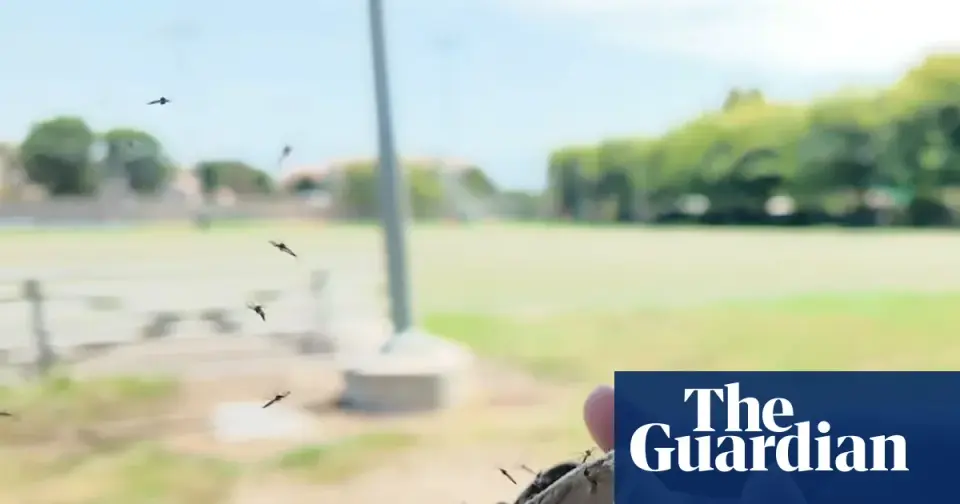
In the San Gabriel Valley, California, officials are releasing nearly 500,000 sterile male mosquitoes weekly to reduce disease-carrying populations. This strategy uses the Wolbachia bacterium to prevent reproduction, addressing a longer mosquito season caused by climate change. While droughts have reduced mosquito numbers elsewhere in the US, warmer temperatures are extending breeding seasons and increasing the risk of dengue and other vector-borne diseases globally.
Key points
- The San Gabriel Valley mosquito control district is releasing approximately 30,000 male Aedes aegypti mosquitoes per week, totaling nearly 500,000, to suppress local populations.
- These males carry the Wolbachia bacterium; when they mate with wild females, the resulting eggs do not hatch, and the females remain sterile, reducing the next generation.
- Climate change has extended the mosquito season in the US, with nearly 95% of cities experiencing 18 more days annually suitable for disease-spreading mosquitoes compared to the 1970s.
- California recorded its first locally acquired dengue cases in 2023 and 2024, with 14 cases in Los Angeles County in 2024, six of which required hospitalization.
- In South Korea, mosquito activity has surged as autumn temperatures cool, with the national average temperature 1.7 degrees above the historical norm, leading to earlier Japanese encephalitis cases.
- The US EPA has approved Wolbachia-infected mosquito control products, and field studies have shown population reductions of 80% to 95% in treated areas.
Background
Previous coverage noted that while droughts in the US West and Midwest have reduced mosquito numbers by up to 70%, they have concentrated remaining populations around water sources, increasing West Nile virus transmission risk. This current development highlights a different climate impact: warmer temperatures extending the breeding season and enabling new disease vectors like dengue to establish in previously unaffected areas such as Southern California.
How outlets are covering it
The Guardian emphasizes the proactive, biological approach to mosquito control in California, highlighting the use of Wolbachia-infected males to combat the expanding range of Aedes aegypti due to climate change. In contrast, The Herald Business focuses on the immediate public health risks in South Korea, where cooler autumn temperatures have triggered a surge in mosquito activity and earlier disease outbreaks. While The Guardian frames the issue as a long-term adaptation to climate-driven habitat expansion, The Herald Business highlights the acute seasonal danger and the need for immediate public precautions. The Independent and Yahoo sources provided limited substantive content, with the former appearing to be a technical error page and the latter lacking readable article text, thus offering no additional perspective on the core story.
Why it matters
As climate change alters temperature and humidity patterns, traditional mosquito control methods may become insufficient. The shift toward biological suppression, such as releasing sterile males, represents a critical adaptation to prevent the spread of diseases like dengue and Japanese encephalitis in regions previously considered low-risk. Understanding these shifts is essential for public health preparedness and resource allocation.
What to watch
Officials in the San Gabriel Valley will monitor female mosquito populations via traps to assess the effectiveness of the release program. In South Korea, the Korea Disease Control and Prevention Agency plans to expand its vector surveillance network from 16 to over 30 sites by 2029, utilizing AI-based monitoring systems to track mosquito activity and disease risks more effectively.
- Scientists are fighting a longer mosquito season with ... more mosquitoes The Guardian
- UK mosquito numbers could increase in September due to warm weather The Independent
- How selective mosquito breeding can lessen the general population Yahoo
- 'Aggressive' wave of mosquitoes are emerging in UK - 4 top tips to avoid bites The Sun
- 'Don't open the windows!' Mosquitoes surge as autumn arrives — and disease risks rise with them 헤럴드경제
Want the full story? Read the original reporting
Read on The Guardian