
FibriLysins Outperform Vancomycin in Treating Staphylococcus aureus Device Infections
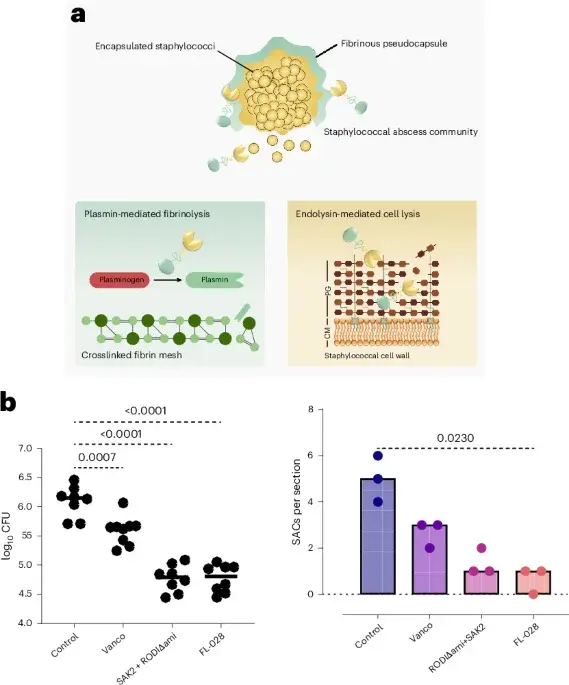
Researchers have developed FibriLysins, dual-action proteins that dismantle the fibrin structures protecting Staphylococcus aureus communities and kill the bacteria inside. In mouse models of device-associated infections, these proteins showed higher efficacy than the standard antibiotic vancomycin, offering a potential treatment for resistant infections.
Key points
- FibriLysins are engineered to target and break down fibrin structures that encapsulate S. aureus multicellular communities.
- The therapy works by dismantling the protective barrier and simultaneously killing the bacteria within the community.
- In a mouse model of device-associated infection, FibriLysins demonstrated superior antibacterial efficacy compared to vancomycin.
- The development utilizes the VersaTile protein engineering platform to create these dual-action proteins.
- The findings suggest potential applications for treating recalcitrant S. aureus infections that are difficult to manage with current antibiotics.
Background
This development follows recent efforts to combat Staphylococcus aureus, including a 2026 study from IISER Bhopal and CSIR-CDRI that introduced a chemical method targeting N-terminal glycine residues to inhibit both susceptible and resistant strains, including biofilms, in lab and animal models.
Why it matters
The ability to effectively treat device-associated S. aureus infections, which are often resistant to standard antibiotics like vancomycin, could significantly reduce morbidity and mortality in hospital settings. By targeting the structural integrity of bacterial communities, FibriLysins offer a novel approach to overcoming antibiotic resistance and biofilm protection.
What to watch
Further clinical trials are likely needed to evaluate the safety and efficacy of FibriLysins in human patients. Researchers may also explore the integration of these proteins with existing antibiotic therapies to enhance treatment outcomes for complex infections.
Want the full story? Read the original reporting
Read on Nature