
Ancient DNA reveals plague returned to Europe in waves for 350 years after the Black Death
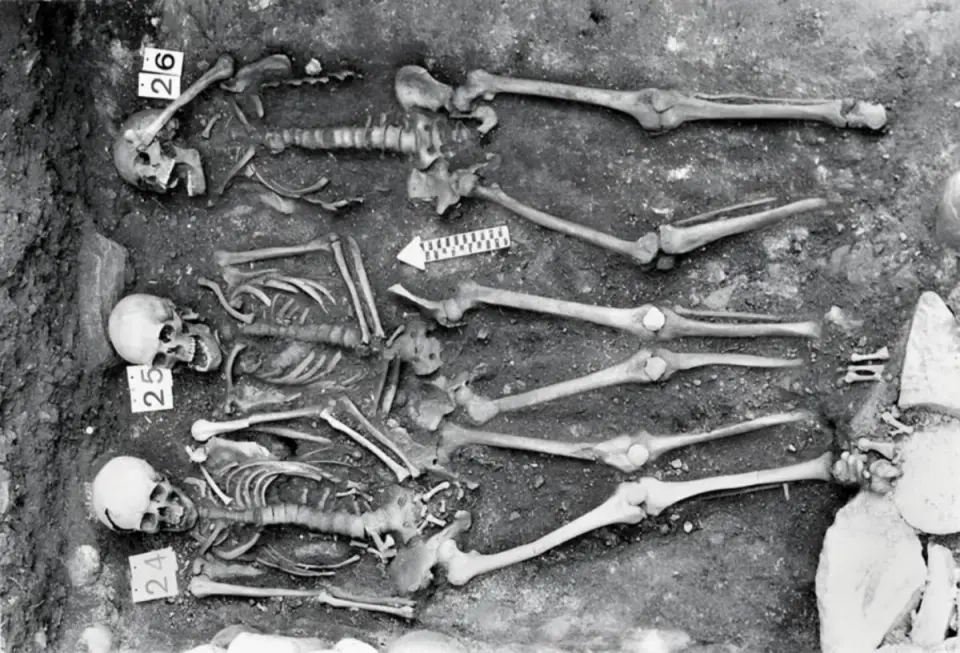
New research shows plague did not vanish after the 1347-1353 Black Death but returned across Europe for over 350 years. By analyzing 75 genomes, scientists found the disease spread via war and trade, evolving into new lineages that established long-term reservoirs in wild rodents.
Key points
- Researchers from the University of Tartu and partners analyzed 75 Yersinia pestis genomes from 11 archaeological sites across Europe, dating from 1349 to 1710.
- The study reveals that plague did not persist in a single location but re-emerged in different regions through repeated introductions, particularly in Estonia.
- A major expansion of plague lineages occurred between 1450 and 1500, splitting into three branches that likely established reservoirs in wild rodent populations.
- The team developed a new dating method called PhIRM (Phylogenetically Informed Radiocarbon Modeling) to narrow historical timelines and link genetic evidence to specific outbreaks recorded by chroniclers.
- Human movement during conflicts, such as the Thirty Years' War and the Great Northern War, facilitated the spread of the disease along military and trade routes.
Background
This study builds on recent ancient DNA research that has reshaped our understanding of European history, such as the 2026 findings on post-Roman population mixing. While previous studies focused on human migration, this research focuses on the pathogen itself, providing a detailed timeline of how infectious diseases persisted and evolved in Europe long after initial pandemics.
How outlets are covering it
Archaeology News Online emphasizes the technical innovation of the PhIRM dating method, highlighting how it resolves the imprecision of traditional radiocarbon dating. ScienceDaily focuses more on the broader narrative of plague's persistence, stressing the role of climate factors like the Great Renaissance Drought and the impact of war on disease transmission. Both sources agree on the core findings but differ in emphasis: one on the methodological breakthrough, the other on the historical and environmental context.
Why it matters
Understanding how plague persisted and eventually disappeared from Europe offers insights into the long-term behavior of infectious diseases. This knowledge can improve modern disease surveillance and help monitor regions where Yersinia pestis still circulates in wild rodent populations today.
What to watch
Future research will integrate archaeological dates, coin evidence, and climate records into the PhIRM models to further refine the timeline of historical epidemics and test the impact of environmental changes on plague reservoirs.
- Plague after the Black Death returned in waves across Europe for centuries, ancient DNA shows Archaeology News Online Magazine
- Ancient DNA reveals how plague kept returning for 400 years after the Black Death ScienceDaily
- A sharper picture of a pandemic: Uncovering the complex history of the plague after the Black Death Phys.org
- Plague killed hunter-gatherers in Siberia 5,500 years ago UA.NEWS
- Plague was killing entire families thousands of years before the Black Death ScienceDaily
Want the full story? Read the original reporting
Read on Archaeology News Online Magazine