
DR Congo Ebola Outbreak Surpasses 9,000 Cases as Bundibugyo Strain Spreads
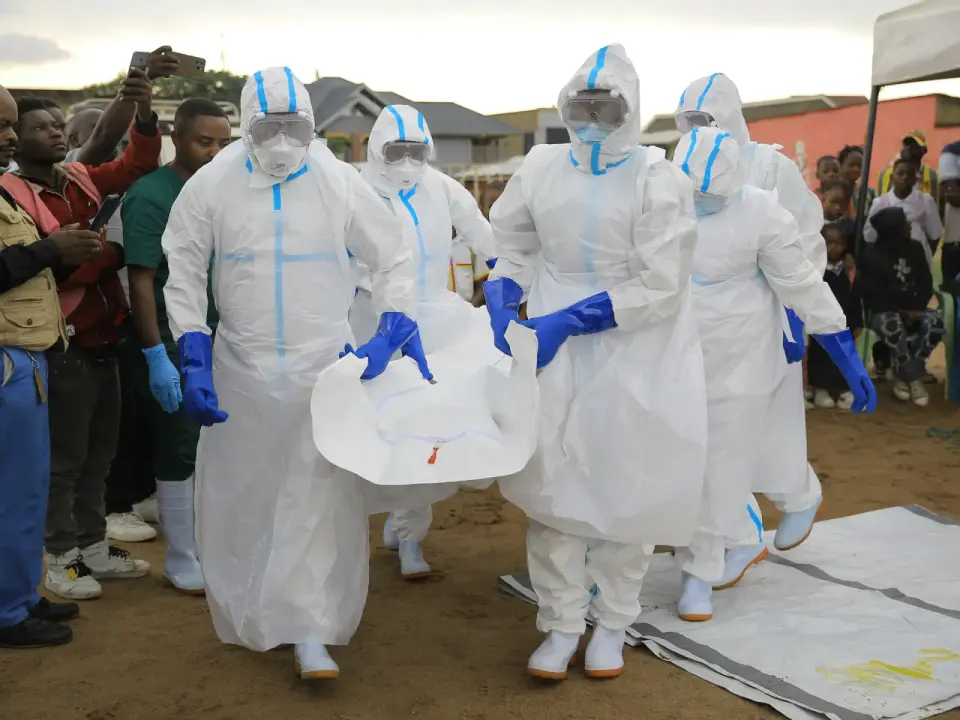
The Democratic Republic of Congo has recorded over 9,000 confirmed Ebola cases and 4,381 deaths, marking the deadliest outbreak in the country's history. The epidemic, caused by the Bundibugyo strain for which no approved vaccine exists, has spread across seven provinces. Containment efforts are hampered by community mistrust, ongoing conflict with the M23 rebel group, and supply shortages. While Kenya recently reported its first imported case, Uganda declared itself Ebola-free in August. A new clinical trial for a Bundibugyo vaccine is being prepared, but current case-fatality rates remain near 48%.
Key points
- The DRC Health Ministry reported 9,066 confirmed cases and 4,381 deaths as of October 13, 2026, with a case-fatality rate of 48.2%.
- The outbreak is caused by the Bundibugyo strain, which lacks approved vaccines or treatments, unlike the Zaire strain that caused the 2014-2016 West African epidemic.
- The virus has spread to seven provinces in northern and eastern DRC, with 65 health zones affected, though officials estimate confirmed cases represent only one-third of total infections.
- Containment is hindered by community mistrust, where some believe the disease is a financial ruse, and by conflict between government forces and the M23 rebel group, which disrupts resource transport.
- Kenya reported its first imported case in late September, involving a national who traveled through Uganda, while Uganda declared itself Ebola-free in August after 20 cases and two deaths.
- CEPI announced preparations for the 'Tumaini' phase 2/3 trial to evaluate vaccine candidates, including Ervebo, against the Bundibugyo strain, while MSF continues a separate study in North Kivu and Ituri.
Background
This outbreak began in mid-May 2026, though some experts suspect it started as early as February. By September 1, cases had surpassed 6,000, and by September 28, they exceeded 8,000. The epidemic has surpassed the 16 previous outbreaks in DRC history and is now the second largest globally, trailing only the 2014-2016 West African epidemic, which saw 28,600 cases and over 11,000 deaths. Previous containment measures included airport closures and gathering limits, particularly in Ituri province, but the conflict with the M23 rebels has complicated logistics. Health workers have also faced strikes over unpaid wages, further straining the response.
How outlets are covering it
Al Jazeera emphasizes the role of community mistrust, noting that some locals believe the disease is a ruse to siphon government funds, and highlights the violence against a local politician who defended the response. ABC News focuses on the scale of the crisis, noting that confirmed cases may represent only a third of total infections and that many deaths occur outside treatment centers. CIDRAP provides technical details on the vaccine response, highlighting the CEPI 'Tumaini' trial and the ongoing MSF study of the Ervebo vaccine, while also noting the lack of approved treatments for the Bundibugyo strain. All sources agree on the severity of the outbreak and the challenges posed by the Bundibugyo strain and regional conflict.
Why it matters
The Bundibugyo strain's lack of approved vaccines and treatments makes this outbreak particularly dangerous, with a high case-fatality rate. The spread to Kenya raises concerns about cross-border transmission in East Africa. The ongoing conflict in DRC hampers containment efforts, creating a humanitarian crisis. The development of new vaccine trials is critical for future preparedness, but the current lack of effective medical interventions means the outbreak could continue to grow. The situation also highlights the impact of community mistrust and political instability on public health responses in conflict zones.
What to watch
The CEPI 'Tumaini' trial is expected to begin in the coming weeks, evaluating multiple vaccine candidates against the Bundibugyo strain. The WHO and MSF will continue monitoring the effectiveness of the Ervebo vaccine in North Kivu and Ituri. Health authorities will need to address community mistrust and improve resource distribution in conflict-affected areas. Kenya and other neighboring countries will maintain heightened surveillance for imported cases. The DRC government will need to coordinate with international partners to manage the humanitarian crisis and support the response.
- DR Congo Ebola cases pass 9,000 as efforts to curb transmission falter Al Jazeera
- Congo's confirmed Ebola cases exceed 9,000 as containment efforts falter ABC News - Breaking News, Latest News and Videos
- Congo's Ebola infections surpass 9,000, government report shows Reuters
- Congo’s confirmed Ebola cases exceed 9,000 as containment efforts falter The Seattle Times
- Ebola cases top 9,000 in DR Congo outbreak CIDRAP
Want the full story? Read the original reporting
Read on Al Jazeera