Tag

Ancient Dna

All articles tagged with #ancient dna

Ice-Age Dogs Bound Humans Across Eurasia, New DNA Pushes Timeline
archaeology13 days ago

Ice-Age Dogs Bound Humans Across Eurasia, New DNA Pushes Timeline

New genetic analysis of 15,800-year-old dog remains from Türkiye and 14,300-year-old bones from Gough’s Cave in Britain pushes back the domestication timeline, showing dogs lived closely with humans across western Eurasia during the Late Upper Paleolithic and were integrated into human groups, with evidence of dietary overlap and even burial alongside people, suggesting a deep, early bond before farming.

Ancient dog DNA pushes back domestication to 16,000 years ago
science15 days ago

Ancient dog DNA pushes back domestication to 16,000 years ago

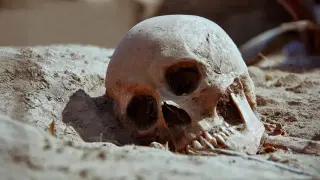
Two Nature studies of ancient dog and wolf DNA reveal the oldest dog remains come from a 15,800–16,000-year-old skull in Pınarbaşı, Turkey, pushing dog domestication back by about 5,000 years. The research shows dogs spread across Europe by around 14,300 years ago, were kept by hunter‑gatherers before the Neolithic farmers’ arrival, and include evidence of puppies buried near human graves, indicating a close human–dog relationship. While dogs clearly split from wolves long before farming, the exact domestication path remains unresolved due to a persistent genetic gap between dogs and wolves.

Ice-Age Dogs: Genetic Evidence Pushes Domestication to 15,800 Years Ago
science16 days ago

Ice-Age Dogs: Genetic Evidence Pushes Domestication to 15,800 Years Ago

Ancient DNA from dog remains across Anatolia, the UK, and Serbia shows dogs were widespread in Europe and western Asia by about 14,000 years ago, with the oldest specimen dating to 15,800 years. Isotopic data indicate dogs ate fish, suggesting they were fed by humans, and puppies buried with a human at Pınarbaşı point to deep emotional bonds. The findings push the origin of domesticated dogs to the last Ice Age and imply rapid spread and sustained human–dog relationships, with many modern European breeds tracing substantial ancestry to these ancient dogs.

Ancient Treponema Genome Rewrites the History of Syphilis
science1 month ago

Ancient Treponema Genome Rewrites the History of Syphilis

Researchers reconstructed the oldest Treponema pallidum genome from a 5,500-year-old Colombian hunter-gatherer, revealing a previously unknown lineage that diverged from modern strains before subspecies formed. The discovery shows treponemal diseases circulated in the Americas long before agriculture or dense populations, suggesting hunter‑gatherer ecologies and mobility helped spread the pathogen and expanding the historical context for syphilis origins.

Ancient DNA shows farming spread into Europe came through women joining hunter-gatherer groups
archaeology1 month ago

Ancient DNA shows farming spread into Europe came through women joining hunter-gatherer groups

New ancient-DNA findings from Belgium, the Netherlands and Rhine-Meuse wetlands reveal that Neolithic farming spread into hunter-gatherer Europe largely via women marrying into forager communities, supporting a permeable frontier model. Over time, later migrations such as Corded Ware from the steppe reshaped the region’s ancestry, leading to populations with mixed hunter-gatherer and farmer lineages rather than a simple farmer replacement.

Ancient mating bias reshapes modern DNA: Neanderthal men, modern women
science1 month ago

Ancient mating bias reshapes modern DNA: Neanderthal men, modern women

New research from the Tishkoff lab shows that Neanderthal DNA on the human X chromosome is surprisingly scarce, while modern-human DNA is enriched on Neanderthal X chromosomes by about 62% compared with their other chromosomes. This pattern points to sex-biased interbreeding where Neanderthal males mated with anatomically modern human females, shaping the modern genome more through mating dynamics than simple genetic incompatibility. Published in Science, the findings suggest ancient social patterns left a lasting imprint on our DNA and offer new insight into human evolution.

DNA reveals tangled kinship in 5,500-year-old Gotland gravesite
archaeology1 month ago

DNA reveals tangled kinship in 5,500-year-old Gotland gravesite

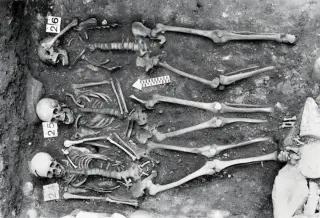
A DNA analysis of 5,500-year-old burials at Ajvide on Gotland, Sweden, uncovers complex kinship networks among Neolithic hunter-gatherers: many graves held distant relatives rather than immediate family, including a teen girl whose father’s bones were placed atop her grave, with bones moved from elsewhere; the study suggests kinship beyond the immediate family shaped burial practices.

Dire Wolves Grow Up at Colossal Biosciences, Snacking on Deer Marks Maturation
science1 month ago

Dire Wolves Grow Up at Colossal Biosciences, Snacking on Deer Marks Maturation

Colossal Biosciences has brought dire wolves Romulus and Remus to life from ancient DNA, raised with surrogate dog mothers, and they are now about 16 months old with maturation to around age three. They recently fed on their first deer carcass and also catch small prey on Colossal’s 2,000+ acre preserve, illustrating their wolf nature rather than domestication. A female pup named Khaleesi, born Jan. 2025, rounds out the trio. They’re friendly toward staff when fed but remain wild wolves, not pets.

Neanderthals fell to a mosaic of factors, not a single foe
archaeology1 month ago

Neanderthals fell to a mosaic of factors, not a single foe

Extinction of Neanderthals appears to be the result of a mix of regional pressures: small, isolated populations prone to inbreeding and mutational burden, competition with expanding modern humans, and varied demographic dynamics across Eurasia. Genetic evidence confirms interbreeding with Homo sapiens, meaning Neanderthals contributed to the modern human genome, but there is no single smoking gun or uniform fate—different Neanderthal groups disappeared for different reasons over time.

Calabrian Cave DNA Reveals Europe’s Oldest Father–Daughter Birth Case
science2 months ago

Calabrian Cave DNA Reveals Europe’s Oldest Father–Daughter Birth Case

DNA analysis of remains from Grotta della Monaca in Calabria uncovers a 3,700-year-old case of a child born to a father–daughter pair, the earliest such instance confirmed in prehistoric Europe. The population shows strong links to Early Bronze Age Sicily and some movement to northeastern Italy, indicating wider regional networks despite the site’s remote location. Interestingly, most adults lacked the lactase-persistence gene, yet dairy was regularly consumed—likely via yogurt or cheese—demonstrating culturally driven dietary adaptation before genetic changes.