
Biochemist Claims Garage-Synthesized AI Drug Treats Schizophrenia
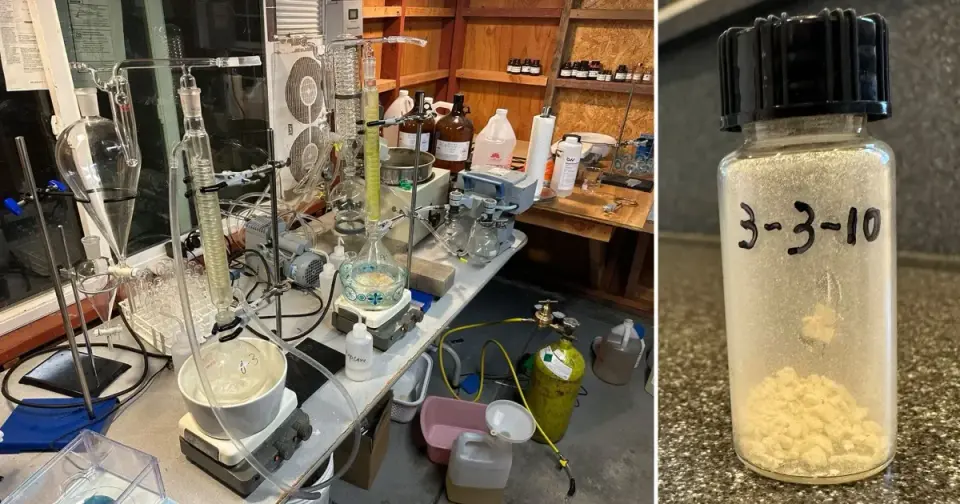
Douglas Yao, a self-described biochemist, announced on X that he synthesized a new schizophrenia treatment called PAC-3310 using ChatGPT and a garage-based laboratory. He claims the compound is an improved version of the recently authorized antipsychotic Cobenfy. While Yao asserts he has synthesized hundreds of AI-designed drugs at a fraction of traditional costs, experts note that the path to FDA approval involves billions of dollars and rigorous clinical trials, making his claims highly improbable.
Key points
- Douglas Yao posted on X on September 8, 2026, claiming he synthesized a new schizophrenia drug named PAC-3310 in a garage lab using ChatGPT for design.
- Yao describes PAC-3310 as a selective M4 muscarinic receptor agonist, modeled after the recently authorized antipsychotic Cobenfy but improved.
- He claims to have used AI to design thousands of small molecule drugs over the past year, including an Alzheimer's treatment, and synthesized approximately 100 of them.
- Yao states his approach costs one-thousandth of the tens of millions typically spent on pre-clinical efficacy evidence, though he uses a box fan as a fume hood.
- The FDA approval process requires pre-clinical testing, three phases of clinical trials, and a costly 12-month New Drug Application review, with only 13.8% of clinical trial drugs gaining full approval.
- No new Alzheimer's drug has been approved since 2003, with over 200 proposed substances failing or being abandoned in trials, highlighting the difficulty of the field.
Background
Recent events highlight the complex relationship between AI and mental health. In September 2026, a California man sued OpenAI, alleging that ChatGPT fueled his delusions and a suicide attempt during a manic episode. Additionally, an inquest in July 2026 found that quitting smoking caused fatal clozapine toxicity in a man with schizophrenia, underscoring the delicate nature of antipsychotic management. Meanwhile, Definium’s LSD-based DT120 achieved a Phase 3 win for anxiety in August 2026, signaling progress in psychedelic therapies, but this contrasts sharply with the stalled progress in Alzheimer's treatments, where no new drug has been approved since 2003.
Why it matters
This incident underscores the risks of unregulated AI-driven drug development and the potential for public misinformation regarding medical breakthroughs. It highlights the gap between AI-generated molecular designs and the rigorous, costly, and time-consuming regulatory processes required for human use. The case also raises concerns about the safety of AI interactions with vulnerable individuals, as seen in recent lawsuits and mental health incidents.
What to watch
Regulatory bodies may monitor such claims to prevent the spread of misinformation, while the scientific community will likely scrutinize Yao's methods and results. The broader implications for AI in drug discovery and the safety of AI interactions with mental health patients will continue to be debated, potentially influencing future guidelines for AI use in medical contexts.
Want the full story? Read the original reporting
Read on Futurism