Financial analyst Josh Brown has added a little-known pharmaceutical company to his recommended stock list, suggesting it may offer significant value to investors despite its low public profile.
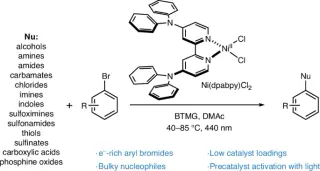
Researchers have developed a new nickel-catalyzed method for forming carbon-heteroatom bonds using visible light and a novel ligand, enabling reactions with electron-rich aryl bromides at catalyst loadings as low as 100 ppm. This approach overcomes previous limitations in oxidative addition reactivity and allows for the coupling of sterically hindered nucleophiles, including tertiary alcohols, without requiring substrate-specific optimization. The method supports gram-scale synthesis and late-stage functionalization of complex pharmaceutical molecules, offering a more efficient alternative to traditional palladium catalysis.
Nine major European pharmaceutical companies urged EU leaders to treat medicines as strategic infrastructure, warning that the continent is losing ground to the US and China in research and investment. The letter cited a drop in Europe’s share of global R&D and clinical trials, urging governments to boost funding and regulatory efficiency to retain competitiveness.
VKTX jumped about 38% in premarket trading after Viking Therapeutics reported that its obesity drug VK2735 helped patients maintain up to 97% of their weight loss when weekly injections were switched to every-other-week dosing over 12 weeks. In a 180-patient study, initial weight losses of 16–19% occurred over 21 weeks, with the exploratory group achieving roughly 22% weight loss after 33 weeks. VK2735 is in Phase 3 (Vanquish program) with about 5,500 patients across two trials, positioning Viking amid fierce competition from Eli Lilly and Novo Nordisk in a market forecast to reach tens of billions of dollars.
Reuters reports AstraZeneca and Bristol Myers Squibb held preliminary talks about a potential merger valued at about $400 billion, which would create one of the world’s largest pharma companies. The status of talks is unclear, and such a deal would face U.S. antitrust scrutiny under the Trump administration and could require divestitures. The companies’ oncology franchises are a focal point, with historical context from Bristol Myers’ Celgene deal cited in analysis.
AstraZeneca and Bristol-Myers Squibb are reportedly in talks to merge, with a combined value near $400 billion that would create one of the world's largest pharma groups; no deal terms have been disclosed and talks could stall. Such a cross-border deal would face antitrust reviews in the US, UK, and EU, with investors awaiting more detail ahead of the Q3 2026 results in late October.
AstraZeneca is in talks with Bristol Myers Squibb about a potential tie-up valued at roughly $400 billion, which would create one of the world's largest drugmakers. Discussions have been ongoing and could materialize soon but may also be delayed or collapse. The deal would reinforce AstraZeneca's US-focused pivot after its NY listing, with both companies keeping comments to themselves as talks proceed.
GSK unveiled a three-year plan to reallocate resources toward its late-stage R&D and move its research HQ from Stevenage to Cambridge, aiming for 1.9 billion pounds in annual savings by 2029 at a 2.4 billion pound one-time cost. Savings will come mainly from procurement and portfolio shifts from mature products to novel therapies, with no jobs figure disclosed yet, and will fund further pipeline assets such as antibody-drug conjugates as the company counters 2028 dolutegravir patent expiry; the London HQ remains, and a 400 million pound Cambridge investment underscores tighter integration with the UK life sciences ecosystem.
Trump floated a plan to impose tariffs on generic drugs in a phased way: 0% for two years starting Aug 1, 2026, then 100% for one year, and 200% thereafter, meaning 100% tariffs would begin in August 2028 to push U.S. production. No formal order has been issued yet. The policy follows ongoing drug-pricing and trade actions, with exemptions for plants under construction and some trading partners; a White House spokesperson did not immediately respond.
The FDA issued a Class II recall of about 2.5 million bottles of prednisolone acetate ophthalmic suspension 1% eye drops by Lupin Pharmaceuticals due to a potential foreign-substance contamination. The products—available in 5 mL, 10 mL, and 15 mL sizes—were initially recalled on June 4 and reclassified on June 30; the drops treat non-infectious eye allergies and inflammation.
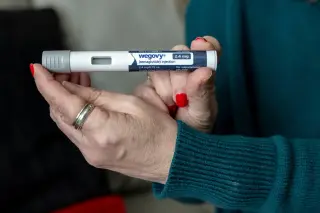
Medicare has started covering certain GLP-1 weight-loss medications with a $50 copay, outlining which drugs are included and the eligibility criteria for beneficiaries. The policy aims to expand access to obesity treatments from manufacturers like Novo Nordisk and Eli Lilly, though coverage may depend on clinical indications and program details.
Pharma firms are racing to bring pill-form GLP-1 weight-loss drugs to market, with aleniglipron and elecoglipron delivering about 11–12% weight loss over 36 weeks in Phase II, thanks to absorption-enhancers or small-molecule designs, while other candidates like Roche CT-996, Ascletis ASC30, and Viking VK2735 are in development. Even if approved, competition could lower prices and expand options beyond injections like Ozempic/Wegovy.
Healthcare stocks outperformed the broader market as Eli Lilly (LLY), Johnson & Johnson (JNJ) and AbbVie (ABBV) hit fresh 52-week highs (with Merck near highs), while biotech names like Moderna led rallies; the Health Care Select Sector SPDR ETF XLV has climbed about 3% year-to-date, signaling renewed investor interest in defensive healthcare plays amid ongoing M&A activity.
Sangamo Therapeutics has filed for bankruptcy and will pursue a sale of substantially all its assets. Eli Lilly and Astellas are named as stalking-horse bidders, with Lilly set to acquire Sangamo’s capsid delivery platform, zinc finger platform, Modular Integrase (MINT) platform, and the ST-506 prion disease program, while Astellas aims to buy the Fabry disease asset isaralgagene civaparvovec. Other assets, including ST-503 for chronic neuropathic pain, giroctocogene fitelparvovec for hemophilia A, and the cell therapy/Treg assets, are not included in these initial bids. Sangamo has faced years of cash strain, Pfizer exiting a key collaboration, and its stock has fallen dramatically, prompting the asset-sale process to maximize value for creditors and stakeholders.
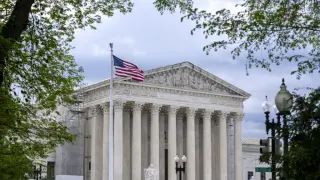
The Supreme Court unanimously ruled Hikma Pharmaceuticals did not infringe Amarin's patents in a skinny-label case, shielding generic manufacturers from certain patent lawsuits and paving the way for more affordable generics while overturning a lower court ruling.