
Amygdala-to-Hypothalamus Circuit Identified as Key Driver of Stress Sensitization
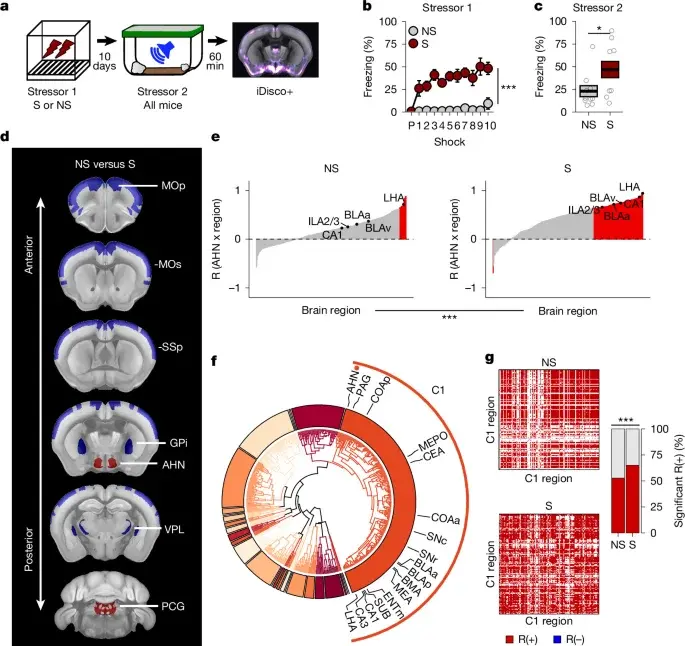
Researchers at Nature have identified a specific neural pathway linking the amygdala to the anterior hypothalamic nucleus (AHN) that regulates how previous adversity increases sensitivity to future stress. Using whole-brain activity mapping and in vivo imaging in mice, the study found that prior stress heightens AHN reactivity and strengthens its functional connectivity with threat-related brain networks. The AHN was shown to process negative valence, with previous stress amplifying the proportion of neurons sensitive to negative stimuli. Causal tests confirmed that inhibiting AHN neurons or blocking amygdala inputs to the AHN abolishes sensitized stress responses, while exciting these neurons promotes defensive behavior. This finding highlights the AHN as a critical node in stress sensitization, offering a new target for understanding conditions like PTSD.
Key points
- Previous stress increases the activity of the anterior hypothalamic nucleus (AHN) and strengthens its correlation with threat-related brain regions, including the amygdala and hippocampus.
- AHN neurons, specifically GABAergic ones, scale their activity with negative valence; previous stress increases the proportion of neurons responsive to negative stimuli.
- Inhibiting AHN neurons during initial stress prevents the development of sensitized responses to subsequent stressors, while exciting them promotes defensive freezing.
- Silencing projections from the amygdala to the AHN abolishes sensitized stress responses, confirming the causal role of this specific circuit.
- The study uses unbiased whole-brain mapping to identify the AHN as a new node in stress regulation, moving beyond traditional focus on the amygdala and prefrontal cortex.
Background
This research builds on prior findings that stress sensitization is a key factor in the development of PTSD and depression, where only a subset of individuals exposed to trauma develop lasting disorders. Previous studies have focused on the amygdala, prefrontal cortex, and hippocampus, but this study identifies the anterior hypothalamic nucleus (AHN) as a critical, previously underexplored region. The AHN has historically been associated with thermoregulation and cardiovascular control, but this work reveals its role in processing negative valence and coordinating threat responses. The findings align with broader research on how chronic stress affects physiological systems, as noted in recent coverage of stress-related cardiovascular risks and circadian influences on resilience. Additionally, the identification of specific neural circuits, such as the amygdala-AHN pathway, complements other recent discoveries of nose-to-brain pathways that modulate anxiety, suggesting multiple neural mechanisms underlie stress responses.
Why it matters
Understanding the neural mechanisms of stress sensitization is crucial for developing targeted treatments for PTSD and other stress-related disorders. By identifying the AHN as a key regulator of negative valence and stress sensitivity, this research provides a new potential target for therapeutic interventions. The finding that specific amygdala-AHN projections are necessary for sensitized responses suggests that disrupting this pathway could prevent the development of long-term stress sensitivity. This could lead to new treatments that focus on modulating specific neural circuits rather than broad pharmacological approaches. Furthermore, the study highlights the importance of previous adversity in shaping brain circuitry, offering insights into why some individuals are more vulnerable to stress-related illnesses than others.
What to watch
Future research will likely focus on translating these findings from mouse models to human brains, exploring whether similar AHN-amygdala circuits exist in humans and how they might be targeted therapeutically. Researchers may also investigate the molecular mechanisms underlying the increased valence sensitivity in the AHN, such as changes in receptor expression or synaptic plasticity. Additionally, studies could explore the role of other inputs to the AHN, such as from the ventral hippocampus, to understand how different brain regions contribute to stress responses. Clinical trials may eventually test interventions that modulate AHN activity, such as optogenetics or pharmacological agents, to prevent or treat stress sensitization in humans.
Want the full story? Read the original reporting
Read on Nature