Tag

Stress Response

All articles tagged with #stress response

New Study Identifies Brain 'Volume Knob' Linking Past Trauma to Future Stress
science-and-health18 days ago

New Study Identifies Brain 'Volume Knob' Linking Past Trauma to Future Stress

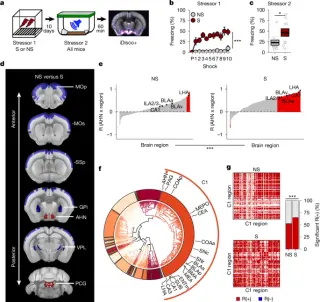
Researchers at Mount Sinai have identified a specific neural circuit in the anterior hypothalamic nucleus (AHN) that acts as a 'volume knob' for stress reactivity. Published in Nature, the study shows that past trauma hyper-sensitizes this region, amplifying future threat responses. Silencing the connection between the amygdala and the AHN prevents this sensitization, offering a new potential target for treating PTSD and anxiety.
Amygdala-to-Hypothalamus Circuit Identified as Key Driver of Stress Sensitization
science19 days ago

Amygdala-to-Hypothalamus Circuit Identified as Key Driver of Stress Sensitization

Researchers at Nature have identified a specific neural pathway linking the amygdala to the anterior hypothalamic nucleus (AHN) that regulates how previous adversity increases sensitivity to future stress. Using whole-brain activity mapping and in vivo imaging in mice, the study found that prior stress heightens AHN reactivity and strengthens its functional connectivity with threat-related brain networks. The AHN was shown to process negative valence, with previous stress amplifying the proportion of neurons sensitive to negative stimuli. Causal tests confirmed that inhibiting AHN neurons or blocking amygdala inputs to the AHN abolishes sensitized stress responses, while exciting these neurons promotes defensive behavior. This finding highlights the AHN as a critical node in stress sensitization, offering a new target for understanding conditions like PTSD.

Sea Jelly Rewinds to Larval Stage to Survive Stress
science6 months ago

Sea Jelly Rewinds to Larval Stage to Survive Stress

Researchers found the warty comb jelly Mnemiopsis leidyi can actively revert from adulthood to a larval form when faced with extreme stress like starvation or trauma. In experiments with 65 adults, 13 fully reversed to larval form after 15 days of limited feeding; another subset with surgically removed adult lobes reversed even faster. The study, published in PNAS, notes the mechanism is unknown and raises questions about whether other species have similar de-aging capabilities, suggesting a new area for understanding animal aging and survival strategies.

health8 months ago

Darken Your Night to Protect Your Heart

New research presented at the American Heart Association's 2025 Scientific Sessions links higher nighttime exposure to artificial light with increased brain activity related to stress, arterial inflammation, and a higher long-term risk of cardiovascular events. The mechanism goes beyond melatonin suppression, as nighttime light activates the body's fight-or-flight system, potentially harming heart health over time. Practical tips include darkening bedrooms, using warm evening lighting, imposing a digital curfew on devices, and minimizing outdoor light to protect circadian rhythm and cardiovascular health.

Study Finds Aging Neurons React Differently to Stress
science1 year ago

Study Finds Aging Neurons React Differently to Stress

Aging impairs neurons' ability to respond to stress, leading to mislocalization of key proteins like TDP-43 and destabilizing RNA metabolism, which may contribute to neurodegenerative diseases such as Parkinson's. The study compared lab-grown aged neurons with human brain tissue, revealing chronic stress and protein mislocalization as key features of neuronal aging.

Gut Microbes Influence Stress and Mental Health
science1 year ago

Gut Microbes Influence Stress and Mental Health

New research highlights the role of gut bacteria in regulating stress responses by interacting with circadian rhythms, suggesting potential for microbiome-based therapies for mental health. The study identifies specific bacteria, like Limosilactobacillus reuteri, as crucial in modulating stress hormones, emphasizing the importance of a balanced microbiome for mental well-being. This discovery opens avenues for developing treatments targeting the gut-brain axis to manage stress-related disorders.

"The Science of 'Hysterical Strength' and the Body's Response to Extreme Stress"
health-and-science2 years ago

"The Science of 'Hysterical Strength' and the Body's Response to Extreme Stress"

The body's fight-or-flight response, triggered by extreme stress, can unlock extraordinary strength and heightened senses, but studying this phenomenon is challenging due to its danger. This response involves the release of adrenaline and noradrenaline, redirecting energy to immediate survival needs and temporarily reducing pain perception. While beneficial in emergencies, chronic stress and sustained hormone release can lead to detrimental physiological outcomes, affecting memory, causing high blood pressure, sleep disorders, and potentially leading to heart disease.

"New Dementia Breakthrough: Uncovering the Role of Stressed Brain Cells in Neurodegenerative Disease"
health2 years ago

"New Dementia Breakthrough: Uncovering the Role of Stressed Brain Cells in Neurodegenerative Disease"

A breakthrough in dementia research from UC Berkely suggests that abnormal protein clumps may not directly kill brain cells, but rather keep the cells' stress response constantly activated, leading to their death. The discovery of a protein complex called SIFI, which both cleans up the clumps and switches off the stress response, could revolutionize treatment for neurodegenerative diseases like Alzheimer's and Parkinson's by focusing on turning off this stress response rather than solely targeting the protein accumulations. This new understanding could change the approach to treating these diseases and make it more feasible.

"Linking Stress and Neurodegenerative Disease: Uncovering the Role of Brain Cells"
health2 years ago

"Linking Stress and Neurodegenerative Disease: Uncovering the Role of Brain Cells"

Researchers at the University of California, Berkeley, have discovered that the accumulation of aggregated proteins isn't what kills brain cells in neurodegenerative diseases, but rather the body's failure to turn off the cells' stress response. Their findings suggest that a drug forcing the stress response to shut down can save cells mimicking early-onset dementia, offering a potential treatment option for certain neurodegenerative diseases. The discovery of a protein complex called SIFI, which cleans up aggregates and turns off the stress response, could lead to the development of therapies to silence the stress response while maintaining the cell's cleanup of protein aggregates, potentially changing how neurodegenerative diseases are treated.

"The Unrecognized Nighttime Sound: Your Body's Built-in Stress Response"
health-and-wellness2 years ago

"The Unrecognized Nighttime Sound: Your Body's Built-in Stress Response"

Many people experience a strange sound, known as pulsatile tinnitus, before falling asleep, which is a sign that the body is stuck in a stress response. This phenomenon, exacerbated by stress, can make it difficult to concentrate or sleep. While relaxation techniques, therapy, sound generators, dietary changes, and seeking professional help can alleviate this issue, it's important to address the underlying stress and anxiety causing these manifestations.