Tag

Animal Models

All articles tagged with #animal models

New Study Finds Dog Brain Pathology Mirrors Human Alzheimer’s, Offering New Research Model
science-and-health3 days ago

New Study Finds Dog Brain Pathology Mirrors Human Alzheimer’s, Offering New Research Model

A new study published in npj Dementia reveals that aging dogs with Canine Cognitive Dysfunction (CCD) exhibit brain protein deposits in the same regions as humans with Alzheimer’s. This finding suggests dogs are a superior natural model for studying neurodegeneration compared to mice, potentially accelerating the development of diagnostics and treatments. Researchers identified elevated blood markers, specifically glial fibrillary acidic protein (GFAP), in dogs with high brain protein deposits, offering a potential biomarker for early detection in both species. While 99% of Alzheimer’s drugs fail in human trials after showing promise in mice, dogs naturally develop the misshapen proteins associated with dementia, providing a more accurate platform for testing therapies. The research highlights the value of companion dogs in understanding how environmental and genetic factors influence brain aging, with implications for earlier diagnosis and improved care for both pets and people.
Amygdala-to-Hypothalamus Circuit Identified as Key Driver of Stress Sensitization
science8 days ago

Amygdala-to-Hypothalamus Circuit Identified as Key Driver of Stress Sensitization

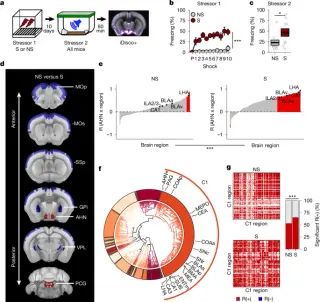
Researchers at Nature have identified a specific neural pathway linking the amygdala to the anterior hypothalamic nucleus (AHN) that regulates how previous adversity increases sensitivity to future stress. Using whole-brain activity mapping and in vivo imaging in mice, the study found that prior stress heightens AHN reactivity and strengthens its functional connectivity with threat-related brain networks. The AHN was shown to process negative valence, with previous stress amplifying the proportion of neurons sensitive to negative stimuli. Causal tests confirmed that inhibiting AHN neurons or blocking amygdala inputs to the AHN abolishes sensitized stress responses, while exciting these neurons promotes defensive behavior. This finding highlights the AHN as a critical node in stress sensitization, offering a new target for understanding conditions like PTSD.

New Study Fuses Millions of Human Neurons into Mouse Brains to Probe Disorders
science16 days ago

New Study Fuses Millions of Human Neurons into Mouse Brains to Probe Disorders

Researchers in California have successfully fused millions of human neurons into the brains of mice to create a new model for studying brain disorders. This advanced technique allows scientists to observe how human brain cells integrate and function within a living animal, potentially accelerating the development of treatments for neurodevelopmental and neurocognitive diseases.

Cross-species brain science: uniting data to reveal general principles
science7 months ago

Cross-species brain science: uniting data to reveal general principles

The author argues that neuroscience, despite vast cross-species data, remains fragmented into species-specific frameworks, hindering the discovery of general brain principles. She calls for making cross-species dialogue a core organizational principle, using differences between species (such as how hippocampal theta appears across rodents and humans) to constrain and refine theory rather than treat them as anomalies. The piece also urges frameworks that link signals across scales, reforms in training and conferences, and funding and publication practices that reward cross-species theory testing rather than single-model optimization.

Rethinking Animal Testing in Biomedical Research
science11 months ago

Rethinking Animal Testing in Biomedical Research

The article discusses the nuanced debate between traditional animal models and new approach methodologies (NAMs) in biomedical research, emphasizing that both have their strengths and limitations. It advocates for a balanced, model-specific approach rather than outright replacing animal testing with NAMs, highlighting technological advances and ethical considerations.

Mitochondrial Gene Editing Uncovers Memory and Metabolic Links
science1 year ago

Mitochondrial Gene Editing Uncovers Memory and Metabolic Links

Researchers at Korea University College of Medicine used mitochondrial gene editing to induce mutations in the ND5 gene in mice, revealing significant impacts on brain function, metabolism, and thermoregulation. The study found that these mutations led to learning deficits, hippocampal atrophy, and obesity, highlighting the potential of mitochondrial gene editing for developing therapies for mitochondrial diseases and related neurodegenerative and metabolic disorders.

"Linking Altered Brain pH and Lactate Levels to Neuropsychiatric Disorders"
health-and-science2 years ago

"Linking Altered Brain pH and Lactate Levels to Neuropsychiatric Disorders"

A global research effort involving 131 scientists from 105 laboratories across seven countries has identified alterations in brain pH and lactate levels as key indicators of metabolic dysfunction in a spectrum of neuropsychiatric and neurodegenerative disorders, including intellectual disability, autism spectrum disorders, schizophrenia, bipolar disorder, depressive disorders, and Alzheimer’s disease. The study, published in eLife, suggests a potential common biological underpinning for these conditions and highlights the impact of both genetic and environmental factors on brain metabolism. The findings could pave the way for new approaches to diagnosing and treating these complex disorders, although further research is needed to understand the exact mechanisms at play in humans.

New Study Reveals Omicron BA.5 Subvariant's Increased Virulence and Replication Speed
health3 years ago

New Study Reveals Omicron BA.5 Subvariant's Increased Virulence and Replication Speed

A new study in mice has found that the Omicron BA.5 variant of SARS-CoV-2 is more virulent and replicates faster than its predecessors. The study, published in Science Advances, used genetically modified mice to compare different subvariants of Omicron and found that BA.5 caused more severe illness and death, likely due to its ability to rapidly replicate early during infection. This study provides a valuable animal model for studying the new Omicron variants and understanding their behavior, as previous animal models did not exhibit illness with other variants. The findings suggest that targeting cytokines with drugs could potentially lessen symptoms and provide a treatment option.