
AP-1–driven memory enables adaptive cancer genome regulation
TL;DR
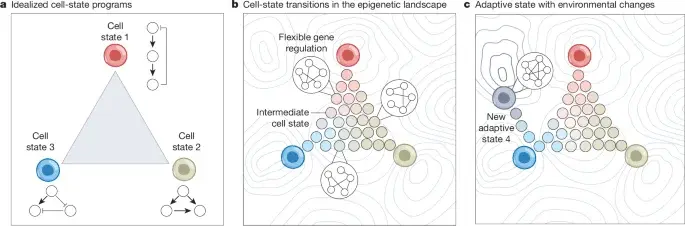
A Nature Perspective argues that cancer drug resistance can arise from adaptive cellular states learned by the AP-1 transcription factor network. By combinatorial AP-1 binding, stress-induced feedback, and epigenetic memory, AP-1 can reprogram the genome to create drug-tolerant states, effectively encoding a population-level memory that guides ongoing resistance and potentially informing broader biology beyond cancer.
- A mechanism for adaptive genome regulation in cancer Nature
- How do cancer cells 'learn' to resist treatment? Medical Xpress
- Molecular Movie Reveals How Cancer Evades Targeted Therapy Bioengineer.org
- The protein that helps cancer cells survive treatment Umeå universitet
- Neutron reflectometry reveals how cancer cells can avoid programmed cell death Lightsources.org
Want the full story? Read the original reporting
Read on Nature