
Bat alphacoronavirus KY43 reveals human CEACAM6 as an entry route
TL;DR
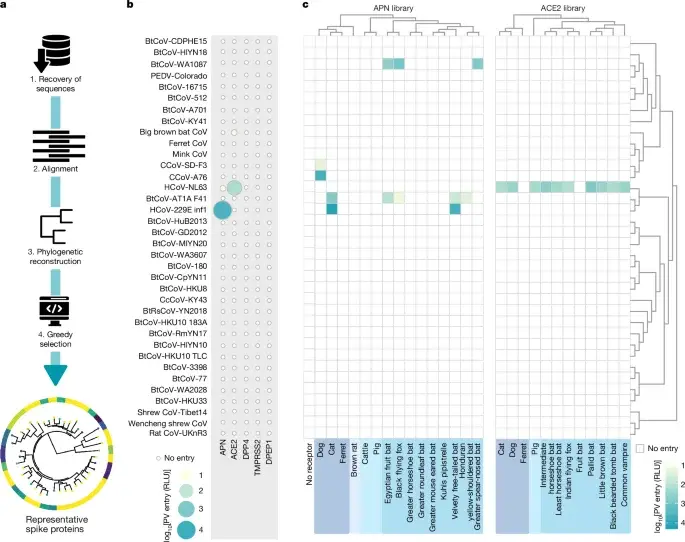
A computationally guided screen of alphacoronavirus spikes identified CcCoV-KY43 from heart-nosed bats that can enter human cells by binding the human receptor CEACAM6; the RBD engages the amino-terminal IgV-like domain of CEACAM6, and CEACAM6 overexpression confers permissivity. Structural and binding analyses, plus serology from Kenya, show CEACAM6 usage by Kenyan and related bat viruses, with broader but variable CEACAM6 tropism in non-African strains. The findings imply alphacoronaviruses using CEACAM6 may be geographically widespread and pose a potential zoonotic risk, underscoring the need for surveillance and pandemic preparedness.
- Heart-nosed bat alphacoronaviruses use human CEACAM6 to enter cells Nature
- Bat coronavirus develops new ways to infect humans, says study The Telegraph
- Scientists find a new way coronaviruses can get into human cells University of Cambridge
- Bat coronavirus reveals a new way into human cells, widening the map of future spillover risks Medical Xpress
Want the full story? Read the original reporting
Read on Nature