
Catfish Melanoma Confirmed as Fourth Natural Transmissible Cancer
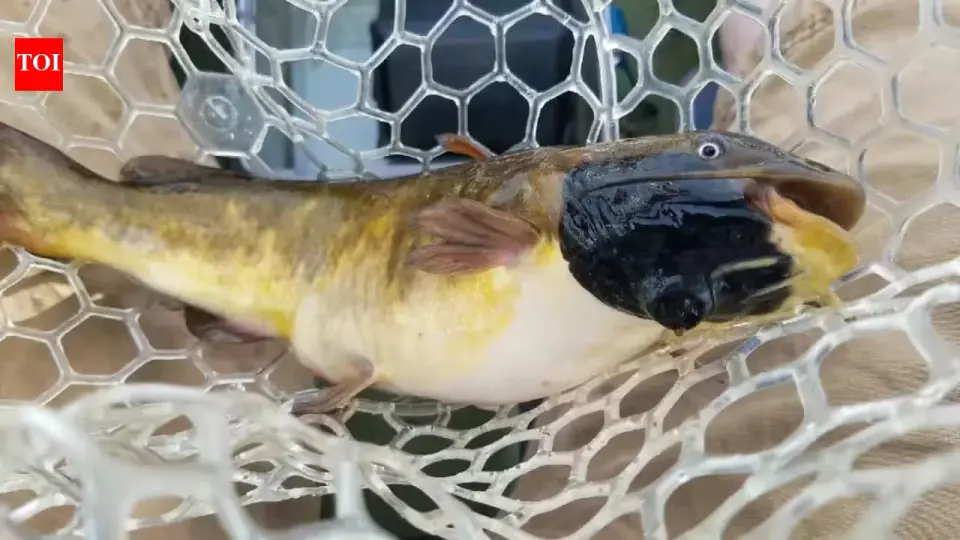
Scientists have confirmed that black skin lesions on brown bullhead catfish in Lake Memphremagog are a contagious melanoma, marking the first known transmissible cancer in fish and the fourth in nature. Genomic analysis shows the tumors share a common lineage, affecting up to 37% of the population, though transmission routes remain unclear and no human risk exists.
Key points
- Researchers identified the black patches on brown bullhead catfish as melanoma, a skin cancer that spreads between individuals.
- Whole-genome sequencing revealed that tumor DNA is more closely related to other tumors than to the host fish, confirming a clonal transmissible cancer.
- The condition affects 23% to 37% of sampled fish in Lake Memphremagog, a lake shared by Vermont and Quebec.
- This is the first documented transmissible cancer in a freshwater species and the fourth in the animal kingdom, joining dogs, Tasmanian devils, and shellfish.
- Transmission mechanisms are not yet confirmed, with hypotheses including direct contact during spawning or environmental factors like sediment and arsenic.
- The lake serves as a drinking water source for over 175,000 people, but researchers emphasize there is no evidence the cancer poses a risk to humans.
Background
Initial reports of black skin patches on catfish began in 2012, with biologists initially suspecting environmental contaminants or viruses. By 2014, nearly one in three fish showed lesions. Previous archive coverage noted the discovery as a potential transmissible cancer, but the recent Nature study provides the definitive genomic evidence. The discovery follows earlier observations of transmissible cancers in dogs, Tasmanian devils, and bivalves, but this is the first in a fish species.
How outlets are covering it
The Times of India highlights the mystery of the transmission route, noting it could be linked to mating behavior or water filtration, similar to other species. The New York Times emphasizes the rarity of the event, noting that transmissible cancers are exceedingly rare in catfish and that the cancer seems to have arisen from a single cell. ABC News focuses on the public health aspect, clarifying that while the lake provides drinking water for 175,000 people, there is no risk to humans. The Nature study provides the technical basis, using whole-genome sequencing to show that tumor genomes are clonally related, distinct from host genomes, which rules out conventional somatic mutations or viral causes.
Why it matters
This discovery expands the known list of transmissible cancers, offering a new model for studying how cancer cells evade immune systems and survive in new hosts. It also raises ecological concerns about the long-term impact on fish populations, as heavily diseased fish can survive for years, though the overall population effect is still unknown.
What to watch
Researchers are expanding sampling to other waters in Vermont, New Hampshire, Maine, and New Brunswick to map the distribution of the cancer. They are also investigating ponds and rivers in Massachusetts to determine if the cancer originated there. Further studies will aim to confirm the exact transmission route, whether through direct contact during spawning or environmental factors.
- Anglers had been reporting black skin patches among catfish in Vermont lake. Now scientists have found it The Times of India
- Scientists Discover The Fourth Transmissible Cancer Known To Science Forbes
- Deep in This Lake, a Contagious Cancer Is Spreading The New York Times
- Brown bullhead catfish melanoma represents a novel transmissible cancer Nature
- Scientists discover 1st known likely transmissible cancer in wild catfish ABC News - Breaking News, Latest News and Videos
Want the full story? Read the original reporting
Read on The Times of India