
Eight integrated mutational footprints map drivers and therapy response in prostate cancer
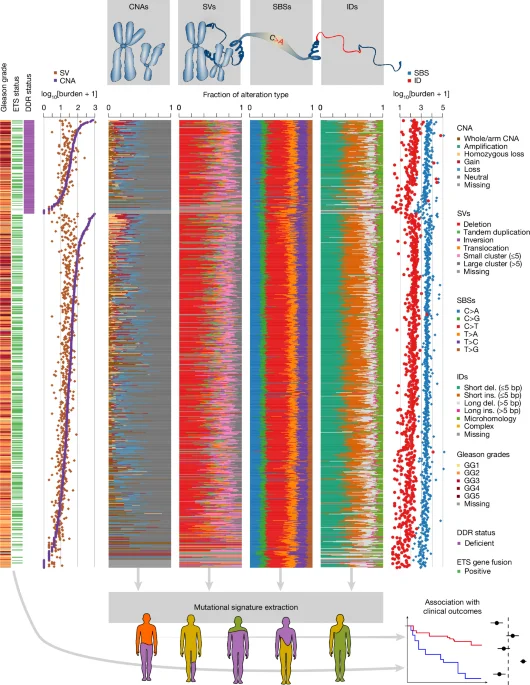
A Pan Prostate Cancer Group study analyzes 959 primary prostate cancers with whole-genome sequencing to extract SNV, indel, CNA, and complex SV signatures, identifying eight integrated mutational footprints (IMFs) that explain 85% of tumors. These IMFs reveal AR-driven mutagenesis, replication stress, and DDR defects, correlate with metastasis risk, and in metastatic settings predict response to androgen receptor pathway inhibitors, with IMF6 linked to AR signaling and replication stress and enriched in African ancestry. The IMFs were validated in TCGA-PRAD and Hartwig cohorts, suggesting WGS-based biomarker-driven risk stratification and therapy selection, though prospective validation is needed.
- Integrated signatures define mutational processes in prostate cancer Nature
- Genetic ‘footprints’ could show why some prostate cancers become deadly The Times
- Scientists reveal what damages the DNA in most prostate cancers EurekAlert!
- Prostate Cancer Genomic Analysis Links Mutational Footprints to Clinical Outcomes Inside Precision Medicine
- High-risk cancers could be identified sooner after major prostate cancer study The Independent
Reading Insights
1
8
94 min
vs 95 min read
99%
18,879 → 95 words
Want the full story? Read the original article
Read on Nature