
Enzyme-guided glycosylation and amidation reengineer polyene antifungals
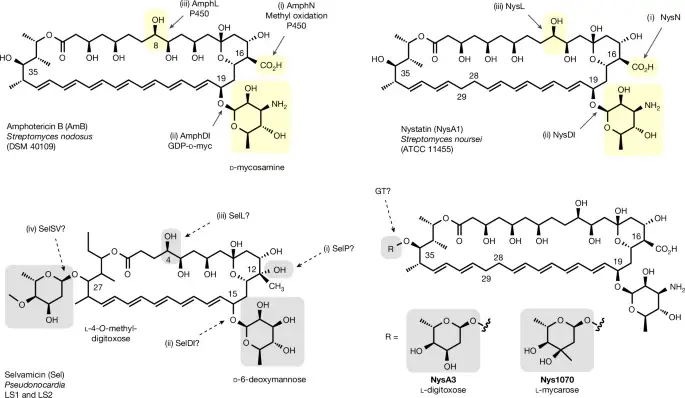
Genome mining uncovers new glycosyltransferases that install diverse second sugars onto clinically used polyenes (e.g., amphotericin B and nystatin), enabling in vitro and in vivo production of glycosylated derivatives with improved solubility and antifungal activity. The study also expands the substrate scope of the amidotransferase PcsA to convert the detrimental carboxylate of polyenes into amide- or hydroxamate-type functionalities. Combining a second sugar with carboxylate modifications yields derivatives such as AmB‑l‑digitoxose and Nys34 that show higher potency against multiple fungal pathogens and, in several cases, reduced mammalian toxicity, with Nys34 demonstrating in vivo efficacy in a mouse invasive aspergillosis model via a mechanism distinct from ergosterol binding. Overall, enzymatic diversification provides cleaner, scalable routes to safer, more effective polyene therapeutics and expands the mechanistic landscape of polyene action.
- Enzymatic glycosylation and amidation reshapes polyene bioactivity Nature
- Enzymes open a new path to improve antifungal drugs C&EN
- Genome Mining Points to Less Toxic, More Potent Polyene Antifungals in Mice Genetic Engineering and Biotechnology News
- UK researchers develop safer antifungal drugs to tackle drug-resistant infections Innovation News Network
- New antimicrobials may help combat deadly drug-resistant infections Bioengineer.org
Want the full story? Read the original reporting
Read on Nature