
Mice retain memories despite losing half their synapses during artificial hibernation
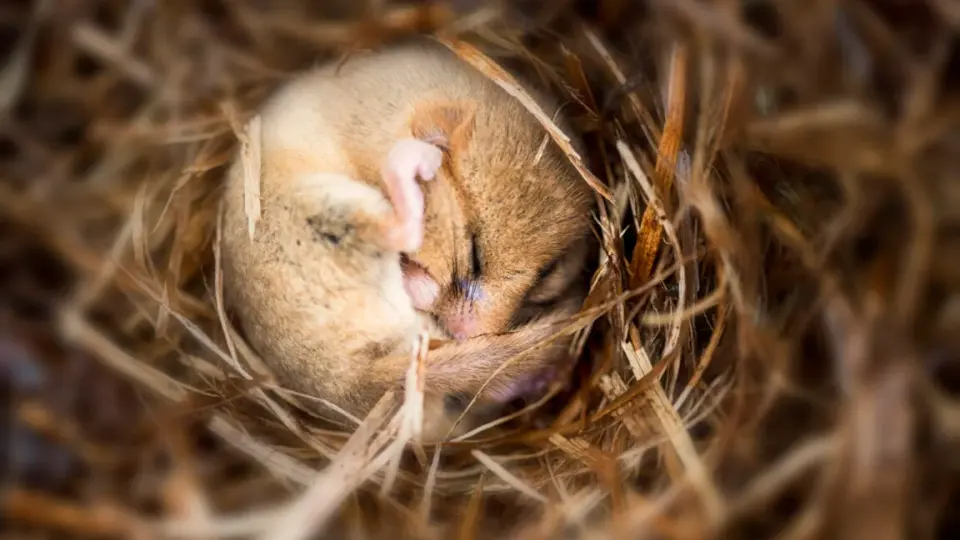
A study in Science reveals that mice can lose over 50% of their hippocampal synapses during induced hibernation yet retain specific memories. Researchers found that clustered 'engram' synapses survive the synaptic purge, suggesting memory storage relies on network architecture rather than individual connection strength.
Key points
- Kazumasa Tanaka’s team at the Okinawa Institute of Science and Technology induced a hibernation-like state in mice using Q-neuron activation, dropping body temperature to 20°C for 48 hours.
- During this state, hippocampal neuronal activity dropped by 70%, and more than half of the synapses were physically eliminated.
- Despite this massive synaptic loss, mice performed equally well on contextual fear conditioning and spatial navigation tasks after waking up.
- Analysis showed that synapses arranged in tight spatial clusters survived, while isolated synapses were pruned and later reformed at the same locations.
- A third of the surviving clustered synapses were attached to rare 'multisynaptic boutons,' where one presynaptic terminal connects to multiple postsynaptic spines.
- Tanaka notes that while clustered synapses safeguard memory, non-clustered ones may aid in recall, though the exact mechanism remains unknown.
Background
This finding challenges the traditional view that memories are stored solely in the strengthening of individual synapses. Previous research, including our August 14 coverage, highlighted that memory persistence might depend on resilient network topology. While related studies on sleep and neurodegeneration (such as the August 16 Alzheimer’s sleep breakthrough) focus on inflammation and sleep disruption, this study isolates the structural integrity of synaptic clusters as a potential buffer against massive neural pruning.
How outlets are covering it
Ars Technica provides a detailed technical breakdown, emphasizing the use of tetrodes and serial block-face scanning electron microscopy to track synaptic loss and the specific role of multisynaptic boutons. It also highlights a negative control experiment using cytochalasin D, which impaired memory despite similar synaptic loss, suggesting that the *pattern* of loss matters, not just the quantity. Ars Technica also notes Tanaka’s caution that the study is associative rather than causal, as researchers cannot yet selectively manipulate synaptic clustering without affecting other network aspects. DongA Science offers a more concise summary, focusing on the practical outcome: mice retained memories of food mazes and shock locations. It frames the discovery as a challenge to the long-held assumption that synapses must remain physically in place for memories to persist, highlighting the distinction between clustered synapses that safeguard memory and non-clustered ones involved in recall.
Why it matters
These findings suggest that memory is more robust than previously thought, potentially relying on the architecture of neural networks rather than individual synaptic strength. This could have implications for understanding neurodegenerative diseases and developing therapies that preserve cognitive function despite synaptic loss. The potential for artificial hibernation to reset brain states to a 'factory setting' could also have future applications in treating conditions like epilepsy, though clinical translation remains distant.
What to watch
Tanaka’s lab is planning further studies to analyze synaptic clusters more thoroughly and is investigating whether artificial hibernation can suppress epilepsy development in mouse models. The team also aims to move research to rats and monkeys to assess the impact of artificial hibernation on brain function in larger mammals, addressing safety and ethical concerns before any potential human applications.
- Putting mice into hibernation causes a major loss of synapses Ars Technica
- We May Be Wrong About How the Brain Stores Memory SingularityHub
- [Science Video] OIST shows why our brains can lose half their synapses yet keep memories 동아사이언스
- What Happens to Memories When Half the Brain’s Synapses Disappear? Technology Networks
Want the full story? Read the original reporting
Read on Ars Technica