
Mystery Mushroom Causes Consistent Miniature Hallucinations
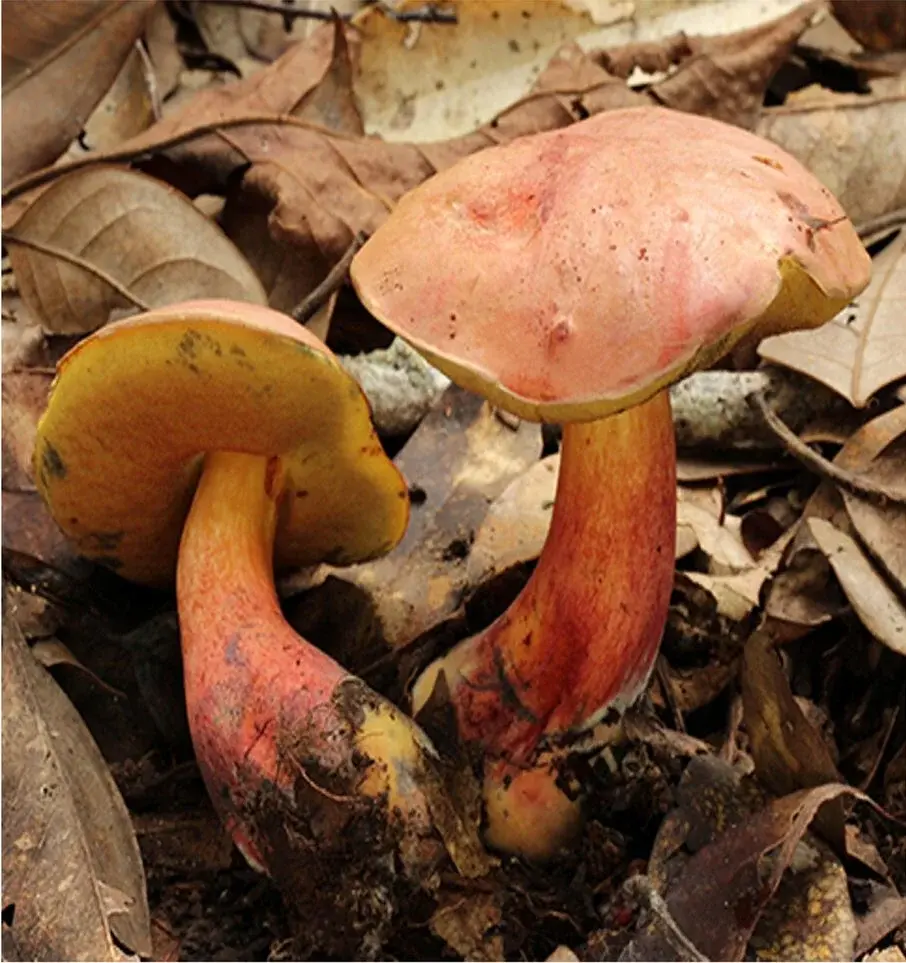
A reddish bolete mushroom known as Lanmaoa asiatica causes vivid, consistent hallucinations of tiny people, a phenomenon termed Lilliputian hallucinations. While the fungus is a popular food in China's Yunnan Province, it requires strict cooking times to avoid severe toxicity, including liver failure and death. Recent research confirms the species exists in the Philippines and possibly Papua New Guinea, yet scientists remain unaware of the specific chemical mechanism driving these unique, prolonged visions.
Key points
- Lanmaoa asiatica, formally described in 2015, is a bolete mushroom widely consumed in Yunnan, China, but requires at least 15 minutes of cooking to neutralize toxins.
- Consuming the mushroom raw or undercooked triggers Lilliputian hallucinations, where individuals see miniature, elf-like creatures, a symptom also linked to schizophrenia or alcohol withdrawal.
- Unlike other psychedelics, this mushroom produces highly consistent visions of tiny people, with effects lasting one to three days and onset occurring 12 to 24 hours after ingestion.
- DNA sequencing by researcher Colin Domnauer confirmed that similar mushrooms in the Philippines and potentially Papua New Guinea belong to the same species, despite visual differences.
- Chemical analysis at the Natural History Museum of Utah found no psilocybin or ibotenic acid, indicating the hallucinogenic compound is entirely unknown to science.
- Historical references to similar effects date back to the 1930s in Papua New Guinea and a 3rd-century CE Daoist text, suggesting a long history of these unique neurological events.
Background
The phenomenon of Lilliputian hallucinations has been documented in various medical contexts, such as schizophrenia and alcohol withdrawal, but the mushroom Lanmaoa asiatica produces these visions with unusual reliability. Earlier research in the 1960s by mycologist Roger Heim and author Gordon Wasson failed to identify the active compound in Papua New Guinea specimens, leading to a decades-long gap in scientific understanding. Recent genomic studies have reignited interest in this frontier, aiming to understand consciousness and the specific neural pathways triggered by this unknown substance.
Why it matters
Identifying the active compound in Lanmaoa asiatica could revolutionize the understanding of consciousness and reality perception. The mushroom's ability to produce consistent, specific hallucinations offers a unique model for studying the brain, potentially leading to new treatments for conditions that cause spontaneous Lilliputian hallucinations. Furthermore, the discovery highlights the dangers of uncooked wild fungi, which can cause fatal organ failure, emphasizing the need for precise culinary and medical knowledge regarding natural toxins.
What to watch
Researchers, including Colin Domnauer, are continuing to search for the specific psychoactive compound responsible for the hallucinations. Future expeditions to Papua New Guinea may confirm whether the local 'nonda' mushroom is the same species or a distinct one that evolved similar effects independently. Successful identification of the compound could lead to new pharmacological applications and a deeper understanding of how the brain constructs visual reality.
Want the full story? Read the original reporting
Read on BBC Wildlife Magazine