
Neuronal migration causes non-lethal DNA breaks via mechanical stress
TL;DR
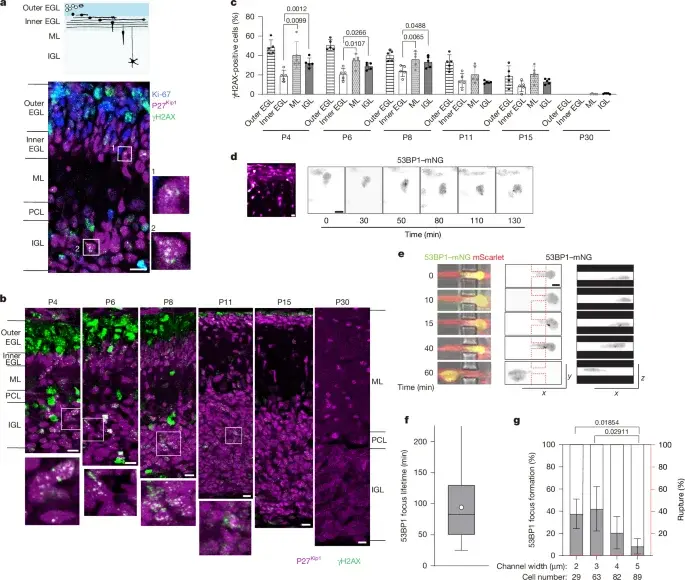
During brain development, migrating neurons experience mechanical stress as they squeeze through narrow spaces, triggering widespread DNA double-strand breaks without nuclear envelope rupture. Breaks arise from TOP2β–DNA cleavage complexes and are repaired mainly by non-homologous end joining; damage concentrates in transcriptionally inactive chromatin and retrotransposons. In mice with early Lig4 loss in migrating neurons, DSBs persist with mild transcriptional changes and age‑related motor deficits, suggesting developmental DNA damage can subtly affect brain function and disease risk.
Want the full story? Read the original reporting
Read on Nature