
Brain Shifts Tasks to Temporal Cortex to Enable True Multitasking
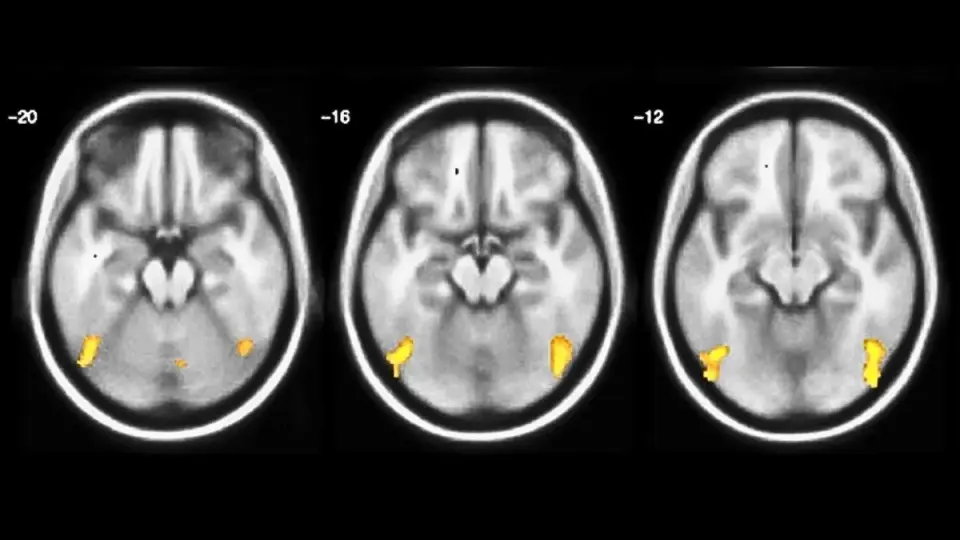
A new study from Georgetown University Medical Center demonstrates that extensive practice allows the brain to offload specific tasks from the prefrontal cortex to the temporal cortex, enabling true multitasking. By shifting cognitive load to areas responsible for memory and object recognition, the brain frees up its primary executive center to handle additional duties simultaneously.
Key points
- Researchers at Georgetown University Medical Center published a study in the Journal of Cognitive Neuroscience showing that the brain can rewire itself to perform true multitasking after extensive practice.
- The study utilized functional magnetic resonance imaging (fMRI) and electroencephalogram (EEG) on 11 participants who completed over 30,000 mental challenges sorting car images across several weeks.
- Initial brain scans showed activity in the prefrontal cortex, but after training, significant work shifted to the temporal cortex, which handles memory encoding and object recognition.
- Participants who offloaded more car-sorting work to the temporal cortex performed better on a secondary dual-task challenge, indicating reduced mental overload.
- Senior author Maximilian Riesenhuber stated that this circuitry change allows the brain to do two things at once, challenging the view that multitasking is merely rapid task-switching.
Background
This finding builds on earlier reports from June 2026 regarding practice-induced brain rewiring and complements recent research on neuroplasticity in spaceflight and fatherhood, which also highlight how environmental or experiential factors can reorganize brain function and resource allocation.
Why it matters
Understanding how the brain offloads tasks to the temporal cortex offers insights for improving education, medical training, and artificial intelligence development. It suggests that expertise can be cultivated to enhance cognitive efficiency and multitasking capabilities in critical real-world scenarios, such as radiology.
What to watch
Researchers plan to investigate which specific types of tasks are most likely to be offloaded to other brain regions, aiming to further understand how the prefrontal cortex can be freed for other cognitive demands.
Want the full story? Read the original reporting
Read on ScienceAlert