
Two opposing neural populations drive brain-wide blood flow across arousal states
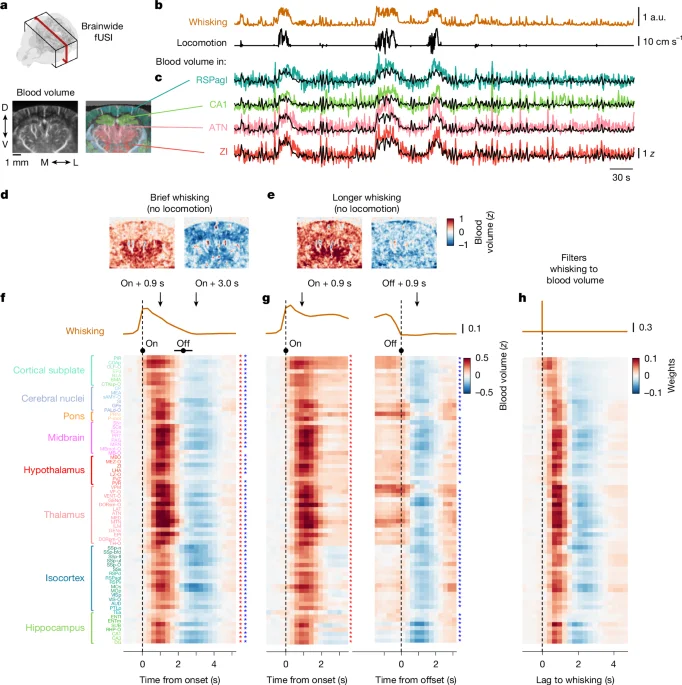
A brain-wide study using functional ultrasound imaging (fUSI) and Neuropixels reveals two opposing neural populations—Arousal+ neurons that ramp up with arousal/whisking and Arousal− neurons that ramp down—that together shape brain-wide blood-volume fluctuations. Each population has a distinct haemodynamic response, and their combined activity predicts blood volume across brain regions and states better than bulk firing alone, with both populations present in every region. This two-population model reconciles regional and state differences in neurovascular coupling and accounts for brain-wide blood-flow changes during arousal and sensory-driven activity.
Reading Insights
0
48
71 min
vs 72 min read
99%
14,297 → 85 words
Want the full story? Read the original article
Read on Nature