
US Reopens Border to Mexican Cattle Despite New Screwworm Cases in Sonora
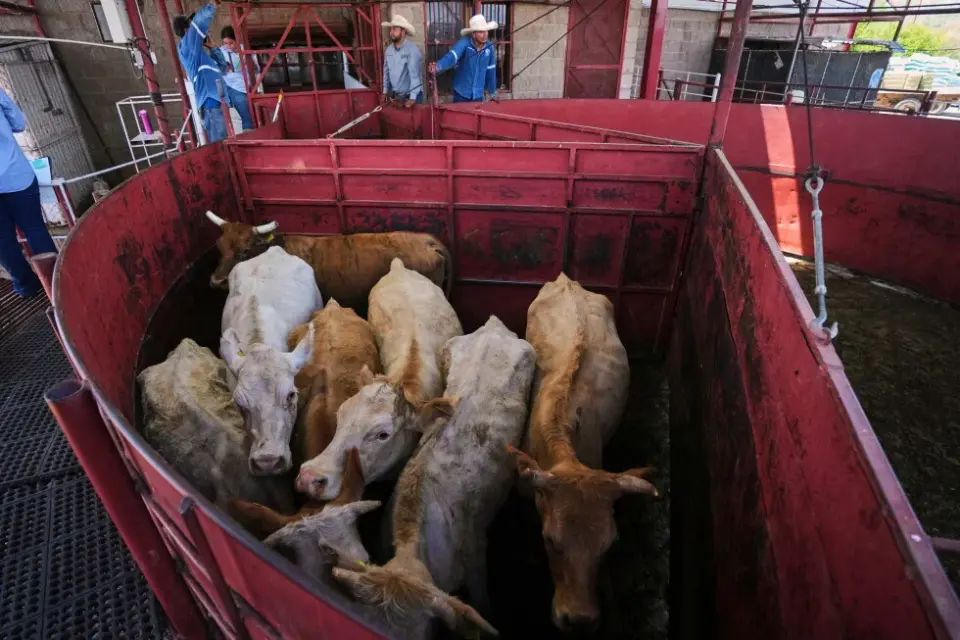
The US Department of Agriculture (USDA) began reopening the Douglas, Arizona, border crossing to Mexican cattle on August 24, 2026, despite a new screwworm case reported in Sonora days earlier. Economists predict this move will not significantly lower US beef prices, which remain high due to a historic 75-year low in the US cattle herd. While Mexican ranchers welcome the return of trade, US producers fear increased competition and potential disease spread. The USDA plans to open additional ports in New Mexico within 30 to 60 days, contingent on ongoing monitoring.
Key points
- USDA reopened the Douglas, Arizona, port to Mexican cattle on August 24, 2026, after a yearlong ban due to the New World screwworm.
- Sonora, Mexico, reported its first screwworm case in the community of Munihuasa just days before the reopening, though the USDA proceeded with the plan.
- Initial import limits are set at 700 cattle per day, rising to 900 in the second week and eventually reaching 1,300 per day.
- US beef prices remain high primarily because the US cattle herd is at a 75-year low, not solely due to the border closure, according to agricultural economists.
- The USDA plans to open ports in Santa Teresa and Columbus, New Mexico, within 30 to 60 days, but will not open Texas ports soon due to active screwworm cases there.
- Mexican ranchers lost up to $1,000 per animal during the closure, while US meatpackers like Tyson Foods closed plants due to cattle shortages.
Background
The US imposed a ban on Mexican cattle imports in November 2024, with the current closure starting in July 2025, to prevent the spread of the New World screwworm. Previous coverage noted that the USDA framed the reopening as necessary to protect livestock and affordability ahead of the 2026 midterms. In August 2026, President Trump announced a 90-day tariff-free import window for 300,000 metric tons of ground beef to lower prices, a move criticized by cattle industry groups. Tyson Foods recently closed plants in Illinois and Utah due to historic cattle shortages, though economists noted these closures would not immediately lower beef prices.
How outlets are covering it
CNN highlights the tension between US ranchers, who fear competition and disease, and Mexican producers, who suffered significant financial losses during the closure. CNN notes that US Cattlemen’s Association officials view the reopening as a political move to lower beef prices before the midterms. Fortune emphasizes the irony of Sonora, chosen for its lack of screwworm cases, reporting its first infection just before the reopening, and details the strict new import protocols, including electronic ID tags and canine screening. Reuters focuses on the phased reopening timeline and the USDA’s commitment to pausing imports if risks increase, while noting Mexico’s efforts to expand sterile-fly production. AP News, the primary source, stresses that economists do not expect the reopening to lower beef prices, attributing high costs to the US cattle herd’s historic low rather than the border closure alone.
Why it matters
The reopening affects millions of consumers facing high beef prices and thousands of ranchers on both sides of the border. It tests the effectiveness of US biosecurity measures against the screwworm, which has already been detected in Texas and New Mexico. The outcome will influence future trade policies and the viability of the US cattle industry, which has lost half its producers in a generation due to foreign competition and drought. Additionally, the move has political implications ahead of the 2026 midterms, as beef prices remain a key issue for voters.
What to watch
The USDA will monitor the Douglas port for 30 days before potentially opening the Santa Teresa port in New Mexico, followed by Columbus 60 days later. Mexico aims to export up to 200,000 head of cattle in 2026 if Chihuahua ports reopen in the fourth quarter. The US is building a sterile-fly production facility in Texas, expected to be completed by spring 2027. If screwworm cases increase in Sonora or Chihuahua, the USDA may pause the reopening. The long-term impact on beef prices remains uncertain, as the US cattle herd continues to recover from a 75-year low.
- Economists don't expect reopening the US to Mexican cattle imports to reduce high beef prices AP News
- The US-Mexico cattle border is reopening. Not every American rancher is celebrating CNN
- The U.S. picked the Mexican state without screwworm to reopen the border. Then it got screwworm Fortune
- Mexico Boosts Sterile Fly Dispersal as US Reopens Cattle Trade U.S. News & World Report
- What to expect from Mexican cattle imports Beef Magazine
Want the full story? Read the original reporting
Read on AP News