
Texas Tech Faculty Face Censorship Fears as New Chancellor Directives Restrict Race and Gender Curriculum
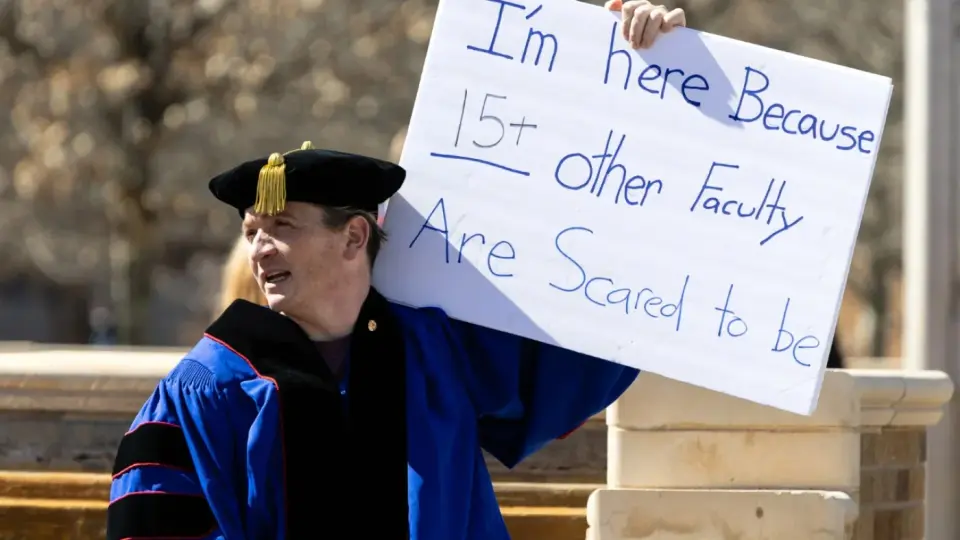
Texas Tech University has implemented sweeping restrictions on teaching topics related to race, sex, gender identity, and sexual orientation, leading to faculty self-censorship, student protests, and legal challenges. Chancellor Brandon Creighton’s directives go beyond state law, causing some tenured professors to leave the institution.
Key points
- Chancellor Brandon Creighton issued directives in December 2025 and April 2026 restricting how professors teach about race, sex, gender identity, and sexual orientation, and calling for the phase-out of related academic programs.
- The restrictions exceed the requirements of Senate Bill 37, which prohibits core courses from requiring students to adopt beliefs that one race or sex is inherently superior, but does not ban discussion of identity politics or systemic oppression.
- Faculty members report uncertainty and fear of disciplinary action, leading to self-censorship; some have removed course materials, such as 'The Silence of the Lambs,' due to potential interpretations of transgender themes.
- Several tenured professors, including biology professor Lisa Limeri and history professor Jacob Bell, have left Texas Tech for positions in other states, citing the restrictions as a threat to academic freedom and accurate teaching.
- Faculty groups have filed a federal lawsuit arguing the policies violate constitutional rights and are too vague, while student groups like 'Raiders Against Censorship' have organized to inform peers about the changes.
Background
This development follows the 2023 passage of Senate Bill 17, which banned diversity, equity, and inclusion offices at Texas public universities, and the 2025 enactment of Senate Bill 37, which gave university governing boards greater authority over curriculum. Texas Tech is part of a broader trend in Texas higher education where multiple university systems have adopted restrictions beyond state mandates, with Texas A&M also facing federal challenges over similar policies.
Why it matters
The restrictions at Texas Tech highlight a growing conflict between state-level legislative control and academic freedom in higher education, potentially setting a precedent for how other public universities in Texas and beyond may limit curriculum on sensitive social issues. The resulting faculty exodus and legal challenges could impact the university's reputation and the quality of education provided to students.
What to watch
The federal lawsuit challenging the constitutionality and vagueness of the policies is expected to proceed, while more faculty may leave Texas Tech in the coming year. The university administration has not responded to requests for comment, and the long-term impact on curriculum and faculty retention remains uncertain.
Want the full story? Read the original reporting
Read on NPR