
Kavanaugh blocks emergency bid to force Michigan citizenship vote onto November ballot
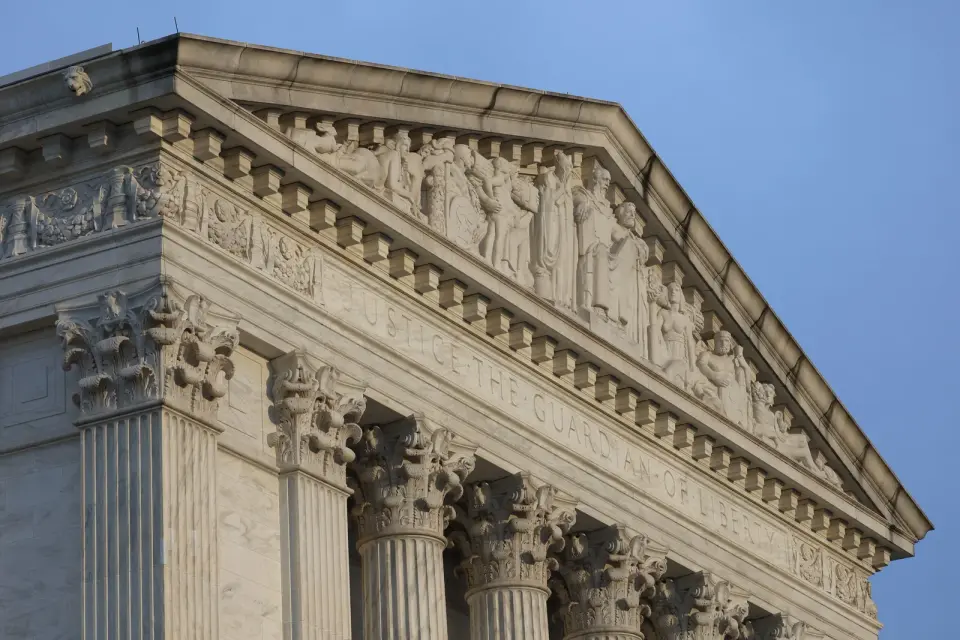
The U.S. Supreme Court has denied an emergency request from Americans for Citizen Voting (ACVM) to force a proof-of-citizenship amendment onto Michigan’s November 2026 ballot. Justice Brett Kavanaugh, who handles emergency appeals for the Michigan region, rejected the application without explanation on September 3, just one day before the state’s deadline to finalize ballots. The denial effectively kills the measure for the upcoming midterm election, as the Michigan Supreme Court also declined to intervene. The dispute centers on a signature shortfall: while ACVM collected over 750,000 signatures, state officials found only 626 valid in a sample, falling short of the 629 required for automatic certification. The resulting 2-2 deadlock on the Board of State Canvassers prevented the measure from advancing, leading ACVM to seek federal intervention despite the state’s argument that the issue belongs in state courts.
Key points
- Justice Brett Kavanaugh denied ACVM’s emergency application on September 3, 2026, preventing the proof-of-citizenship amendment from appearing on the November ballot.
- The Michigan Board of State Canvassers deadlocked 2-2 on August 24 after finding only 626 valid signatures in a 1,000-signature sample, three short of the 629 needed for automatic ballot access.
- ACVM claimed to have gathered over 750,000 signatures, but opponents alleged forgery and errors, including edits made with crayon, leading to a House investigation.
- The proposed amendment would have required photo ID for voting, eliminated affidavit-based ID verification, and mandated a systematic review of the Qualified Voter File.
- Michigan Attorney General Dana Nessel argued the Supreme Court should not intervene in a state administrative proceeding, noting that federal law already bars noncitizens from voting.
Background
This decision concludes a rapid legal battle that began in March 2026 when ACVM submitted its petition. Earlier coverage noted that the group faced a five-month delay in the signature review process, which they cited as a due process violation. The measure also included provisions for a state-funded hardship program for voters unable to afford photo ID. The denial follows a pattern of recent Supreme Court emergency rulings on election-related issues, including a separate denial of a Missouri redistricting request and a ruling allowing White House construction to proceed.
How outlets are covering it
ACVM and its counsel, John Bursch, argued that the state’s rejection violated due process and equal protection, claiming the board’s delay and invalidation of signatures denied voters their voice. They emphasized that if the measure stayed off the ballot, voters would never have the chance to decide on it. In contrast, the Michigan Board of State Canvassers and Attorney General Dana Nessel characterized the request as 'highly unusual,' arguing that the Supreme Court should not act as the first court to review a state administrative decision. Nessel’s office pointed out that ACVM had only appealed to the Michigan Supreme Court four days prior and that the signature shortfall was based on a rigorous sample review. While ACVM focused on the finality of the denial, state officials emphasized the procedural irregularity of bypassing state courts and the lack of evidence that noncitizens were voting in large numbers.
Why it matters
The ruling prevents a significant change to Michigan’s voting laws for the 2026 midterms, maintaining the current system where voters attest to citizenship via affidavit at registration. It also highlights the tension between state ballot access rules and federal judicial intervention, with the Supreme Court reaffirming its reluctance to override state administrative processes in election matters. For ACVM, the loss is likely permanent for this cycle, as the ballot deadline has passed, though the group may pursue other legal avenues in the future.
What to watch
The proof-of-citizenship amendment is effectively dead for the November 2026 election. ACVM may consider litigation in other states or wait for future election cycles to retry the measure. The Michigan House investigation into the signature review process may continue, potentially leading to procedural changes for future ballot initiatives. The Supreme Court is expected to return to its regular docket in early October, where it may address other pending election-related cases, including mail-in ballot restrictions.
- Supreme Court denies right-wing group’s bid to force Michigan proof-of-citizenship measure on November ballot Democracy Docket
- Supreme Court refuses to put proof-of-citizenship amendment on Michigan ballot Courthouse News
- Justice Kavanaugh won’t order proof of citizenship measure to go on Michigan ballot MS NOW
- State of Michigan responds to Americans for Citizen Voting appeal to US Supreme Court Michigan Advance
- Michigan election officials urge high court to reject ballot challenge The Detroit News
Want the full story? Read the original reporting
Read on Democracy Docket