
Iowa Court Halts Army’s Plan to Detonate Unstable Lead Azide Amid Lead Exposure Fears
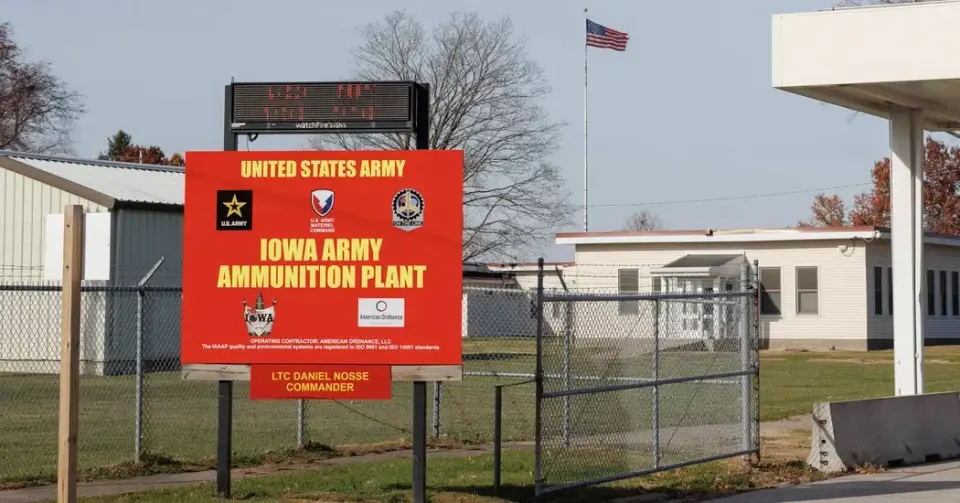
A federal appeals court has temporarily suspended an EPA permit allowing the U.S. Army to detonate approximately five tons of unstable lead azide at the Iowa Army Ammunition Plant in Middletown. The blast, originally scheduled for November 20 and postponed to November 23, was blocked after environmental groups sued over concerns that the explosion would spread toxic lead dust across farmland, waterways, and communities. While the Army argues the material is too volatile to transport safely, critics contend the detonation poses unacceptable health risks and that safer chemical neutralization options were improperly rejected. The Justice Department opposes the stay, citing imminent safety hazards, but the court’s order leaves the detonation’s future uncertain pending further rulings.
Key points
- The 8th U.S. Circuit Court of Appeals temporarily suspended the EPA’s emergency permit for the detonation on November 20, halting the planned blast at the Iowa Army Ammunition Plant in Middletown.
- The Army plans to destroy 68 drums of lead azide, a volatile compound that has become unstable due to drying out after being stored in a water-ethanol solution for 20 years.
- Environmental groups, including the Iowa Environmental Council and the Sierra Club, argue the blast could spread lead dust up to 100 miles, contaminating soil, crops, and the Mississippi River, with no safe level of lead exposure.
- The Army rejected a chemical neutralization option proposed by MuniRem Environmental, citing safety risks from handling the unstable material, and opted for detonation as the lowest-risk immediate option.
- Acting Army Secretary Adam Telle postponed the blast from November 20 to November 23, citing a forecasted temperature drop that could further destabilize the material, but did not specify a time for the operation.
- The Justice Department opposes the court’s stay, arguing the deteriorating explosive poses an imminent danger and that federal regulations allow waste treatment without a permit in emergencies, a stance environmental attorneys called an 'extraordinary and extreme backstop.'
Background
In March 2026, the Army discovered nearly five tons of rapidly deteriorating lead azide at the Iowa Army Ammunition Plant. The material, stored in underground tanks for 20 years, had become unstable due to drying out, posing a risk of accidental explosion. The Army initially awarded a contract to MuniRem Environmental, a Georgia-based firm that uses chemicals to neutralize munitions, but canceled the deal two months later, citing safety concerns, and opted for detonation instead. The EPA issued an emergency permit for the detonation, effective from November 13, 2026, to February 11, 2027, allowing the Army to proceed without a full environmental review. This decision followed a pattern of federal actions to dispose of hazardous materials, such as the UK’s removal of masts from the sunken SS Richard Montgomery in the Thames Estuary in September 2026, though that case involved unexploded ordnance rather than chemical contamination. The current dispute highlights tensions between federal agencies prioritizing immediate safety and environmental groups advocating for thorough risk assessments and community input.
How outlets are covering it
The New York Times emphasizes the Army’s rejection of a safer chemical neutralization option, highlighting the decision to detonate despite concerns about lead contamination. Iowa Public Radio focuses on the legal battle, noting the Justice Department’s opposition to the court’s stay and the argument that the explosive poses an imminent danger, while environmental groups challenge the adequacy of the EPA’s emergency permit. CNN highlights public concern, with residents expressing fears about lead exposure, broken windows, and long-term soil contamination, and questions the Army’s communication and transparency. NPR provides a broader context, noting the Army’s rescheduling of the blast to November 23 and the involvement of the University of Iowa in air quality monitoring, while also emphasizing the lack of public awareness until earlier this week. The sources differ in emphasis: The Times and CNN focus on the environmental and public health risks, Iowa Public Radio on the legal and regulatory disputes, and NPR on the logistical and communication aspects of the delay. All sources agree that the detonation poses significant risks, but they diverge on whether the Army’s decision was justified by safety concerns or whether safer alternatives were improperly dismissed.
Why it matters
The case underscores the challenges of managing hazardous materials in a way that balances immediate safety with long-term environmental and public health risks. The potential spread of lead dust across hundreds of square miles, including farmland and waterways, could have lasting impacts on communities and ecosystems, particularly in a state like Iowa, which already has the second-highest cancer rate in the U.S. The dispute also highlights tensions between federal agencies and environmental groups over the adequacy of emergency permits and the need for transparent, community-informed decision-making. The outcome could set a precedent for how similar cases are handled in the future, influencing policies on hazardous material disposal and public engagement in environmental decisions.
What to watch
The 8th U.S. Circuit Court of Appeals is expected to rule on the motion to block the blasts, with the EPA planning to file a response by November 22. If the court upholds the stay, the Army may need to explore alternative disposal methods, such as chemical neutralization, or delay the blast further. If the stay is lifted, the Army may proceed with the detonation on November 23, subject to revised weather forecasts and safety measures. The outcome will likely depend on the court’s assessment of the Army’s safety arguments versus the environmental groups’ concerns about lead contamination and public health. Additionally, the activation of the State Emergency Operations Center and ongoing coordination between federal and state agencies suggest that preparations for the blast, if it proceeds, will involve extensive monitoring and public communication efforts.
- The Army Plans to Blow Up Tons of Toxic Explosives. It Rejected a Safer Option. The New York Times
- Justice Department to oppose bid to block the US Army's lead detonation in Iowa Iowa Public Radio
- Judge halts Army’s plan to detonate 5 tons of bomb-making material as Iowa residents worry about lead exposure CNN
- Federal court puts EPA permit for Middletown detonations on hold WQAD
- Dems aim to block Iran war funding. And, Army delays lead azide detonation in Iowa NPR
Want the full story? Read the original reporting
Read on The New York Times