
Report: US Private Jets Pollute 14x More Than Commercial Flights While Paying Minimal Taxes
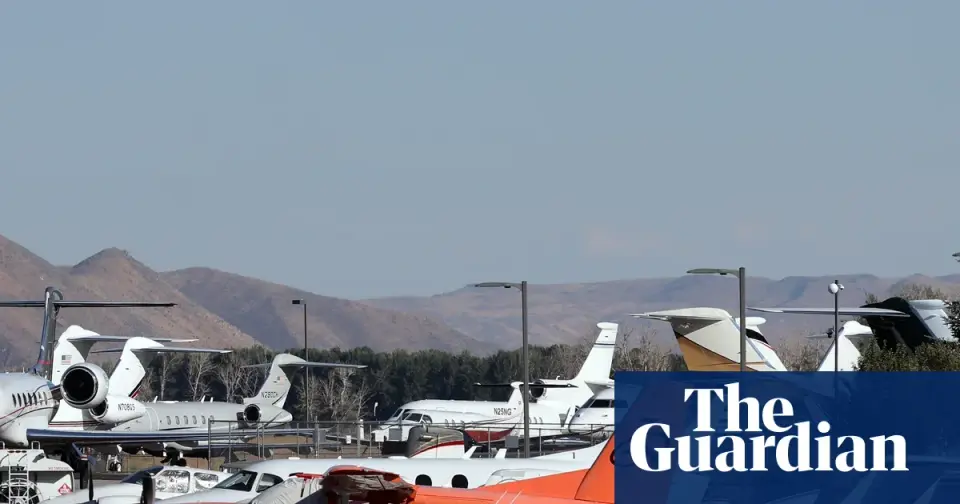
A new report by the Institute for Policy Studies (IPS) reveals that private jet travel in the US is surging, with emissions rising 50% since 2019. Despite accounting for 16% of flight operations, private jets contribute less than 0.6% of aviation taxes. The report highlights that private jet owners have a median wealth of $190 million and that these flights produce 10 to 14 times the carbon emissions of commercial flights per passenger. IPS argues that the ultra-wealthy are subsidizing their luxury travel through public infrastructure and tax breaks, while commercial passengers bear the costs of increased congestion and delays.
Key points
- The Institute for Policy Studies (IPS) released 'High Flyers 2026,' detailing that private jet emissions have increased by 50% in recent years.
- Private jets and charter services represent 16% of Federal Aviation Administration (FAA) flight operations but contribute less than 0.6% of taxes to the Airport and Airway Trust Fund.
- The median wealth of a private jet owner is $190 million, while fractional owners have a median wealth of $140 million.
- IPS states that private jet passengers generate 10 to 14 times more direct carbon emissions than commercial airline passengers.
- The National Business Aviation Association spent approximately $2 million on lobbying in 2025 to secure tax breaks for private jet owners.
- The 2026 FIFA World Cup alone generated over 92,000 private jet flights, emitting 150 kilotons of excess emissions.
Background
This report builds on previous concerns regarding the expansion of private aviation infrastructure and its environmental impact. While earlier coverage focused on spaceflight and AI, the current focus shifts to terrestrial luxury transport. The IPS report is part of a series examining the costs of private jet excess, following previous reports on philanthropy and executive compensation. The surge in private jet use coincides with growing wealth inequality and increased lobbying efforts to maintain tax advantages for the ultra-wealthy.
How outlets are covering it
The Institute for Policy Studies (IPS) and The Guardian emphasize the inequity of private jet travel, highlighting the disproportionate environmental impact and tax avoidance by the ultra-wealthy. IPS co-author Chuck Collins argues that public tax dollars should not subsidize the 'reckless air travel habits' of the billionaire class. In contrast, BlackJet, a private aviation company, promotes a 'sustainable private aviation initiative' that offsets 300% of flight emissions to account for non-CO2 warming effects. BlackJet argues that standard carbon offsets are insufficient and that their model addresses the full climate impact of aviation. However, IPS criticizes the promotion of Sustainable Aviation Fuels (SAFs) as a 'green smokescreen' that may not effectively reduce greenhouse emissions. The two perspectives differ on the viability of voluntary offsetting versus mandatory regulatory and tax reforms.
Why it matters
The report underscores the growing environmental and economic burden of private jet travel on public infrastructure and climate stability. As private jet usage increases, it contributes to airspace congestion, delays, and higher costs for commercial passengers. The disparity in tax contributions and environmental impact highlights a significant policy gap that could exacerbate wealth inequality and climate change. Addressing this issue through tax reforms and infrastructure restrictions could help ensure that the costs of luxury travel are borne by those who benefit from it, rather than the general public.
What to watch
IPS is urging lawmakers to pass the End Subsidies for Private Jets Act and to repeal the one-year accelerated bonus depreciation of private jet purchases. They also recommend increasing taxes on private jet fuel and implementing a luxury tax on jet sales. Additionally, IPS calls for the removal of provisions in the ALERT Act that would prevent jurisdictions from levying use fees and taxes on private jets. These legislative actions aim to ensure that private jet owners pay their fair share of the costs associated with their travel and to fund sustainable transportation alternatives.
- Private jets pollute up to 14 times as much as commercial planes and are undertaxed in US, report says The Guardian
- High Flyers 2026: The High Cost of Private Jet Excess Institute for Policy Studies
- Aviation's Climate Problem Is Bigger Than CO2: BlackJet's Sustainable Private Aviation Initiative Is Built to Address All of It markets.businessinsider.com
Want the full story? Read the original reporting
Read on The Guardian