
Elephant Butte Reservoir Hits 1.4% Capacity, Prompting Calls for Infrastructure Fixes
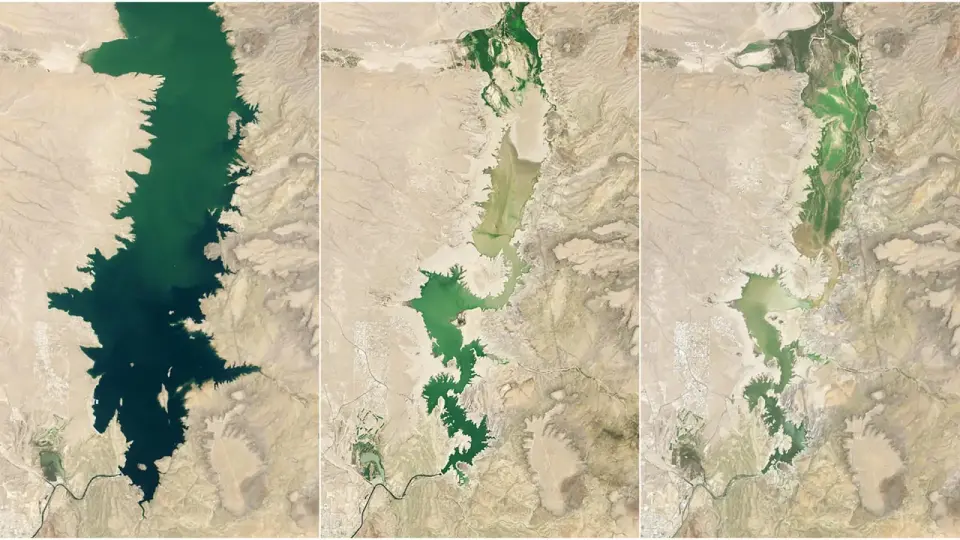
New Mexico’s Elephant Butte Reservoir reached its lowest level since 1971, holding only 1.4% of its capacity in July 2026. While NASA attributes this to extreme drought and record early snowmelt, local advocates argue that infrastructure inefficiencies and management decisions also contribute to the crisis. The reservoir’s decline has exposed submerged debris, closed boat ramps, and reduced tourism revenue, prompting calls for a protected minimum water pool and improved conveyance channels to sustain the Rio Grande’s agricultural and economic systems.
Key points
- Elephant Butte Reservoir, New Mexico’s largest, dropped to 1.4% capacity in July 2026, its lowest level since 1971.
- NASA Earth Observatory links the decline to prolonged drought and the earliest snowmelt on record in the southern Rocky Mountains.
- The low levels exposed long-submerged debris and forced the closure of boat ramps at Elephant Butte Lake State Park.
- Agricultural water releases ended after July 28, 2026, allowing the reservoir to begin a slow recovery.
- Local business leader James Prendamano argues that drought alone does not explain the reservoir’s state, citing infrastructure and management issues.
- Prendamano’s 25-page brief proposes restoring the Low Flow Conveyance Channel and establishing a 200,000-acre-foot minimum pool.
Background
The Rio Grande basin has faced increasing water stress in recent years, with previous droughts in 2013 and 2023 causing significant drops in reservoir levels. The 2026 crisis is the most severe in over half a century, highlighting the vulnerability of the region’s water supply to climate variability and management practices. The reservoir’s decline has also raised broader concerns about water allocation between New Mexico and Texas, as well as the long-term sustainability of agriculture and recreation in the arid Southwest.
How outlets are covering it
NASA Earth Observatory emphasizes the role of climate factors, noting that the 2026 decline was driven by extreme drought and record early snowmelt, which reduced water inflows to the Rio Grande. In contrast, James Prendamano, a New Mexico business leader, argues that drought alone does not explain the reservoir’s current state. He points to discrepancies between wet and dry years, suggesting that upstream water losses, infrastructure inefficiencies, and management decisions also play a significant role. Prendamano’s brief calls for restoring the Low Flow Conveyance Channel and establishing a protected minimum pool, while NASA focuses on using satellite data to improve water allocation and monitoring. The two perspectives highlight a tension between climate-driven scarcity and human-managed water systems.
Why it matters
The collapse of Elephant Butte Reservoir threatens the livelihoods of farmers, the economy of Sierra County, and the sustainability of the Rio Grande basin. The reservoir supports nearly 160,000 acres of farmland, including crops like alfalfa, cotton, and Hatch green chiles, as well as hydroelectric power and tourism. The closure of boat ramps and the drop in visitor numbers have already reduced revenue for local businesses and state parks. If the reservoir remains at such low levels, it could exacerbate water shortages in both New Mexico and Texas, strain interstate water rights, and undermine the region’s ability to adapt to future climate changes. The crisis also underscores the need for better water management and infrastructure investment to ensure long-term sustainability.
What to watch
State officials have ended agricultural water releases, allowing the reservoir to begin a slow recovery. James Prendamano is pushing for his proposals to be reviewed by water managers and officials, including the restoration of the Low Flow Conveyance Channel and the establishment of a 200,000-acre-foot minimum pool. NASA’s Western Water Action Office continues to use satellite data to monitor water availability and support resource allocation. Sierra County has declared a local disaster and requested state and federal assistance to address the immediate and long-term impacts of the reservoir’s decline. The coming months will likely see increased debate over water management, infrastructure investment, and the future of the Rio Grande basin.
- New Mexico’s largest reservoir plunges to just 1.4% full Science Daily
- Water managers say New Mexico should prepare for reductions in river flows krqe.com
- Rio Grande in Albuquerque reaches historic dryness level Source New Mexico
- Rio Grande Down 31% on the Week to 177 cfs, 78% Below Normal Buttondown
- New Mexico’s Elephant Butte Reservoir Hits Lowest Level Since 1971, Sparking Push to Expedite Refilling EIN News
Want the full story? Read the original reporting
Read on Science Daily