
Hawaii's 550-Year-Old Hōlei Sea Arch Collapses After Tropical Storm
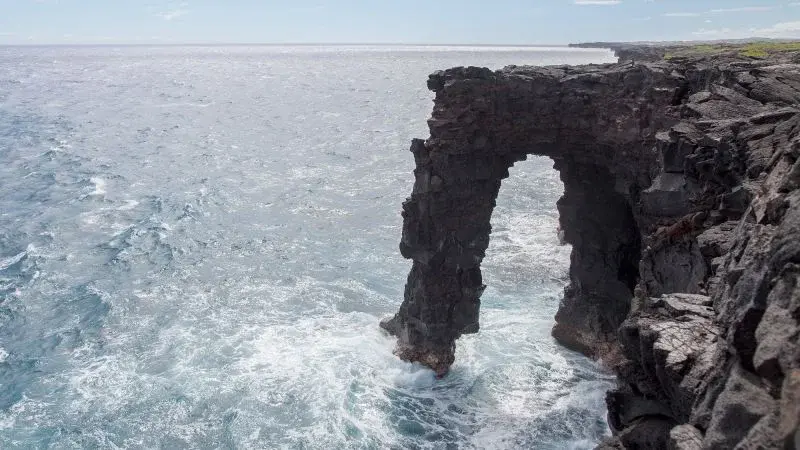
The Hōlei Sea Arch, a 90-foot landmark in Hawaii's Volcanoes National Park, collapsed into the Pacific Ocean between September 23 and 28, 2026. Formed 550 years ago by lava flows, the structure fell due to differential erosion, a process park officials had long predicted would eventually destroy the arch. The collapse occurred during a closure for Tropical Storm Nolo, with the structure confirmed standing on September 23 but missing when the park reopened on September 28.
Key points
- The Hōlei Sea Arch, standing 90 feet tall on the Big Island's southern coast, collapsed into the Pacific Ocean.
- The structure was formed approximately 550 years ago by lava flows from one of the island's six volcanoes.
- The collapse occurred between September 23 and September 28, 2026, during a park closure for Tropical Storm Nolo.
- The National Park Service confirmed the arch was still standing on September 23 but was gone when the park reopened on September 28.
- Officials attributed the collapse to differential erosion, a process where softer rock erodes faster than harder rock.
- Park staff had long warned that the arch was temporary and would eventually crumble into the sea.
Background
Hawaii has faced significant environmental challenges recently, including Hurricane Lowell in September 2026, which damaged infrastructure on Lanai and Kauai and prompted federal disaster declarations. The collapse of the Hōlei Sea Arch follows a period of increased storm activity in the Pacific, with Tropical Storm Nolo causing the park closure during which the arch fell. This event highlights the ongoing geological changes in Hawaii's volcanic landscape, where natural formations are subject to erosion and eventual disappearance, as noted by the National Park Service in its long-term descriptions of the site.
Why it matters
The collapse of the Hōlei Sea Arch marks the end of a significant natural landmark that had drawn visitors for centuries, underscoring the impermanence of geological formations in Hawaii's volcanic environment. The event highlights the role of differential erosion in shaping coastlines and the challenges of predicting the exact timing of such natural changes. It also serves as a reminder of the impact of weather events, like Tropical Storm Nolo, on vulnerable natural structures and the need for safety precautions in unstable areas. The loss of the arch may affect tourism and local cultural connections to the site, while also illustrating the dynamic nature of Hawaii's landscape.
What to watch
The National Park Service will likely monitor the cliff edges for further instability and enforce safety measures to prevent visitors from approaching dangerous areas. The park may also update its educational materials to reflect the loss of the Hōlei Sea Arch and the ongoing process of differential erosion. Visitors may seek alternative viewpoints or engage in educational programs about the geological history of the area. The park may also assess any potential risks to nearby infrastructure or visitor areas due to the collapse.
- Hawaii’s famed Hōlei Sea Arch has collapsed CNN
- Centuries-old lava rock arch in Hawai'i Volcanoes National Park collapses into ocean following Hurricane Nolo FOX Weather
- Hawaii’s famed Hōlei Sea Arch has collapsed into Pacific Ocean ABC7 Eyewitness News
- Watch: 500-Year-Old Hawaii Landmark Collapses Into Pacific SURFER Magazine
- Hawaii's famed Holei Sea Arch is gone forever SFGATE
Want the full story? Read the original reporting
Read on CNN