
King Tides Break Records in South Florida, Submerging Streets and Sparking Climate Concerns
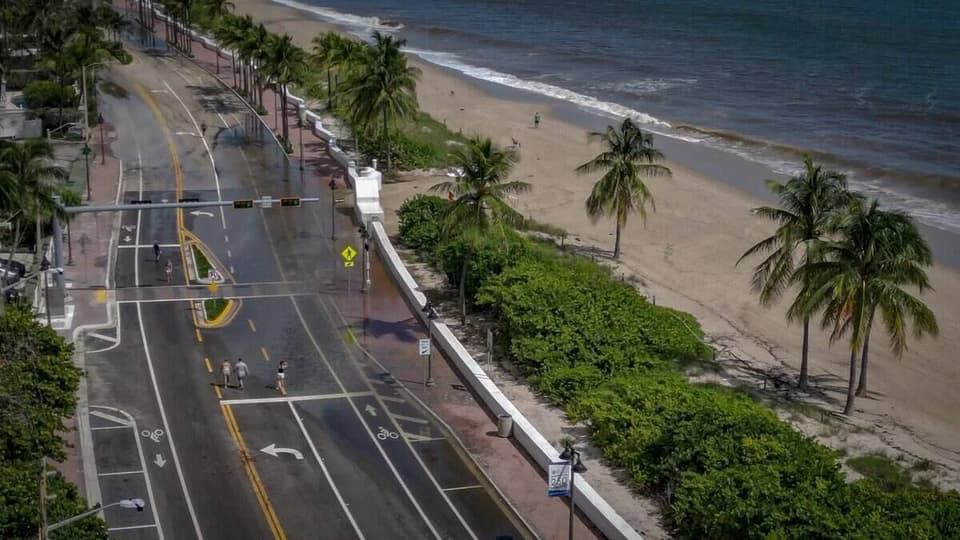
King tides combined with heavy rain caused significant coastal flooding across South Florida on September 27, 2026. High tides, approximately two feet above normal, submerged streets in Fort Lauderdale, Miami Beach, and Hollywood. Fort Lauderdale police closed two miles of A1A, while residents reported water reaching doorsteps. Officials noted this is the highest tide recorded at Broward’s Port Everglades since 2018, surpassing Hurricane Nicole. While water receded by midday, further flooding is expected through Monday, with additional king tide cycles forecast for October, November, and December. Experts link this event to rising sea levels, which have increased by 8 inches in the last 30 years.
Key points
- High tides reached approximately 2 feet above normal levels, setting a record at Broward’s Port Everglades since 2018 and ranking fourth highest at Miami’s Virginia Key station.
- Fort Lauderdale police shut down two miles of A1A due to flooding, while Hollywood deployed barriers on the Broadwalk and opened free parking for residents.
- Residents in Hollywood and Fort Lauderdale reported water entering homes and businesses, with some describing the flooding as a 'mini tsunami' and calling for city action.
- National Weather Service meteorologist Robert Molleda described the event as 'above-average' but noted no widespread seepage into homes yet, though rain is forecast to return mid-week.
- Additional king tide periods are expected from October 9-11, October 22-November 12, November 22-29, and December 22-27, 2026, with the next cycle predicted to be higher than the current one.
Background
This event aligns with broader trends of rising sea levels, which have increased by 8 inches in the last 30 years, with another foot expected by 2050. Previous coverage noted that NASA-backed research suggests the Moon’s 18.6-year orbital wobble will amplify high tides, potentially tripling or quadrupling nuisance flood days on U.S. coastlines by the mid-2030s. Additionally, a UN report warned that rising seas already threaten major coastal cities like Kolkata and Mumbai, highlighting the global impact of accelerating sea level rise due to glacier melt and ocean warming.
How outlets are covering it
The Miami Herald emphasized the record-breaking nature of the tides and linked them directly to global warming, quoting a resident who called the event 'a direct product of global warming.' NBC 6 South Florida focused on resident frustration, highlighting a homeowner who blamed city negligence for inadequate infrastructure and a business owner who called for larger barriers. WSVN highlighted the stress on locals, noting that many drivers did not understand the risks of driving through saltwater. The Sun Sentinel provided a factual overview, including the NWS forecast and warnings about saltwater damage to vehicles, while noting that rain chances will increase by Tuesday. All sources agree on the severity of the flooding but differ in emphasis: the Herald focuses on climate change, NBC 6 on local government response, WSVN on resident impact, and the Sun Sentinel on weather forecasts and practical advice.
Why it matters
This event underscores the increasing frequency and severity of coastal flooding in South Florida due to rising sea levels. It highlights the need for improved infrastructure and adaptation strategies, as king tides are expected to become more frequent and severe in the coming years. The event also serves as a warning for other coastal communities facing similar challenges, emphasizing the urgent need for localized planning and investment in protective measures.
What to watch
Further flooding is expected during high tides on Monday, with additional king tide cycles forecast for October, November, and December 2026. Rain chances are expected to increase by Tuesday, potentially exacerbating flooding. Residents are advised to park cars on higher ground and avoid driving through saltwater. City officials are deploying barriers and offering free parking for residents in affected areas. Long-term, the event highlights the need for improved infrastructure and adaptation strategies to mitigate the impact of rising sea levels.
- King tides deluge South Florida streets. There’s more flooding to come miamiherald.com
- Flooding seen throughout South Florida as King Tides expected to continue NBC 6 South Florida
- Locals across Broward share frustration after king tide season leaves streets underwater WSVN
- PHOTOS: King tide flooding hits South Florida; more rain to come this week Sun Sentinel
- Aerial video shows king tide flooding in South Florida local10.com
Want the full story? Read the original reporting
Read on miamiherald.com