
Europe’s Iran Policy Shifts from Autonomy to Washington Alignment Amid Economic Pressure
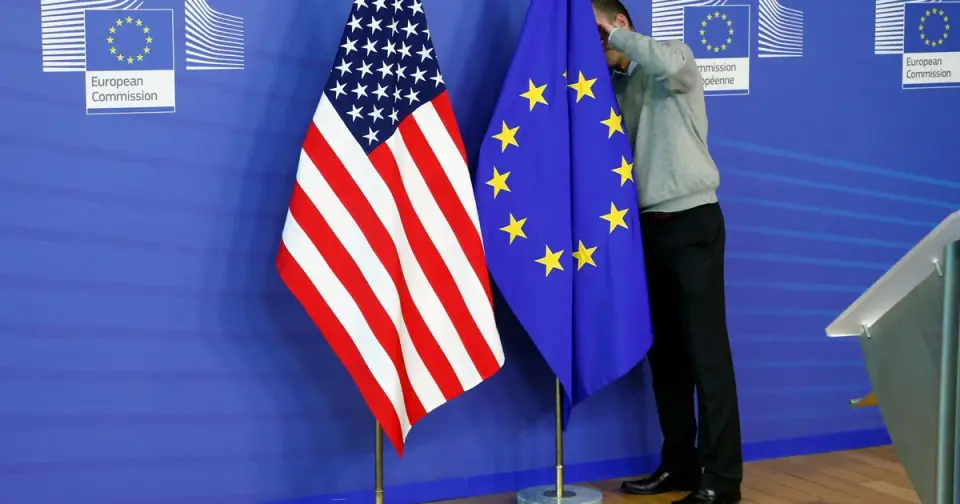
Europe has abandoned its 'third way' approach to Iran, aligning structurally with Washington’s aggressive economic and military pressure despite rhetorical reservations. This shift is driven by financial dependence on the US dollar, the failure of previous autonomous trade mechanisms, and the strategic priority of maintaining US support for Ukraine.
Key points
- The EU formally reimposed nuclear-related sanctions on September 29, 2026, following the UN 'snapback' mechanism triggered by France, Germany, and the UK in August 2025.
- The US Treasury sanctioned 27 Iranian airlines and nine service providers on September 8, 2026, as part of 'Operation Economic Outcast,' targeting entities in Turkey, Malaysia, Kazakhstan, and the UAE.
- EU-Iran trade in goods stood at €3.7 billion in 2025, but European companies largely abandoned direct trade to preserve access to the US market after 2018.
- Iranian oil exports fell to 220,000–255,000 barrels per day in August 2026, down from roughly 2 million barrels per day before the conflict, due to US naval blockades and tanker strikes.
- The US and E3 are pushing for an IAEA resolution to report Iran to the UN Security Council, a move Iran has refused to cooperate with pending broader political negotiations.
Background
Since the US withdrawal from the JCPOA in 2018, Europe’s attempts to maintain autonomous trade with Iran through mechanisms like the blocking statute and INSTEX failed as major European firms prioritized US market access. The current alignment is further influenced by the war in Ukraine, where European leaders view cooperation on Iran as a bargaining chip to secure US support against Russia.
How outlets are covering it
Iran International argues that while the Trump administration may overstate Europe’s formal endorsement of its 'Economic D-Day' campaign, structural economic and political convergence has made Europe a junior partner to Washington. CNN and CNBC emphasize the immediate impact of new sanctions on Iran’s aviation and financial sectors, noting skepticism from experts about the long-term efficacy of these measures against a regime that has withstood decades of pressure. Iranian officials dismiss the sanctions as ineffective, while US officials claim anecdotal evidence of economic strain.
Why it matters
The erosion of European autonomy in Iran policy signals a broader shift in transatlantic relations, where Europe prioritizes US security guarantees over independent diplomatic initiatives. This alignment intensifies the economic squeeze on Iran, potentially accelerating internal instability but also risking further regional escalation in the Strait of Hormuz.
What to watch
The US Treasury is expected to announce additional secondary sanctions against foreign banks weekly. The IAEA may adopt a resolution reporting Iran to the UN Security Council, while Iran may retaliate against regional energy infrastructure if its oil export revenues continue to decline.
- Europe’s third-way ambitions on Iran give way to alignment with Washington Iran International
- US targets Iran’s airline industry as part of pressure campaign CNN
- U.S. sanctions Iranian airlines in aim to tighten economic squeeze as war spreads, oil rises cnbc.com
- US senator says Turkey ‘not our friend’ over Iran-linked financing Iran International
- US issues fresh Iran-related sanctions, Treasury website shows Reuters
Want the full story? Read the original reporting
Read on Iran International