
Iran Condemns US 'Economic D-Day' as China Defies Sanctions Threats
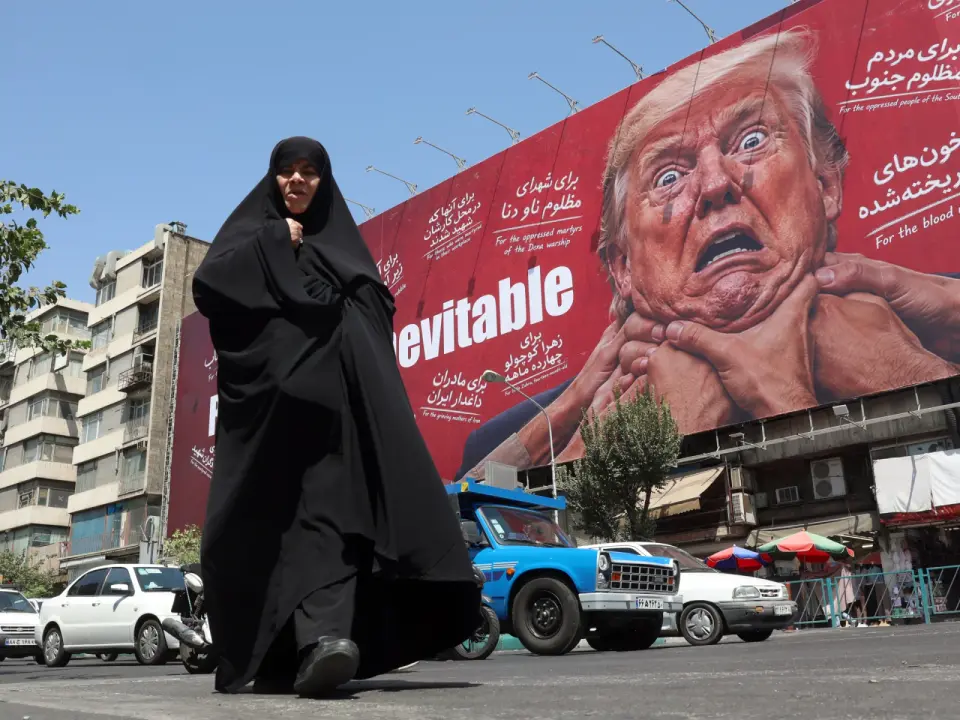
Iran has rejected new US sanctions threats as a violation of state sovereignty, while China has refused to align with Washington’s pressure campaign. The US Navy is rotating carriers in the region, and peace talks have stalled after a 60-day deadline passed without agreement.
Key points
- Iran’s Foreign Ministry spokesman Esmaeil Baghaei called the US threat to punish trading partners a 'complete erosion of sovereignty' and a return to colonialism.
- China, which buys 90% of Iranian crude, stated that sanctions are not the solution and urged a political settlement, defying US Treasury Secretary Scott Bessent’s call for Beijing to join the pressure campaign.
- The 60-day deadline for peace talks expired without a deal; Iran’s parliament speaker Mohammad Bagher Ghalibaf listed conditions for reopening the Strait of Hormuz, including lifting oil sanctions.
- The USS Abraham Lincoln is returning home after a nine-month deployment, replaced by the USS George Washington, which was pulled from the Pacific to signal strategic priority.
- Iran’s President Masoud Pezeshkian stated the war should end now while Tehran holds a position of strength, despite internal pressure from hardliners demanding continued conflict.
Background
This escalation follows a June memorandum of understanding that unraveled, leading to a naval blockade of Iranian ports. Previous intelligence assessments suggested further strikes would not break the standoff, prompting the US to pivot toward economic pressure. The current situation reflects a prolonged conflict where the Strait of Hormuz remains a critical chokepoint for global energy supplies.
How outlets are covering it
Al Jazeera emphasizes the legal and diplomatic arguments, highlighting Iran’s claim that extraterritorial sanctions violate UN principles. CNN focuses on the operational and economic fallout, noting the shift from an oil shock to a fuel crisis and the morale issues on the USS Abraham Lincoln. The New York Times analyzes the strategic calculus, arguing that China’s confidence stems from its ability to withstand energy disruptions and leverage rare earth minerals, viewing the conflict as a sign of US weakness. While all sources agree on the stalled talks, they differ on the efficacy of the US strategy: CNN and NYT suggest the economic pressure may backfire, whereas Al Jazeera frames it as an illegitimate overreach.
Why it matters
The failure of the 'economic D-Day' strategy risks prolonging the conflict without achieving a decisive outcome. If China and other major trading partners refuse to comply with US sanctions, the global oil market may face continued volatility, and the US may lack the leverage to force Iran back to the negotiating table. This could lead to a prolonged state of 'no war, no peace,' exacerbating economic hardship in Iran and destabilizing regional security.
What to watch
The US may face limited options if China continues to defy sanctions, potentially leading to a reassessment of the blockade strategy. Iran may maintain its current stance, using the Strait of Hormuz as leverage while managing internal economic pressures. Diplomatic efforts may resume if the economic pressure fails to yield results, but for now, the US is 'seeing what happens' as it navigates a complex web of international alliances and rivalries.
- Iran says new US sanctions violate sovereignty of other states Al Jazeera
- Iran war live: Tehran says US sanctions ‘declaration of war’ on all nations Al Jazeera
- August 21, 2026 — US gas prices up nearly a dollar from a year ago as Hormuz traffic remains low CNN
- Why China Thinks It Can Resist Trump’s Economic Threats on Iran The New York Times
- US Treasury Secretary Bessent to hold press conference on Monday Reuters
Want the full story? Read the original reporting
Read on Al Jazeera