
Iran Vows Escalation as US Strikes Oil Tankers and Energy Prices Spike
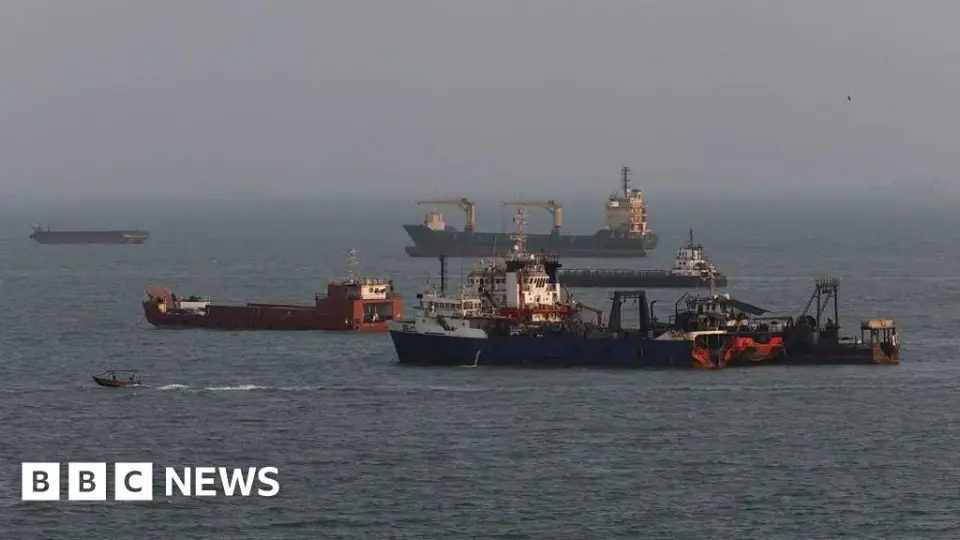
Iran’s parliament speaker warned of a 'faster, heavier, and more painful' response to US attacks, following recent strikes on Iranian oil tankers. The US military confirmed disabling three tankers in retaliation for missile attacks on US warships, while Energy Secretary Chris Wright stated the US is 'strangling' Iran’s economy to force policy changes or a new regime. Despite the escalation, Wright indicated a nuclear agreement may not be reached, suggesting the US might destroy Iran’s nuclear capabilities instead. Global energy prices have surged, with US diesel reaching $5.85 per gallon, as the Strait of Hormuz remains effectively closed.
Key points
- US Central Command reported permanently disabling three Iranian oil tankers, including the M/T Downy and M/T Stark 1, after Iran’s Revolutionary Guard fired ballistic missiles at a US aircraft carrier and destroyer.
- Iran’s parliament speaker Mohammad Bagher Ghalibaf declared that the era of 'proportionate responses' is over, warning that future US violations will face a 'faster, heavier, and more painful' retaliation.
- US Energy Secretary Chris Wright stated the US is 'strangling' Iran’s economy by blocking crude exports to force a policy change or regime shift, while acknowledging a nuclear deal may not be possible.
- The conflict has driven US diesel prices to an average of $5.85 per gallon, up from $3.71 a year ago, as the Strait of Hormuz remains largely closed to commercial shipping.
- Iran’s Supreme National Security Council secretary Mohsen Rezaei announced plans to establish a restricted zone outside the Strait of Hormuz, though the US military denied claims of Iranian attacks on US vessels in the strait.
Background
The current escalation follows a six-month-long war that began in February 2026 with US and Israeli airstrikes. A 60-day ceasefire expired last month, leading to renewed fighting. Previous incidents, including US strikes in early September and Iran’s accusations of Ukrainian attacks on Caspian vessels, have heightened regional tensions. The conflict has also impacted global energy markets and diplomatic efforts, with the US and Iran failing to reach a lasting peace despite months of negotiations.
How outlets are covering it
BBC and CBS News emphasize the immediate military escalation, highlighting the US strikes on tankers and Iran’s verbal threats. Al Jazeera provides a broader regional context, noting Iran’s potential political benefit from escalation and the impact on Gaza and Lebanon. CNBC focuses on the economic and diplomatic dimensions, citing Energy Secretary Wright’s comments on the impossibility of a nuclear deal and the severe economic pressures on Iran, including a 2.7% GDP contraction and 62.2% inflation. While all sources agree on the military actions, they differ in emphasis: BBC and CBS focus on the tactical exchange, Al Jazeera on the strategic implications, and CNBC on the economic and diplomatic fallout.
Why it matters
The escalation threatens to further disrupt global oil supplies, as the Strait of Hormuz is a critical waterway for energy exports. Rising energy prices are already impacting US consumers and could influence the November midterm elections. The lack of a nuclear deal and the potential for further military action raise concerns about a broader regional conflict, with implications for global security and economic stability.
What to watch
Iran may announce a restricted zone near the Strait of Hormuz, potentially leading to further maritime tensions. The US may continue to enforce its blockade and sanctions, while Iran could escalate its military responses. Diplomatic efforts may stall, with the US potentially focusing on destroying Iran’s nuclear capabilities rather than seeking a negotiated agreement. Global energy prices are expected to remain volatile, with some analysts predicting a slight decrease as summer demand wanes.
- Iran warns of 'faster, heavier, more painful response' to US attacks BBC
- Iran war live: Tehran warns of ‘faster, more painful’ response to attacks Al Jazeera
- Iran warns of ‘more painful’ response to U.S. attacks as economic pressure mounts CNBC
- Live Updates: Iran threatens "more painful" retaliation to U.S. strikes on Iranian oil tankers CBS News
- West Asia conflict LIVE updates: Iran's response to U.S. attacks will be 'more painful', parliament speaker says The Hindu
Want the full story? Read the original reporting
Read on BBC