
US strikes Iranian tankers as Tehran vows escalation amid economic squeeze
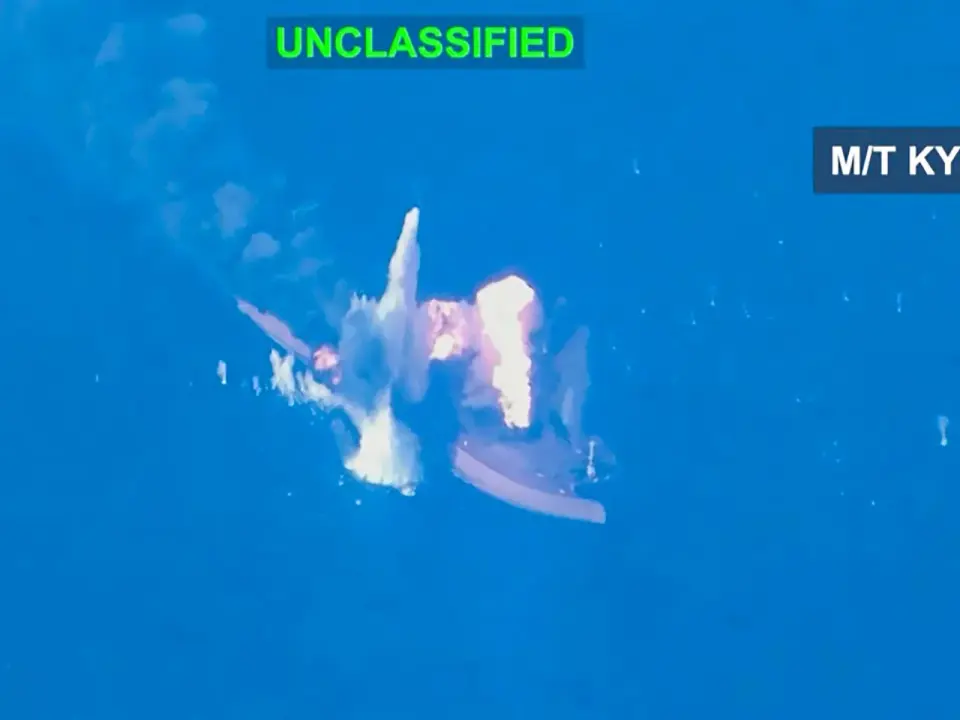
The US military struck three Iranian oil tankers in the Gulf of Oman and near Kharg Island, claiming two were permanently disabled and one sank. Iran’s Islamic Revolutionary Guard Corps (IRGC) responded by firing ballistic missiles at US naval vessels, though CENTCOM stated the attacks were evaded. As the US maintains a naval blockade to choke off Iranian oil exports, Tehran has warned that future violations will face 'faster, heavier and more painful' retaliation. US officials suggest a negotiated nuclear deal may be impossible, prioritizing the destruction of Iran’s nuclear capabilities and economic isolation instead.
Key points
- CENTCOM reported striking three Iranian crude oil tankers; two were disabled and one sank.
- IRGC claimed to have hit a US sea drone and fired missiles at a US aircraft carrier and destroyer, though CENTCOM said the ships evaded the attacks.
- Iranian Parliament Speaker Mohammad Bagher Ghalibaf warned that the era of proportionate responses has ended.
- US Energy Secretary Chris Wright stated a nuclear agreement may not be reached, with the focus shifting to destroying Iran’s nuclear capabilities.
- Crude oil exports from the Middle East dropped 39 percent in August compared to the January baseline.
- Iran established an 'economic war headquarters' to counter the blockade and rising inflation.
Background
The current escalation follows a months-long naval blockade of Iranian ports that began in mid-July, following initial US-Israel airstrikes in late February. Previous coverage noted logistical challenges in enforcing a land blockade and significant disruptions to global energy logistics, including record fees for bypassing the Panama Canal. Iranian officials had previously claimed some oil exports continued despite sanctions, but recent data suggests a sharp decline in trade volumes.
How outlets are covering it
Al Jazeera emphasizes the military tit-for-tat, highlighting IRGC claims of damaging US warships and Tehran’s rhetoric regarding 'strategic defeat' of the US. CNBC focuses on the economic and diplomatic dimensions, noting Energy Secretary Chris Wright’s skepticism about a nuclear deal and the severe economic impact on Iran, including a 2.7% GDP contraction and 62.2% inflation. While both sources confirm the tanker strikes, Al Jazeera details the IRGC’s narrative of success, whereas CNBC highlights the US strategy of 'Operation Economic Outcast' to isolate Iran’s economy.
Why it matters
The conflict threatens to disrupt global oil supplies, as the Strait of Hormuz carries one-fifth of the world’s oil and gas. The shift from a potential negotiated settlement to a strategy of destroying nuclear capabilities and economic strangulation could prolong the conflict, exacerbating global energy price volatility and deepening Iran’s economic crisis, which already features high unemployment and inflation.
What to watch
Iran has warned of escalated military responses to any further US violations. The US may continue striking Iranian infrastructure if nuclear capabilities are rebuilt. The fate of the remaining 30 million barrels of Iranian crude held by China could influence the timeline for economic collapse or a potential shift in Iranian policy. The US Treasury has also expanded sanctions targeting financial and technological sectors.
- Iran touts military response as US maintains blockade, hits tankers Al Jazeera
- Iran war live: Tehran warns of ‘faster, more painful’ response to attacks Al Jazeera
- Iran warns of ‘more painful’ response to U.S. attacks as economic pressure mounts CNBC
- Live Updates: Iran threatens "more painful" retaliation to U.S. strikes on Iranian oil tankers CBS News
- Iran’s response to US strikes on tankers will be ‘more painful,’ parliament speaker says The Times of Israel
Want the full story? Read the original reporting
Read on Al Jazeera