
Trump Weighs 'Annihilation' of Iran as Gulf Leaders Convene and Hormuz Attacks Escalate
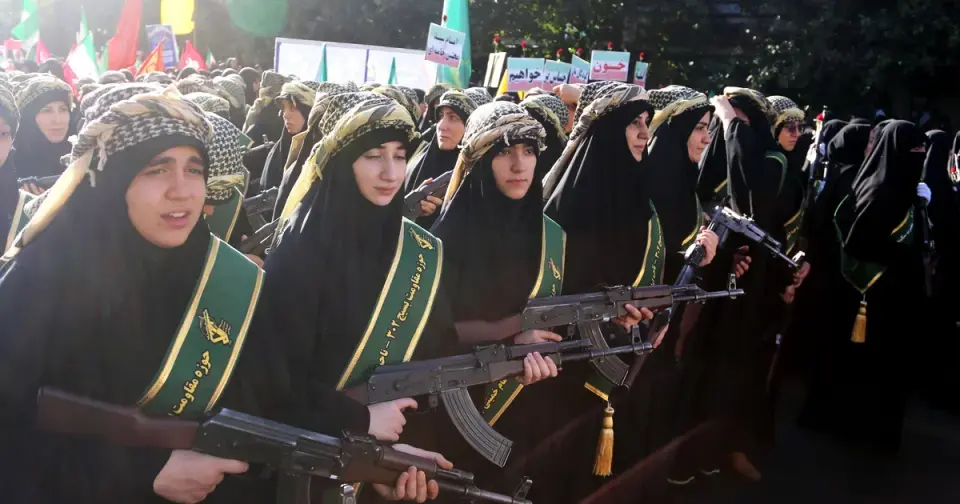
President Trump is facing a critical decision on whether to launch a major new offensive against Iran, a move he described as potentially 'annihilating' the regime. This deliberation comes as the conflict enters a stalemate, with two ships attacked in the Strait of Hormuz and Iran staging massive state-organized rallies. Trump is set to meet with Gulf leaders at the U.N. General Assembly to gauge regional support for further action, while the U.S. maintains a naval blockade and extends sanctions against Tehran.
Key points
- Trump told Axios he is deciding whether to 'annihilate' the Iranian regime, a choice he may make before or after the U.S. midterm elections.
- The U.K. Maritime Trade Operations center reported two tanker attacks in the Strait of Hormuz, with the Islamic Revolutionary Guard Corps claiming responsibility for one strike.
- Iran held a massive state-choreographed rally, with officials claiming over 600,000 people registered for military training in a campaign called 'Janfaday-e Iran.'
- Trump is scheduled to meet with leaders from six Gulf states at the U.N. General Assembly to discuss the war's next steps and a potential post-war strategy.
- The U.S. approved visas for Iranian President Masoud Pezeshkian and Foreign Minister Abbas Araghchi to attend the U.N. General Assembly, despite the ongoing conflict.
- Russia and China vetoed a U.N. resolution that would have extended the mandate of experts monitoring sanctions against Iran, which were reimposed in September 2025.
Background
The U.S.-Israel war on Iran began in late February 2026 and has since entered a stalemate. Previous coverage from August and September 2026 highlighted ongoing tensions over the Strait of Hormuz, including ship attacks and diplomatic standoffs. The U.S. has been using escorted 'dark transits' to move oil through the strait, while Iran has maintained a hardline posture, rejecting U.S. claims of control over the waterway. The current situation reflects a continuation of this low-intensity conflict, with the U.S. focusing on economic pressure and naval blockades rather than full-scale combat operations.
How outlets are covering it
Outlets differ on the immediate trajectory of the conflict. Axios emphasizes Trump's internal deliberation and the need for Gulf buy-in before resuming major combat, noting that the U.S. military cannot sustain its current holding pattern indefinitely. CNBC focuses on the economic fallout, highlighting the disruption to Saudi Arabia's East-West Pipeline and the potential for a prolonged supply gap. Al Jazeera provides a broader regional context, noting the expansion of the conflict into Yemen, where Iran-backed Houthis are escalating attacks on Saudi Arabia. CBS News highlights the domestic mobilization in Iran, framing the massive rallies as a response to the threat of a new U.S. offensive. All sources agree that the conflict is in a stalemate, but they differ on whether a diplomatic resolution is imminent or if the war will drag on until late 2028.
Why it matters
The potential for a major U.S. offensive against Iran could significantly disrupt global energy markets and escalate the conflict into a wider regional war. The U.N. General Assembly meeting with Gulf leaders is a critical juncture that could determine whether the U.S. pivots to diplomacy or intensifies military action. The ongoing attacks in the Strait of Hormuz and the extension of U.S. sanctions signal that the economic pressure on Iran is intensifying, with potential ripple effects for global oil prices and regional stability.
What to watch
The key next steps include the U.N. General Assembly meeting between Trump and Gulf leaders, where the U.S. will seek to gauge regional support for a post-war strategy. Trump's decision on whether to launch a new offensive against Iran is expected to be made soon, potentially before the U.S. midterm elections. The U.S. will also continue its naval blockade and economic sanctions, while Iran is expected to maintain its hardline posture and mobilize its population for potential conflict. The outcome of these developments will likely determine whether the conflict moves toward a diplomatic resolution or a renewed phase of major combat operations.
- Iran War Updates: 2 ships attacked in Strait of Hormuz as Trump says next move could be to "annihilate" regime CBS News
- Trump tells Axios he's approaching major crossroads in Iran war Axios
- Iran war live: Second tanker reported struck in the Strait of Hormuz Al Jazeera
- Trump says U.S. ‘hopefully’ nearing end of Iran war as Saudi Arabia, Houthis trade strikes CNBC
- Trump weighs return to large-scale Iran strikes: ‘I have a big decision coming up’ The Times of Israel
Want the full story? Read the original reporting
Read on CBS News