
Pentagon restricts US-Canada military social ties to pressure defense spending
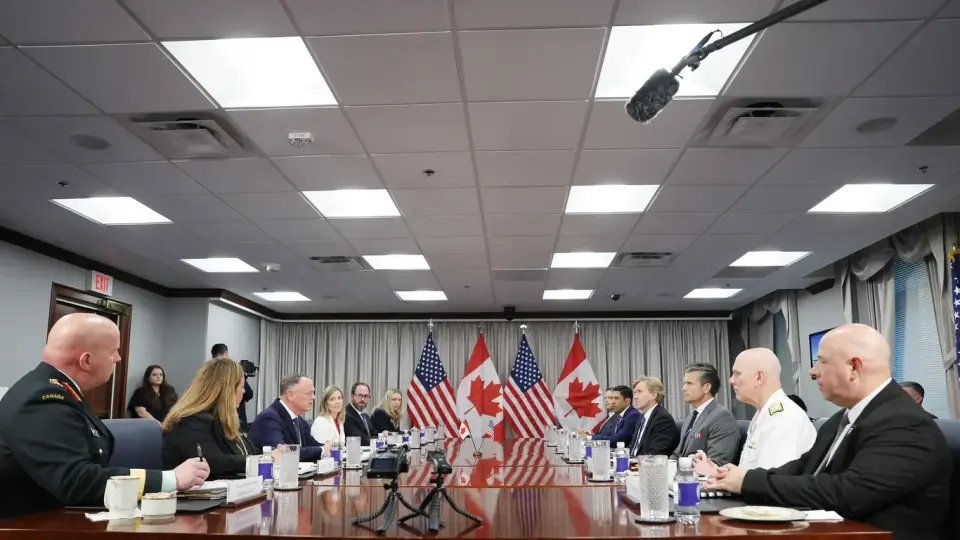
U.S. Secretary of War Pete Hegseth issued a classified memorandum restricting informal interactions between U.S. and Canadian military personnel, aiming to pressure Ottawa to increase defense spending. While the directive limits attendance at think tanks and social events, it does not affect core operations or intelligence sharing. Canada reports no operational changes, but the move highlights tensions over NATO spending targets and military readiness.
Key points
- Hegseth’s memo requires U.S. military officials to seek permission before attending social events or think tank conferences with Canadian counterparts.
- The Pentagon cites Canada’s low equipment serviceability rates, including 41.9% for air, 53.9% for naval, and 48% for land forces, as justification for the restrictions.
- Canada has met the 2% GDP defense spending target but faces pressure to reach 5% by 2035, with U.S. officials questioning Ottawa’s path to this goal.
- Canadian Defense Minister David McGuinty states there is no evidence of operational changes, describing cooperation as 'business as usual.'
- The directive excludes defense intelligence sharing, NORAD operations, and NATO cooperation, focusing instead on informal engagements.
Background
Relations between the U.S. and Canada have soured due to trade disputes and U.S. threats to annex Canada. In May 2026, the Pentagon paused participation in the Permanent Joint Board on Defence, citing Canada’s lack of progress on commitments. This latest memo follows a pattern of U.S. pressure to increase Canadian defense spending and align with NATO goals.
How outlets are covering it
Axios emphasizes the Pentagon’s focus on Canada’s military readiness shortfalls and the need for 'hard decisions' to meet NATO pledges. CBC highlights the lack of operational impact and Canadian officials’ confusion over the directive, noting that military cooperation remains intact. AP News focuses on the limited scope of the restrictions, targeting social and think tank events rather than core military functions. U.S. Senator Mike Rounds downplays the impact, while Democratic Senator Chris Coons criticizes the move as unnecessary and damaging to alliance relations.
Why it matters
The restrictions signal a shift in U.S. approach to alliance management, using informal engagement limits to leverage defense spending commitments. This could strain long-standing bilateral ties and affect future cooperation in NATO and NORAD, while highlighting ongoing disputes over military readiness and procurement strategies.
What to watch
Canada is expected to clarify its path to the 5% defense spending target by 2035. U.S. officials may monitor compliance with the new restrictions, while Canadian officials continue to seek clarification on the memo’s scope. Trade negotiations between the U.S. and Canada may also be influenced by these defense tensions.
- Scoop: The Pentagon's case for Canada to "get serious" on defense Axios
- Pentagon Issued Memo Limiting ‘Social Activities’ With Canadian Military The New York Times
- In secret memo, Hegseth restricts U.S.-Canada defense relationship The Washington Post
- Hegseth reportedly moves to restrict defence ties with Canada, but Ottawa sees no change CBC
- US senator says Pentagon restrictions on Canada focus on think tanks and social events AP News
Want the full story? Read the original reporting
Read on Axios