
Pezeshkian Defies Trump at UN, Signals Talks While Hardliners Warn of Backlash
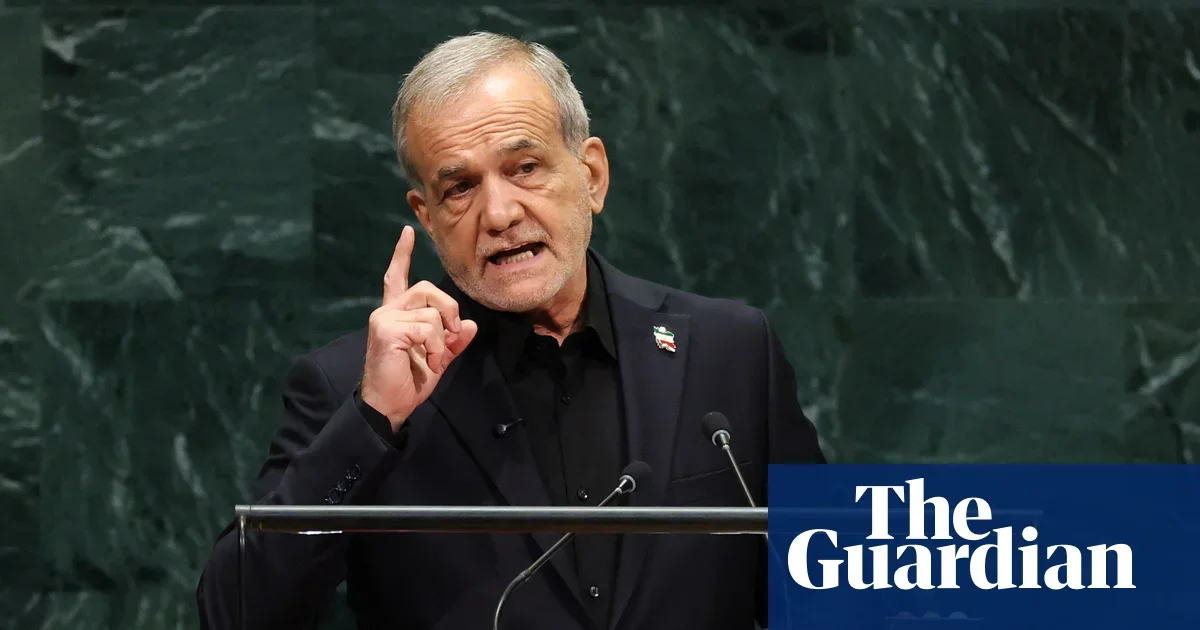
Iranian President Masoud Pezeshkian addressed the UN General Assembly on September 23, 2026, rejecting US accusations of terrorism and asserting Iran’s right to a peaceful nuclear program. Despite a defiant tone, he signaled openness to negotiations without 'language of force.' A three-hour indirect meeting with US envoys occurred, but hardliners in Tehran warned against concessions, while the US delegation walked out during the speech.
Key points
- Pezeshkian called the US the 'true bully' and accused it of terrorism, citing the killing of Supreme Leader Ali Khamenei and 150 schoolchildren in Minab.
- The US delegation walked out as Pezeshkian displayed photos of civilian casualties; Secretary of State Marco Rubio criticized Iran’s human rights record.
- A three-hour meeting between Iranian Foreign Minister Abbas Araghchi and US envoy Steve Witkoff, mediated by Qatar, was described as constructive but did not yield a formal deal.
- Iran set seven preconditions for reopening the Strait of Hormuz, including ending the naval blockade and releasing frozen assets, with a potential seven-day timeline if met.
- Hardliner Mohsen Rezaei rejected the talks as 'negotiations,' warning that Iran’s conditions must be met before any dialogue or opening of the strait.
Background
This follows nearly seven months of war between the US/Israel and Iran, which began with strikes on Iranian leadership and infrastructure. A preliminary memorandum of understanding in June aimed to end the conflict but collapsed due to renewed fighting. The Strait of Hormuz has been intermittently blockaded, causing global energy price spikes and straining Iran’s economy under US sanctions. Trump had threatened to 'annihilate' Iran at the UN the day prior, while also expressing hope for a post-midterm deal.
How outlets are covering it
The Guardian and NBC News emphasize Pezeshkian’s dual strategy of defiance and diplomatic openness, noting the historic nature of his address during active war. CNBC highlights the contradiction between Trump’s 'annihilation' threat and his praise for the 'very good' talks. The Guardian notes internal Iranian division, with hardliner Mohsen Rezaei rejecting the talks, while NBC points to pressure from hardliners on Pezeshkian and Araghchi. All sources agree the talks were indirect, mediated by Qatar, and focused on the Strait of Hormuz and sanctions relief, but differ on whether progress was substantive or merely procedural.
Why it matters
The outcome of these talks could determine whether the Strait of Hormuz reopens, stabilizing global oil prices and easing pressure on Iran’s economy. A failure could escalate the conflict, especially with US midterm elections approaching in November. The US naval blockade and secondary sanctions on Iranian civilian aviation are intensifying, risking a broader regional disruption involving Gulf states and Houthi-controlled chokepoints like Bab al-Mandab.
What to watch
Iran has indicated the Strait of Hormuz could reopen within seven days if its seven preconditions are met. The US faces pressure to lower oil prices before November midterms. Hardliners in Tehran may oppose any concessions, potentially stalling negotiations. The next phase may involve further indirect talks via Qatar or a return to military confrontation if no deal is reached.
- Iran’s president hits out at ‘bully’ Trump in UN speech but signals willingness to talk The Guardian
- Iran's president blames U.S., Israel for global instability in defiant UN speech CNBC
- Iran’s president strikes a defiant tone at U.N. after Trump threats NBC News
- Iran's president gives a rare wartime speech at the U.N. NPR
- In defiant speech, Pezeshkian calls out Trump and says Iran will fight ‘until our last breath’ AP News
Want the full story? Read the original reporting
Read on The Guardian