
Seoul Defies Washington: Lee Vows No Troops for Iran War Amid Trade Stalemate
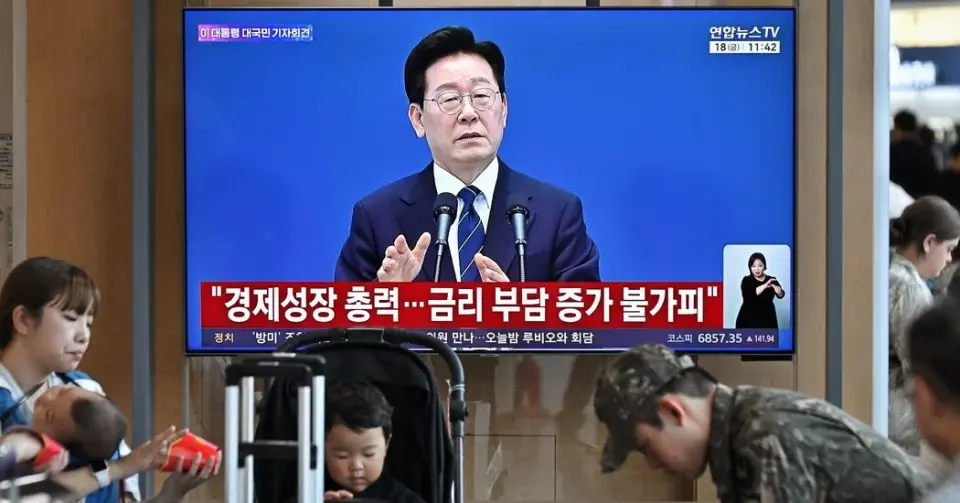
South Korean President Lee Jae Myung explicitly rejected US President Donald Trump’s demands for military support in the Iran conflict, stating Seoul will not deploy troops or combat assets to the Middle East. While Lee affirmed a limited naval role to protect commercial shipping, he emphasized this would not constitute war participation. The refusal follows Trump’s unilateral scaling back of joint military drills and ongoing disputes over a $350 billion investment deal. Lee’s approval rating has hit a low of 37 percent, compounded by domestic economic struggles and political controversies regarding term limits.
Key points
- President Lee Jae Myung stated there will be no deployment of troops or military assets to intervene in the war against Iran.
- Seoul is considering expanding the operational scope of its anti-piracy naval presence near the Red Sea solely to protect South Korean commercial vessels and oil tankers.
- Trump previously criticized Seoul for refusing to help defend the Strait of Hormuz, noting the US maintains troops on the Korean Peninsula for Seoul’s protection.
- Lee’s approval rating has fallen to 37 percent, driven by a stock market crash, rising housing costs, and stalled trade negotiations with Washington.
- Lee denied intentions to seek a second term, calling such claims a 'political offensive,' while supporting a special prosecutor to investigate politically motivated charges against him.
Background
This diplomatic friction follows a series of tensions in 2026, including the US unilateral shortening of the Ulchi Freedom Shield military drills in August. That move was linked to Trump’s desire to pursue talks with North Korean leader Kim Jong-un, a stance that unsettled Seoul. Additionally, broader regional security concerns have emerged, with Ukrainian President Zelenskyy warning of potential North Korean troop deployments to Russia, highlighting shifting alliances in the region.
How outlets are covering it
The New York Times highlights the domestic political risks for Lee, noting that previous deployments to US-led conflicts, such as the Iraq War, severely damaged the approval ratings of the then-progressive administration. The Guardian and NBC News focus on the diplomatic nuance, emphasizing Lee’s commitment to protecting commercial shipping while avoiding combat involvement. All three outlets agree that the $350 billion trade deal remains stalled due to disagreements over commercial viability and profit-sharing, with Lee insisting Seoul will not buckle under coercion. The New York Times uniquely details Lee’s low approval rating and the opposition’s accusations regarding constitutional amendments for term limits, whereas the other sources focus more on the immediate military and trade negotiations.
Why it matters
This decision tests the durability of the seven-decade US-South Korea alliance. By refusing military support, Seoul prioritizes domestic political stability and public opinion, which strongly opposes intervention. The standoff could strain the broader security architecture in the Asia-Pacific, particularly as the US seeks to redirect resources to the Middle East. Furthermore, the stalled trade deal threatens the economic interests of both nations, potentially impacting global supply chains and investment flows in the manufacturing sector.
What to watch
Seoul is expected to finalize the location for the first batch of US investments in the coming weeks, though negotiations remain tense. Lee has indicated that a meeting between Trump and Kim Jong-un is possible in the coming months, contingent on aligning factors. Domestically, Lee plans to designate Seoul as the economic capital and Sejong as the political capital to ease capital concentration. The special prosecutor’s investigation into politically motivated charges may also progress, potentially impacting Lee’s legal standing.
- Rejecting Trump, South Korean Leader Says He Will Not Send Troops to Iran The New York Times
- South Korea will not send military to support US war on Iran, defying Trump pressure The Guardian
- South Korean president rules out military involvement in Middle East conflict NBC News
- South Korea President Seeks Reset After Approval Rating Nosedive Bloomberg.com
- Lee rules out Korean troop deployment in Iran war The Korea Times
Want the full story? Read the original reporting
Read on The New York Times