
Treasury Secretary Bessent Predicts Iran’s Oil Revenue Will Collapse Within Two Weeks
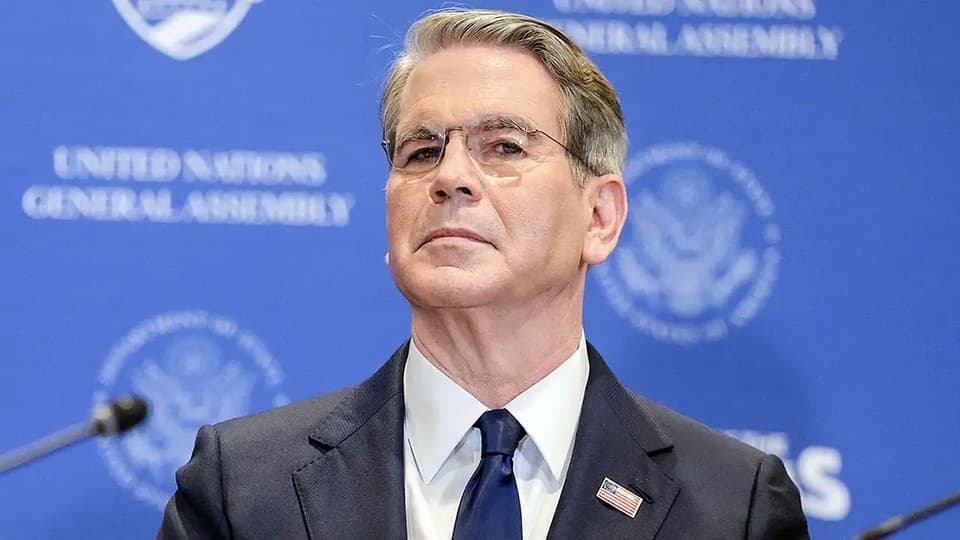
Treasury Secretary Scott Bessent stated on September 27 that Iran will exhaust its remaining oil exports to China within two weeks, leaving the nation with no tradeable assets. He cited a US blockade and the 'Operation Economic Outcast' campaign as the drivers of this economic isolation. While President Trump rejected Tehran’s latest ceasefire proposal, Bessent argued that Iran’s desperation will force it to accept stricter terms in future negotiations.
Key points
- Bessent claims only 15 million barrels of Iranian oil remain in transit for delivery to China.
- The US administration asserts that the Strait of Hormuz remains open, with traffic averaging 15 to 22 million barrels daily.
- Trump rejected Iran’s proposal to reopen the strait in exchange for unfreezing $12 billion in assets and lifting the blockade.
- Bessent described Iran as a 'pariah state' that is currently 'on its knees' due to the economic pressure.
- The Treasury Secretary stated that the goal of the blockade is to ensure Iran adheres to any future agreement.
Background
In late August, the US signaled sanctions against countries purchasing Iranian oil, with China identified as the primary target since it accounts for roughly 90% of Iran’s exports. By mid-September, oil prices had dipped slightly after China urged Iran to curb Houthi attacks on Saudi infrastructure, though refining bottlenecks continued to affect global supply. Vice President JD Vance had previously suggested that China could help economically isolate Iran, framing the conflict as a non-war scenario involving economic pressure rather than active combat.
How outlets are covering it
Fox News and the New York Post both emphasized Bessent’s prediction that Iran’s economy will collapse within two weeks, focusing on the 'nothing left to trade' rhetoric. The Washington Times highlighted the broader prediction of economic collapse. While all three outlets reported on the blockade, Fox News and the New York Post detailed Trump’s rejection of the ceasefire proposal, noting that Tehran’s offer to reopen the Strait of Hormuz was deemed insufficient. The New York Post specifically noted that Iranian President Masoud Pezeshkian remains willing to negotiate, contrasting with the US stance that Iran has 'overplayed its hand.'
Why it matters
The potential cessation of Iranian oil exports to China could significantly impact global energy markets, given that China is Iran’s largest buyer. The success of 'Operation Economic Outcast' may determine whether Iran complies with future nuclear or security agreements. If the blockade forces Iran into a deal, it could reshape US-Iran relations and influence oil prices, which had recently fluctuated due to Middle East tensions and refining capacity issues.
What to watch
Analysts expect further talks between the US and Iran this week, as Trump indicated he anticipates more negotiations. The outcome of these discussions will depend on whether Iran accepts the US terms, which Bessent claims are now more favorable due to Tehran’s economic isolation. The next two weeks are critical for determining if the 15 million barrels of oil in transit are the final shipments, potentially marking a shift in the US strategy from military pressure to economic coercion.
- Bessent says Iran will have 'nothing left to trade' within two weeks as oil lifeline dries up Fox News
- Iran’s economy will have ‘nothing’ left ‘within two weeks,’ Scott Bessent warns New York Post
- Bessent: Iran Economy Will Have 'Nothing' in 2 Weeks Yahoo
- Bessent predicts Iran’s economic collapse ‘in the next two weeks’ Washington Times
- China ‘substantially reduced’ assistance to Iran, US says Middle East Eye
Want the full story? Read the original reporting
Read on Fox News