
Trump Claims Hormuz as US Territory Amidst Iranian Threats and Omani Fallout
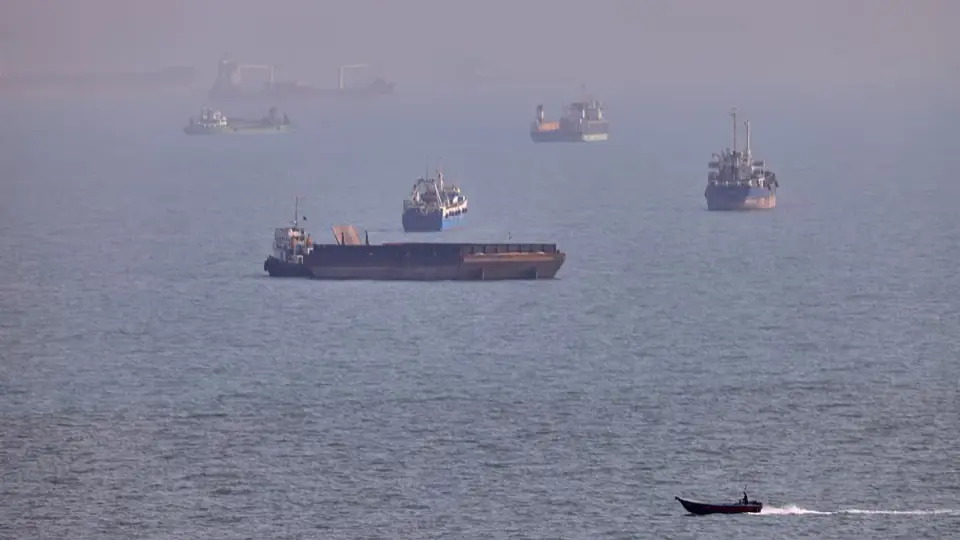
US President Donald Trump has intensified his claim that the Strait of Hormuz is 'new American territory,' posting maps to this effect on Truth Social. Iran’s Supreme National Security Council secretary, Mohsen Rezaei, insists the waterway remains closed until Washington changes its behavior and honors prior commitments. Meanwhile, The Atlantic reports that Oman, a historic mediator, is now facing direct threats from Trump, marking a sharp decline in its diplomatic standing.
Key points
- Trump posted a map labeling the Strait of Hormuz as 'new American territory' on Truth Social, a move he first floated in mid-August.
- Iranian official Mohsen Rezaei stated the strait will remain closed until the US corrects its 'behavior' and honors commitments, warning against joining US economic sanctions.
- The Atlantic notes that Trump has threatened to bomb Oman, a country that previously served as a crucial back-channel for US-Iran nuclear negotiations.
- US Central Command reports that 68 commercial vessels have been redirected due to the ongoing blockade, with the conflict approaching its six-month mark.
Background
This escalation follows a June memorandum of understanding between the US and Iran aimed at ending the war, which subsequently stalled over implementation details and navigation rights. Previous coverage noted that Iran had already rejected US claims of '100 percent' control, demanding war reparations and a regional ceasefire as conditions for reopening the strait. The current standoff occurs against a backdrop of declining US approval ratings and high global oil prices.
How outlets are covering it
Euronews and The Guardian focus on the direct confrontation between Washington and Tehran, highlighting Trump’s territorial claims and Iran’s refusal to reopen the strait without US concessions. The Atlantic provides a contrasting perspective by emphasizing the collateral damage to third-party allies, specifically detailing how Oman’s role as an 'indispensable' mediator has collapsed into a target of potential annihilation. While Euronews and The Guardian frame the issue as a binary dispute over control and sovereignty, The Atlantic highlights the broader diplomatic fallout and the erosion of traditional back-channel diplomacy in the region.
Why it matters
The Strait of Hormuz handles approximately one-fifth of global crude oil and liquefied natural gas exports. Prolonged closure or continued blockade threatens global energy supplies and economic stability. The breakdown of mediation through Oman removes a key diplomatic safety valve, increasing the risk of further escalation between the US and Iran.
What to watch
Analysts expect continued stalemate as Iran maintains its closure and the US enforces its blockade. The failure of talks involving Oman suggests no immediate breakthrough in navigation arrangements. Future developments may hinge on whether the US imposes further economic sanctions or if Iran escalates its attacks on US economic interests, as threatened by Rezaei.
- Trump claims Hormuz on Truth Social, Rezaei says 'shut until US changes' Euronews.com
- Oman Has Gone From ‘Indispensable’ Ally to Target of Annihilation The Atlantic
- Trump says he views strait of Hormuz as ‘American territory’ The Guardian
- Rosie O’Donnell Rags on Trump’s Strait of Hormuz Claims The New York Times
- Trump posts map labeling Strait of Hormuz as US territory The Hill
Want the full story? Read the original reporting
Read on Euronews.com