
US Deploys Third Carrier and 10,000 Troops to Middle East as Iran War Stalls
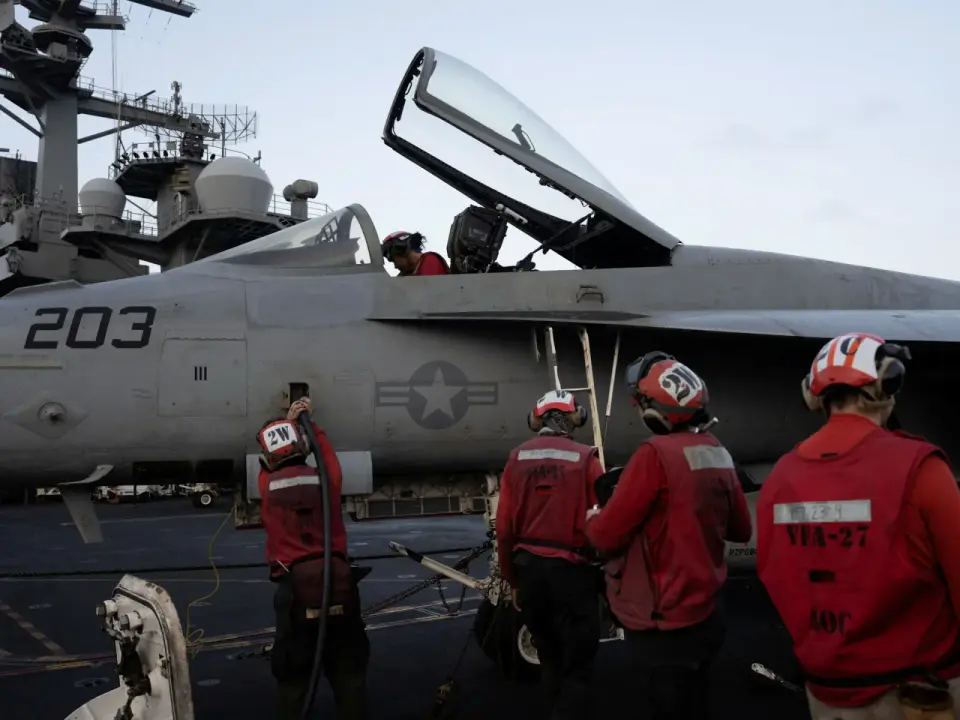
The US is deploying a third aircraft carrier strike group and approximately 10,000 additional troops to the Middle East, bringing total regional forces to roughly 60,000. This surge, which includes the USS Theodore Roosevelt and the Makin Island Marine Expeditionary Unit, aims to provide President Trump with military options ahead of November midterm elections. The buildup coincides with stalled diplomatic talks, new US sanctions on Iran's rail and auto sectors, and Trump's conflicting statements about ending the war quickly versus potentially resuming strikes after the elections.
Key points
- The USS Theodore Roosevelt carrier strike group and the Makin Island Marine Expeditionary Unit, carrying over 2,000 Marines, departed San Diego for the Middle East.
- By late November, the US will have three aircraft carriers and two amphibious landing groups positioned near Iran, adding 9,000 to 10,000 personnel to the existing 50,000 troops in the region.
- President Trump told Time magazine he might ramp up bombing Iran after the November midterm elections, but told voters in Texas and Oklahoma that the conflict would end 'very soon.'
- The US Treasury sanctioned Iran's auto and rail sectors, including state-owned firms and suppliers in the UAE, Hong Kong, Turkey, and Indonesia, as part of an effort to drain Tehran's revenue.
- Diplomatic efforts have stalled after Secretary of State Marco Rubio ordered Iran's UN delegation to leave New York earlier than planned, following failed Qatari-mediated talks regarding the Strait of Hormuz.
Background
The US has maintained a significant military presence in the Middle East for decades, with approximately 50,000 troops stationed across 19 locations as of mid-2025. The current conflict with Iran began on February 28, 2026, and has entered its eighth month. Previous reports indicated that US planners were weighing a reduced footprint if the war ended, but the current deployment signals a significant escalation in military readiness. Oil prices have surged, with Brent crude rising over 4% to $102.31 per barrel, driven by fears of supply disruptions and a blockade on Iranian oil exports.
How outlets are covering it
Al Jazeera and The Washington Post emphasize the strategic intent behind the deployment, noting that the Pentagon is not planning to withdraw assets even if a deal is reached, and that the buildup provides Trump with a 'wider menu of options.' The Wall Street Journal reported that the deployment could involve an additional 9,000 to 10,000 troops. WBAL-TV highlights the political dimension, noting that Trump acknowledged the war could hurt Republicans in the midterm elections, while also suggesting it might help by framing the conflict as preventing Iran from obtaining a nuclear weapon. CNBC focuses on the economic and diplomatic fallout, including the new sanctions and the expulsion of the Iranian delegation from New York. There is a notable discrepancy in Trump's messaging: he told Time magazine that he might resume strikes after the elections, but told voters in Texas and Oklahoma that the war would end 'very soon.'
Why it matters
The deployment of a third aircraft carrier and 10,000 additional troops signals a significant escalation in US military readiness in the Middle East, potentially influencing the outcome of the ongoing conflict with Iran. The timing, just a month before the US midterm elections, suggests that the administration is weighing military action against political risks. The stalled diplomatic talks and new sanctions indicate that the conflict is far from resolved, with potential implications for global oil prices and regional stability. The conflicting statements from President Trump about the war's duration and potential for further strikes add to the uncertainty and could impact public opinion and electoral outcomes.
What to watch
The US is expected to complete the deployment of the third aircraft carrier strike group and amphibious forces by late November. President Trump is likely to make a decision on whether to resume strikes on Iran after the midterm elections, depending on the outcome of diplomatic talks and the political landscape. The US Treasury may impose further sanctions on Iran's economic sectors, and diplomatic efforts may continue through Qatari mediation, though progress has been stalled. The situation in the Strait of Hormuz and the potential for further military action will be closely monitored by global markets and policymakers.
- New aircraft carrier, 10,000 US troops: Is the Iran war about to escalate? Al Jazeera
- Pentagon prepares for potential surge of naval forces in Middle East The Washington Post
- Thousands of US troops heading to Mideast amid uncertainty about war's direction WBAL-TV
- U.S. to send third carrier group to Mideast as Trump warns of new Iran strikes CNBC
- U.S. Sending Third Aircraft Carrier, Up to 10,000 More Troops, to Middle East WSJ
Want the full story? Read the original reporting
Read on Al Jazeera