
US deploys third carrier to Middle East as Trump hints at post-election strikes on Iran
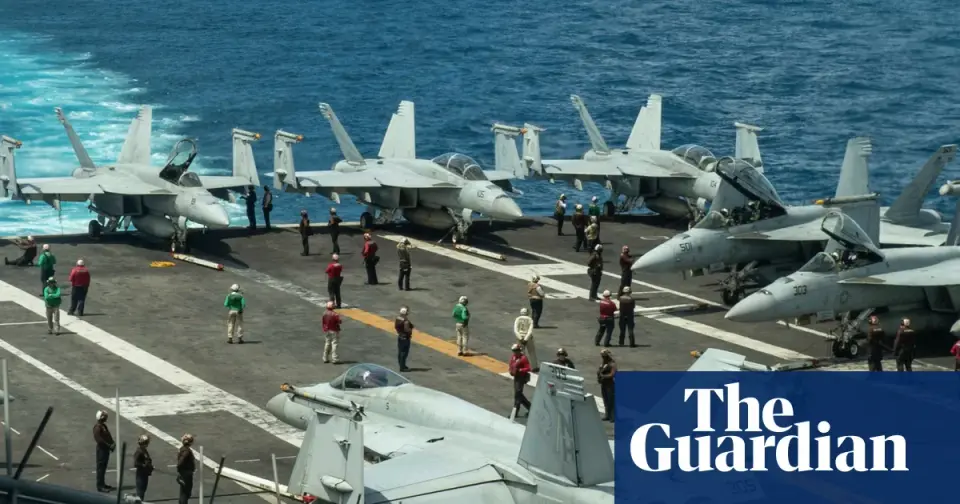
The US is sending the USS Theodore Roosevelt carrier strike group and the 13th Marine Expeditionary Unit to the Middle East, adding over 10,000 personnel to the region. This move brings the total US naval presence to more than 20,000 sailors and Marines, matching levels not seen since 2003. President Trump has signaled that new strikes against Iran may resume after the November midterm elections, despite earlier promises that the conflict would be brief. Oil prices surged, with Brent crude rising 4.4% to $102.31 per barrel, amid fears of escalation and ongoing attacks on tankers in the Strait of Hormuz.
Key points
- The USS Theodore Roosevelt and USS Makin Island amphibious readiness group are en route to the Middle East, expected to arrive by late October or November.
- The deployment adds approximately 10,000 sailors and Marines to the region, joining the USS George HW Bush and USS George Washington already on station.
- President Trump stated in a Time interview that he rejected Iran’s latest ceasefire proposal, calling it 'not good enough,' and suggested escalation could follow the midterms.
- Brent crude prices jumped 4.4% to $102.31 per barrel, while US diesel prices remained elevated at an average of $6.40 per gallon.
- A Kuwaiti tanker was hit by a projectile in the Strait of Hormuz, causing a fire, marking the second attack on a Kuwait Oil Tanker Company vessel in a week.
Background
The current escalation follows a seven-month conflict that began after the US and Israel launched strikes against Iran, which Trump claimed was necessary to prevent Tehran from acquiring nuclear weapons. Previous coverage noted that the war has reshaped Middle East security, leading Gulf states to seek alternative defense arrangements, such as Saudi Arabia’s pact with Pakistan and Turkey. The US had previously deployed three carrier strike groups to the region in April 2026, the first time since 2003, to relieve the USS Abraham Lincoln, which had been at sea for over 260 days.
How outlets are covering it
The Guardian and Fox News both confirm the deployment of the USS Theodore Roosevelt and the 13th Marine Expeditionary Unit, but Fox News emphasizes Trump’s rhetoric, quoting him as saying the US is 'knocking the hell out of Iran' and that victory will come 'very soon.' The Guardian highlights Trump’s rejection of Iran’s ceasefire proposal and his acknowledgment that the war could hurt Republican chances in the midterms. CNBC focuses on the economic impact, noting that oil prices rose despite crude flows recovering to prewar levels, and points to diesel shortages caused by Ukrainian strikes on Russian refineries and Houthi attacks on Gulf infrastructure. Al Jazeera provides a broader regional context, reporting on Houthi missile debris injuring a resident in Saudi Arabia and Israeli strikes in Gaza, while also noting that G7 fuel stock releases are unlikely to significantly alleviate the diesel crisis.
Why it matters
The deployment of a third carrier signals a potential shift from a limited conflict to a sustained military presence, with implications for global energy markets and regional stability. Trump’s suggestion of post-election strikes raises concerns about prolonged conflict, while the surge in oil prices and diesel shortages could exacerbate inflation and economic instability worldwide. The ongoing attacks on tankers in the Strait of Hormuz threaten global energy supply chains, and the US’s naval buildup may influence the balance of power in the Middle East, potentially affecting the security arrangements of Gulf states.
What to watch
The USS Theodore Roosevelt is expected to arrive in the Middle East by late October or November, potentially replacing the USS George Washington, which may redeploy to the Pacific. Trump has indicated that new strikes against Iran could begin after the November midterm elections, though he has not provided specific details. Oil prices may continue to fluctuate based on developments in the Strait of Hormuz and the outcome of the midterms. The G7 is expected to release 100 million barrels of emergency fuel stockpiles over four months, but analysts suggest this will have limited impact on diesel prices.
- US sends third aircraft carrier to Middle East amid stalemate in Iran war The Guardian
- US deploys thousands more troops, Marines to Middle East as oil prices surge foxnews.com
- Iran war live: US moves 2,000 Marines to Middle East, tanker hit in Hormuz Al Jazeera
- Brent oil jumps more than 4% as U.S. reportedly sends third aircraft carrier to Middle East CNBC
- U.S. Sending Third Aircraft Carrier, Up to 10,000 More Troops, to Middle East WSJ
Want the full story? Read the original reporting
Read on The Guardian