
US Jet Disables Cargo Ship in Gulf of Oman as Iran Claims Control of Hormuz
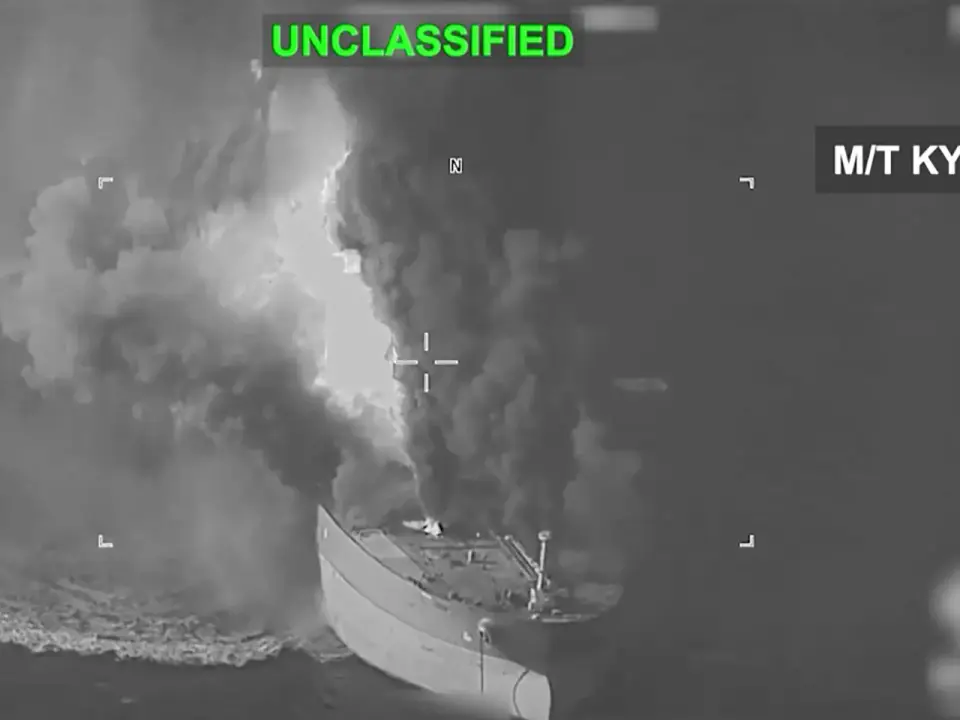
US forces struck the stern of the Panama-flagged cargo ship M/V Ocean Molica in the Gulf of Oman on Saturday, disabling its propulsion without harming the crew. Central Command (CENTCOM) stated the vessel ignored warnings and attempted to run a naval blockade against Iran that began on July 14. Since then, US forces have disabled four commercial vessels and turned around 135 ships, while destroying 10 tankers linked to Iran’s Islamic Revolutionary Guard Corps (IRGC). Simultaneously, the IRGC claimed it struck an LPG carrier in the Strait of Hormuz for taking an 'illegal route,' asserting control over the waterway. The UK Maritime Trade Operations confirmed an incident involving a tanker in the Gulf of Oman and reported a separate strike on a vessel north of Qatar on Thursday, resulting in casualties. Senator Chris Murphy criticized the strikes, questioning the cost and strategic value of targeting commercial ships.
Key points
- CENTCOM stated that a US fighter jet struck the stern of the M/V Ocean Molica with a precision munition on Saturday, fully disabling its propulsion without harming the crew.
- The vessel, also known as the Arika Sun, was attempting to transit regional waters after departing an Iranian port, ignoring repeated warnings regarding the ongoing naval blockade.
- CENTCOM reported that since resuming the blockade on July 14, US forces have disabled four commercial vessels, turned around 135 ships, and destroyed 10 tankers linked to the IRGC’s shadow network.
- The IRGC claimed it struck the LPG carrier NV Sunshine in the Strait of Hormuz for attempting to transit via an 'illegal route' south of the strait, stating it has taken control of the strait’s administration.
- The UK Maritime Trade Operations acknowledged the incident in the Gulf of Oman and reported a separate strike on a vessel north of Qatar on Thursday, which resulted in several casualties.
- US Senator Chris Murphy questioned the military strikes, arguing that taxpayers are paying billions to hit commercial ships to gain leverage for negotiations with Iran.
Background
This incident occurs amid a broader US-Israel war on Iran that began in late February 2026. Previous archive coverage from September 2026 detailed US strikes on Iranian oil carriers and retaliatory missile attacks, as well as escalating tensions in the Strait of Hormuz that threatened oil supplies and environmental safety. A September 2026 secret military summit in Germany highlighted coordinated strategy among US, Israeli, and Arab allies regarding maritime moves in the strait. In early October 2026, Israeli Prime Minister Benjamin Netanyahu predicted the collapse of the Iranian regime, while Iran warned of regional war, coinciding with increased confrontations in the Strait of Hormuz.
Why it matters
The strikes highlight the intensifying naval confrontation in the Gulf of Oman and Strait of Hormuz, critical routes for global oil and liquefied natural gas. The US blockade and Iranian countermeasures risk disrupting energy supplies and escalating regional conflict, with potential environmental and economic consequences. The incident underscores the complex dynamics of maritime enforcement and the strategic leverage sought by both sides in the ongoing war.
What to watch
Investigations by the UK Maritime Trade Operations and other authorities into the incidents in the Gulf of Oman and Strait of Hormuz are ongoing. The US blockade and Iranian enforcement of control over the strait are likely to continue, with potential for further strikes on commercial vessels. Diplomatic and military responses from the US, Iran, and regional allies will be closely monitored as tensions escalate.
Want the full story? Read the original reporting
Read on Al Jazeera