
US ramps up Middle East military presence as Trump ties Iran war end to November elections
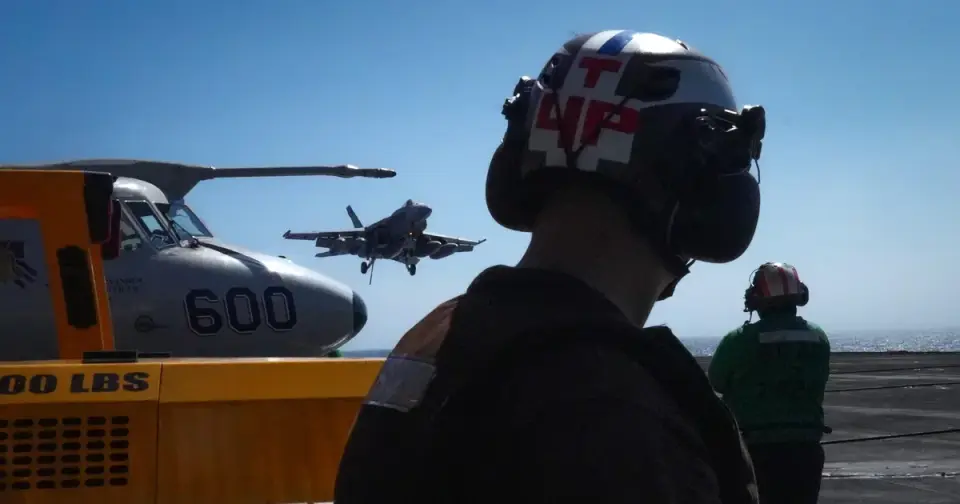
The US is deploying approximately 9,000 additional troops to the Middle East, including carrier strike groups, as President Trump asserts the seven-month war with Iran will conclude around the November midterm elections. While Washington rejects Tehran’s peace proposals, the G7 has agreed to release 100 million barrels of diesel to stabilize fuel prices. Concurrently, Iran is advancing legislation to control the Strait of Hormuz, and violence in Yemen has displaced over 145,000 people.
Key points
- The USS Theodore Roosevelt and USS Makin Island groups are heading to the region, potentially bringing total US forces in the Middle East to 20,000.
- Trump stated the war will end 'right after the election' or sooner, claiming US strikes have caused long-term damage to Iranian infrastructure.
- The G7 agreed to a coordinated release of 100 million barrels of diesel over four months to address soaring fuel prices.
- Iran’s parliament advanced a bill to charge fees for transit through the Strait of Hormuz and ban vessels from hostile nations.
- A tanker was struck by a projectile in the Strait of Hormuz, though no casualties were reported; four vessels have been hit this week.
- In Yemen, fighting near the Red Sea coast has displaced 145,000 people, with 80 combatants killed in recent clashes between Houthis and Saudi-backed forces.
Background
The conflict began in March 2026 when Hezbollah attacked Israel, drawing Lebanon into the broader war. The US has maintained a naval blockade of Iranian ports, while Iran has targeted US assets in Jordan and threatened maritime traffic. Previous rounds of fighting in Lebanon resulted in over 8,900 deaths, and the current war has disrupted global energy flows, prompting alternative shipping routes through the Red Sea and Suez Canal.
How outlets are covering it
Outlets highlight different aspects of the escalating tensions. CBS News focuses on the military buildup and Trump’s timeline for ending the war, noting his comments on oil prices. Al Jazeera emphasizes the diplomatic stalemate, reporting that Iran received a formal US response to its peace proposal but that Trump rejected the terms, suggesting he might 'blow up' Iran instead. Politico underscores the rejection of Iran’s proposal to reopen the Strait of Hormuz in exchange for lifting sanctions. AP News highlights the G7’s coordinated diesel release and the ongoing humanitarian crisis in Yemen, where health facilities are being destroyed. There is a divergence in tone: US officials frame the deployment as necessary for stability, while Iranian officials mock Trump’s claims of victory, asserting that reality is shaped by Iran’s military capabilities.
Why it matters
The escalation risks a broader regional conflict, particularly with the potential for US strikes on Iranian infrastructure and Iran’s legislative moves to control the Strait of Hormuz, a critical global energy chokepoint. The G7’s diesel release aims to mitigate economic fallout, but the displacement of hundreds of thousands in Yemen and the threat to shipping lanes indicate significant humanitarian and economic consequences. The timing of the war’s end relative to US elections adds a political dimension to the geopolitical crisis.
What to watch
Watch for the arrival of the new US carrier groups in the Middle East by late October. Monitor the progress of the G7 diesel release and its impact on global fuel prices. Observe Iran’s parliamentary vote on the Strait of Hormuz legislation and any subsequent US naval responses. Track the humanitarian situation in Yemen, particularly the status of health facilities and displacement numbers. Follow diplomatic communications between Washington and Tehran regarding the rejected peace proposal.
- Live Updates: Trump vows Iran war will end "right after the election" or sooner, as 9,000 troops head to Mideast CBS News
- Iran war updates: Trump says may ‘blow up’ Iran Al Jazeera
- Trump Says Ramped Up Bombing of Iran ‘Possible’ After Midterms Bloomberg.com
- Trump threatens to 'blow up' Iran as talks stall Politico
- Trump says latest Iran peace offer not enough, may resume bombing, and other Mideast developments AP News
Want the full story? Read the original reporting
Read on CBS News